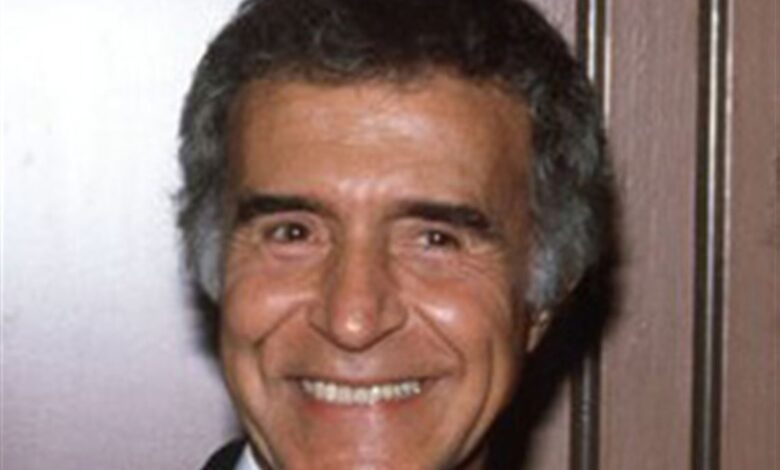
Ricardo Montalbán’s life and body of work stand as one of Hollywood’s most remarkable stories—a testament to artistry, endurance, and cultural influence that continues to resonate decades later.
He was born on November 25, 1920, in Mexico City, Mexico, into a family that valued diligence, integrity, and deep-rooted cultural identity. Growing up in modest surroundings, Montalbán absorbed lessons about discipline and pride that would later anchor him through the unpredictable currents of the entertainment industry.
Even in his youth, he demonstrated a natural inclination toward performance. Storytelling fascinated him, and he possessed a commanding presence that set him apart. Those early sparks of theatrical ambition eventually led him to pursue opportunities beyond Mexico, guiding him toward the demanding and often unforgiving landscape of American film and television.
His arrival in Hollywood came during a period when Latino actors encountered significant structural barriers. The industry frequently confined performers of Latin American heritage to narrowly defined, stereotypical roles—parts that reduced complex identities to caricatures. Meaningful opportunities were scarce, and upward mobility required not only talent but resilience.
Montalbán refused to be boxed in by limitation. Through persistence, professionalism, and a deep respect for his craft, he gradually carved out space for himself in an industry reluctant to offer it. His journey was not simply about personal success; it was about challenging perceptions and expanding the possibilities for those who would follow.
In doing so, Ricardo Montalbán became more than a leading man. He became a symbol of dignity and determination in the face of systemic constraint—a figure whose career reflected both the obstacles of his era and the power of unwavering conviction.
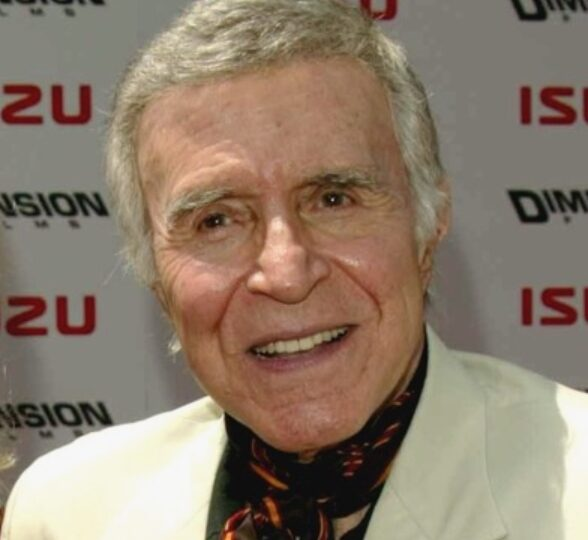
Despite the barriers placed before him, Montalbán met each obstacle with refinement, discipline, and unwavering resolve—qualities that would define his professional legacy.
In the 1940s, he secured a contract with Metro-Goldwyn-Mayer (MGM), one of the most influential studios of its time. The studio system operated with strict hierarchies and carefully controlled star images, leaving little room for deviation. Still, Montalbán quickly distinguished himself within that rigid structure.
His expressive features, resonant voice, and composed confidence gave him a magnetic screen presence. He carried himself with a poise that translated effortlessly to film, lending credibility and depth to every performance. Even when scripts leaned on predictable conventions or limited character development, he found ways to enrich his roles, adding nuance where little was written.
Viewers and reviewers alike began to notice that he had a rare ability: he could take supporting parts and make them linger in the audience’s memory. What might have been routine casting became, in his hands, something layered and compelling.
In doing so, Montalbán subtly disrupted industry assumptions. Without overt confrontation, he proved that Latino performers were capable of portraying a full spectrum of characters—romantic leads, complex heroes, and dignified figures of authority—rather than the one-dimensional stereotypes so common at the time.
The early phase of his career featured a range of romantic and action-driven roles, each demonstrating his adaptability and growing command of the screen. These performances laid the groundwork for a career that would steadily expand in scope and cultural impact.
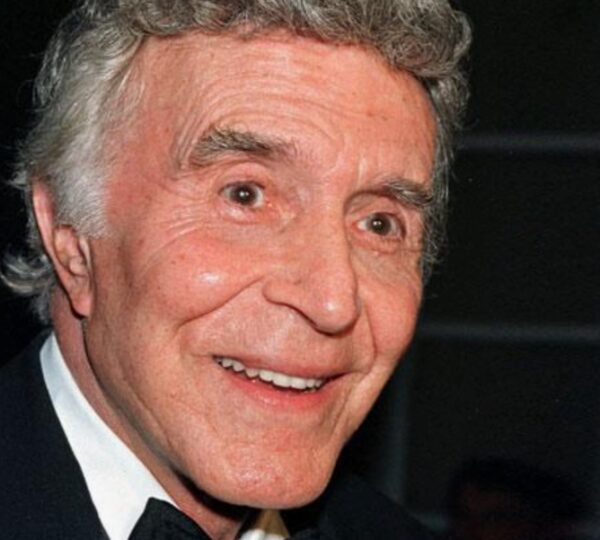
Montalbán’s natural athleticism became another defining asset in his ascent. He handled demanding physical roles with remarkable ease—whether executing action sequences, performing dance numbers, or tackling intricate stunts. His physical confidence enhanced his performances without overshadowing them, reinforcing the sense that he was fully in command of every role he inhabited.
That athletic grace, paired with his polished demeanor and magnetic presence, positioned him as a credible leading man during an era when Hollywood hesitated to cast Latino actors as romantic heroes or central protagonists. Each time he stepped into such a role, it quietly challenged prevailing industry norms. His success served as a reminder that ability and discipline mattered more than the artificial boundaries imposed by bias.
Looking back on those formative years, Montalbán spoke without bitterness. He acknowledged the discrimination he faced, yet emphasized perseverance and craftsmanship over resentment. For him, sustained excellence was the most effective rebuttal to prejudice. Professionalism, he believed, could gradually dismantle barriers that once seemed immovable.
By the 1960s and 1970s, his reputation was firmly established across both film and television. He had become a familiar and respected figure, admired not only for his talent but for the dignity with which he carried himself.
This period ushered in the two roles that would ultimately define his cultural legacy.
The first arrived in 1977 with Fantasy Island. As the enigmatic Mr. Roarke, Montalbán created a character who was simultaneously gracious, composed, and subtly powerful. Week after week, audiences tuned in to watch him preside over the island’s unfolding dramas with calm authority.
His portrayal avoided exaggeration. Instead, he relied on restraint—measured gestures, deliberate speech, and expressive subtlety—to give Mr. Roarke depth. The character’s authority never felt domineering; his charm was sincere rather than ornamental. Through nuance and empathy, Montalbán anchored the series, lending it sophistication and a quiet moral center that elevated the show beyond simple escapism.
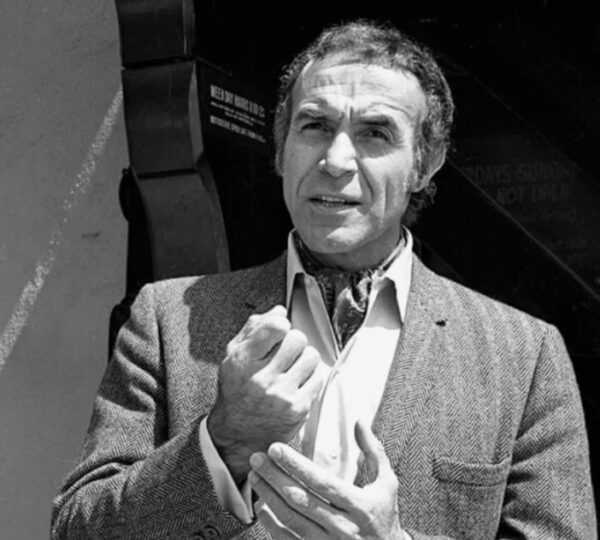
Fantasy Island became far more than a prime-time hit. For Montalbán, it was an opportunity to explore layered storytelling within a popular format. Each episode allowed him to anchor fantastical premises in emotional truth, giving the series a reflective undertone beneath its escapist surface. Through restraint and nuance, he elevated what might have been simple entertainment into character-driven drama.
Yet if Mr. Roarke showcased his subtlety, his portrayal of Khan Noonien Singh in Star Trek II: The Wrath of Khan (1982) revealed his dramatic force in full measure.
As Khan, Montalbán crafted one of cinema’s most enduring antagonists. The character was brilliant, vengeful, and formidable, but also wounded and deeply human. Montalbán infused him with theatrical power—his resonant voice, intense gaze, and deliberate physicality creating a performance that felt almost Shakespearean in scope. Rather than playing Khan as a one-dimensional villain, he emphasized the character’s pride, grief, and obsessive resolve. The result was a portrayal that inspired both awe and empathy.
Decades later, Khan remains a benchmark in science fiction storytelling. Fans and critics alike continue to cite Montalbán’s performance as a masterclass in screen acting—proof that a villain, when given depth and conviction, can become the emotional centerpiece of a film.
Beyond his celebrated roles, Montalbán’s influence extended meaningfully behind the scenes. Having experienced firsthand the constraints placed on Latino performers, he devoted significant energy to advocacy and reform within the industry.
In 1970, he co-founded the Nosotros Foundation, an organization dedicated to advancing Latino representation in entertainment. Through mentorship programs, workshops, scholarships, and public engagement, the foundation sought to dismantle entrenched stereotypes and expand access to opportunity.
Montalbán approached this work with the same discipline that defined his acting career. He understood that lasting change required structure, persistence, and community support. By investing in emerging talent and challenging casting norms, he helped create pathways that had not existed when he began his own journey.
In both art and advocacy, Ricardo Montalbán demonstrated that influence is measured not only by personal achievement, but by the doors one opens for others.
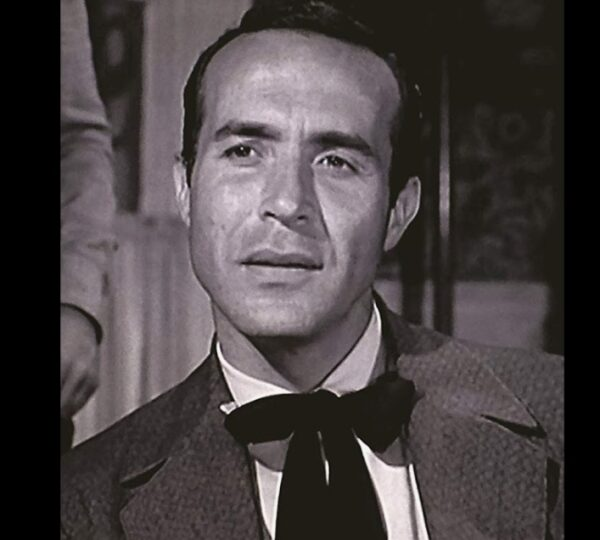
Montalbán’s advocacy was never symbolic or self-serving. It stemmed from personal experience—years spent confronting limited casting opportunities and reductive portrayals. His commitment to equity in the entertainment industry reflected a genuine desire to ensure that others would not have to navigate the same barriers alone. Inclusion, for him, was not a trend but a responsibility.
Alongside his activism and artistic accomplishments, he was widely admired for his character. Those who worked with Montalbán often spoke first not of his fame, but of his kindness. He carried himself with courtesy and composure, earning a reputation for professionalism that set a standard on every set he joined.
In an industry often marked by ego and rivalry, he maintained steadiness and respect. Whether leading a production, supporting a fellow actor, or offering guidance to newcomers, he treated colleagues with consideration. Cast and crew members frequently recalled his attentiveness to detail and his willingness to uplift others’ performances, understanding that strong collaboration strengthened the entire project.
His influence reached beyond specific credits or awards. At a time when Latino representation in mainstream media was scarce, Montalbán became a visible example of what sustained excellence could achieve. He demonstrated that it was possible to command respect without compromising identity. For many aspiring actors, he represented both inspiration and proof—evidence that talent paired with discipline could shift entrenched perceptions.
Across genres—romantic dramas, action adventures, and science fiction epics—he infused his characters with intelligence and dignity. Even when portraying antagonists, he avoided caricature, favoring complexity over exaggeration. That consistent integrity helped counter harmful stereotypes and offered audiences portrayals grounded in humanity.
Throughout his life, Montalbán remained closely tied to his roots. He spoke warmly of his upbringing in Mexico City, often crediting his parents and early community for shaping his values. The lessons instilled in him—hard work, empathy, faith, and cultural pride—remained guiding principles from his earliest auditions to his most iconic performances.
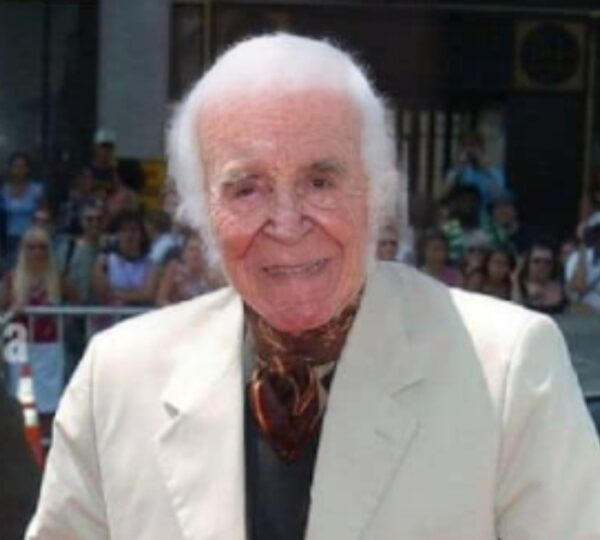
Even at the height of his global recognition, Montalbán remained firmly grounded in his heritage. He frequently spoke about the importance of honoring one’s cultural identity, mentoring the next generation, and reinvesting success back into the communities that made it possible. Fame never eclipsed his sense of responsibility.
That fusion of identity and achievement gave his career a resonance that extended beyond entertainment. He did more than build a résumé—he built bridges. His work connected audiences across cultures and eras, demonstrating that authenticity and excellence are not mutually exclusive but mutually reinforcing.
Long after his passing, his presence continues to echo through popular culture. Fantasy Island remains a nostalgic landmark of television history. Khan Noonien Singh still sparks analysis and admiration among science fiction enthusiasts. Meanwhile, the Nosotros Foundation carries forward the mission he helped establish, advocating for Latino visibility and opportunity in the arts.
Montalbán’s life offers a blueprint for resilience. He showed how to confront systemic obstacles without surrendering grace, how to convert constraint into creative momentum, and how to use prominence not as a pedestal, but as a platform for change.
His imprint on pop culture is both unmistakable and enduring. The cadence of his voice, the composure of his bearing, and the intensity of his performances have been celebrated, referenced, and lovingly parodied across decades of media. These tributes endure not merely because he was recognizable, but because he brought intelligence and craftsmanship to every role.
Academics and historians frequently reference Montalbán in discussions about representation and the evolution of minority visibility in American film and television. His career serves as a case study in how a performer can shape not only characters, but cultural perception itself.
In private life, he was known for approachability and humility. Despite more than seventy years in the industry, he remained generous with his time and guidance. Younger actors often sought his counsel on navigating contracts, industry politics, and the delicate balance between ambition and integrity. He believed storytelling possessed transformative power—the capacity to educate, unite, and expand understanding.
His advocacy efforts were equally significant. Through the Nosotros Foundation and his broader public engagement, he challenged longstanding casting practices and championed authentic representation. He encouraged producers to look beyond stereotypes and urged aspiring performers to prepare themselves with discipline and confidence. Whether speaking at universities, community events, or industry panels, he offered both inspiration and practical support.
Many contemporary Latino actors credit Montalbán as a foundational influence—someone who demonstrated that success and cultural pride could coexist without compromise.
Ricardo Montalbán passed away on January 14, 2009, at the age of 88, leaving behind a legacy woven through film, television, and social progress. His life illustrates that artistry gains its fullest meaning when joined with courage and principle.
From Mexico City to Hollywood’s largest stages, he exemplified how talent, integrity, and purpose can converge to create enduring impact. He was not simply a celebrated performer; he was a pioneer who expanded the boundaries of possibility for others.
His story continues to instruct future generations about perseverance, dignity, and advocacy. The performances remain timeless, but so too does the example he set—an example that reaches beyond the screen into the broader pursuit of equity and excellence.
Ultimately, Montalbán’s legacy cannot be measured solely by accolades or recognition. It is measured in influence, mentorship, and institutional change. It lives in the opportunities he helped create and in the artists who followed his path.
Through his craft, his convictions, and his unwavering sense of responsibility, Ricardo Montalbán reshaped Hollywood in lasting ways—proving that true greatness is defined not just by talent, but by the character with which that talent is used.