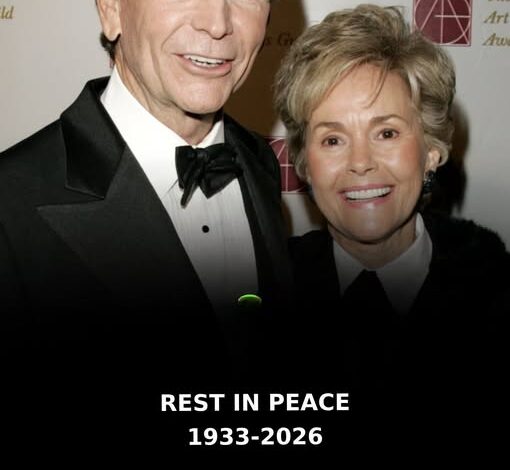
The golden era of American television has bid farewell to one of its enduring trailblazers. Lory Patrick—actress, writer, and quiet force behind some of the most beloved Western dramas—passed away on January 26, 2026, at the age of 92. She died peacefully at her home in Gettysburg, Pennsylvania, closing a chapter on a life that helped define the texture and tone of mid-century television. To many, she was not merely a familiar face on screen, but a steady presence whose strength and conviction extended far beyond the studio lights.
Born Loretta Basham on April 8, 1933, in Beckley, West Virginia, Patrick’s early years were shaped by the grit of coal-country life. Her path from a small Appalachian town to Hollywood soundstages was anything but effortless. As a young woman pursuing acting in New York, she was once bluntly told by a producer, “Pretty girls can’t act.” Rather than accept the dismissal, she treated it as a challenge. Determined to prove otherwise, she moved west, signed with Universal Studios, and began building a career that would eventually include more than 70 television appearances.
A Defining Presence of Television’s Golden Years
Patrick became widely recognized for her role as Tina Swenson in Tales of Wells Fargo, where she portrayed a character defined by warmth and moral clarity. Audiences connected with her natural, unforced performances—qualities that made her a seamless fit for the character-driven storytelling of the 1950s and 1960s.
Her resume grew to include guest roles on Wagon Train, Bonanza, Dr. Kildare, and The Adventures of Ozzie and Harriet, among many others. In an industry often fueled by fleeting fame, Patrick’s career stood out for its steadiness. She attributed her longevity not to luck, but to discipline and persistence—principles she embraced in every role she accepted.
While many actresses of her era were confined to narrow character types, Patrick consistently sought depth in her work. That determination eventually led her beyond acting and into writing, where she found another avenue for creative expression.
Breaking Ground Behind the Camera
At a time when women were rarely invited into writers’ rooms, Patrick carved out space for herself. She contributed scripts to Bonanza, becoming one of the few women of her generation to write for a major network Western. Her work behind the scenes quietly expanded opportunities for others who would follow.
Her creative pursuits extended beyond television. In 1993, she authored the faith-centered book Hearing God, and she contributed columns to publications serving aspiring writers. She later directed the stage production St. John in Exile in 1984, collaborating with her husband, actor Dean Jones.
Patrick married Jones in 1973, and the two shared 42 years together until his passing in 2015. Their partnership blended artistic collaboration with deep personal faith. Together, they founded the Christian Rescue Fund and served as active members and elders at The Church on the Way. For Patrick, service was not separate from her career—it was the foundation beneath it.
A Life Anchored in Faith and Family
After stepping away from regular on-screen work in the late 1960s, Patrick gradually shifted her focus toward family, ministry, and creative writing. In her later years, she relocated to Gettysburg to be closer to her children, grandchildren, and great-grandchildren. Those who knew her describe a woman guided by conviction and kindness, more interested in lasting impact than industry accolades.
Her passing marks the loss of one of television’s early architects—an artist who helped shape the storytelling traditions that defined a generation. Yet her legacy extends well beyond the credits that scroll at the end of an episode.
Lory Patrick demonstrated that resilience can outshine rejection, that discipline can outlast doubt, and that character matters as much off-screen as on it. She built a career through perseverance, expanded opportunities for women in television, and devoted her later years to faith and humanitarian work.
For viewers who remember her riding across dusty Western landscapes or appearing in living rooms during the formative years of broadcast television, she remains part of a cherished cultural memory. More importantly, she leaves behind a life marked by purpose, devotion, and quiet strength.
Though the curtain has fallen, the influence of Lory Patrick endures—in the stories she helped tell, the barriers she helped break, and the example she set for those who continue the work she began.