Democrats and Republicans have come together to pass a resolution formally rejecting socialism, signaling rare bipartisan agreement in Congress. The move arrives just before the high-profile meeting between Trump and Mamdani, adding heightened political interest and prompting renewed national debate over economic systems and government direction.

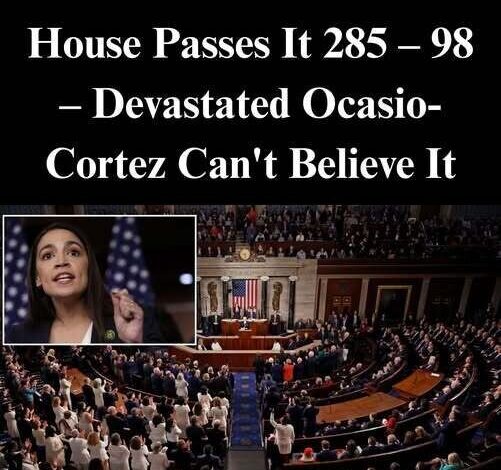
In the hours leading up to New York City Mayor-elect Zohran Mamdani’s first meeting with President Donald Trump in Washington, the U.S. House of Representatives passed a bipartisan resolution condemning the “horrors of socialism.” Introduced weeks earlier but brought to a vote on Friday, the measure served as a symbolic denunciation of socialist ideology at a moment when one of the nation’s most prominent democratic socialists was preparing to take office in America’s largest city. The timing underscored political tensions surrounding Mamdani’s victory, signaling that national lawmakers sought to reaffirm ideological boundaries even as New York City moved in a distinctly progressive direction. According to CBS News, Republicans framed the vote as a moral and ideological necessity, aimed at reaffirming the nation’s commitment to capitalism and liberal democracy.
Republican Rep. French Hill of Arkansas presented the resolution as an obvious and uncontroversial choice, declaring that Congress opposed the implementation of socialist policies in the United States in all forms. Despite its partisan framing, the resolution passed with significant bipartisan support, 285-98. Notably, 86 Democrats voted in favor, highlighting ideological divisions within the party. Among these were several prominent New York and New Jersey lawmakers, including House Minority Leader Hakeem Jeffries. Jeffries’ vote drew attention given that he had endorsed Mamdani only at the final stages of the mayoral race, and Mamdani openly identifies as a democratic socialist.
Other influential New York Democrats, including Ritchie Torres, Greg Meeks, Grace Meng, Laura Gillen, and Tom Suozzi, also supported the resolution. Suozzi had notably distanced himself from Mamdani during the campaign, underscoring the gap between establishment Democrats and the city’s emerging socialist movement. On the Republican side, Rep. Nicole Malliotakis invoked her mother’s flight from Cuba in 1959 to justify her support, linking her family history to a rejection of policies she associated with Mamdani. In contrast, progressive lawmakers such as California Democrat Maxine Waters opposed the resolution, criticizing Republicans for prioritizing ideological symbolism over practical economic concerns like inflation, housing costs, and healthcare access.
After meeting with Trump, Mamdani downplayed the significance of the resolution, stating that he had paid little attention to it. He emphasized his focus on policy implementation and reaffirmed his democratic socialist identity, framing it as transparent and consistent. Mamdani acknowledged ideological differences but stressed that practical governance — particularly making New York City more affordable — was where collaboration mattered most. His remarks signaled a pragmatic approach to working with the White House, even with opponents who had previously mocked his ideas.
The meeting with Trump gained added attention because the former president had earlier threatened to deploy the National Guard to New York City as part of a crime crackdown in Democrat-led cities. In August, Trump indicated he would send forces after completing operations in Chicago. However, before departing for Joint Base Andrews, he suggested he was pausing plans for New York, saying other cities required more immediate attention. During the Oval Office discussion, Trump reiterated that he would consider federal intervention if needed, while also noting he would feel “very comfortable” living in New York City after meeting Mamdani. This shift suggested that the summit had moderated Trump’s tone toward the incoming administration.
Despite past clashes — Trump once mocked Mamdani as “my little communist,” while Mamdani labeled Trump a “fascist” — the two men appeared cordial during their meeting. Their exchange, reportedly light-hearted at times, reflected a notable political thaw. Trump even called the meeting a “great honor,” signaling an unexpected measure of respect.
The day highlighted the complexities of American politics: a national legislature publicly opposing socialism, a new mayor defending democratic socialism as a practical civic philosophy, and a president balancing combative rhetoric with pragmatic cooperation. It illustrated the tensions and possibilities inherent in governance at both the city and national levels.