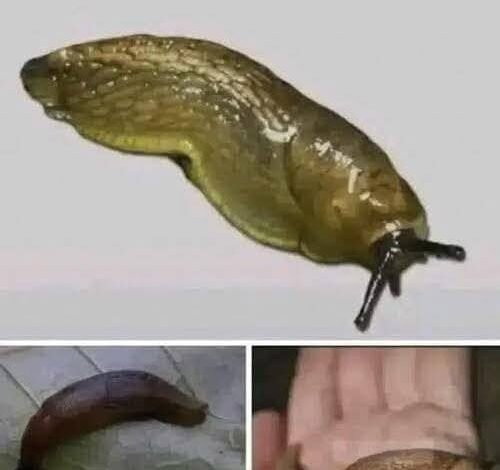
For many people, slugs are nothing more than unwelcome, slimy intruders that appear after a rainstorm or silently invade a garden, leaving behind a glistening trail that sparks annoyance or even disgust. Their slow, gliding movements and shiny, soft bodies often elicit an instinctive reaction of avoidance. However, beneath this seemingly unappealing exterior lies a creature of remarkable ecological and scientific importance. Slugs are far more than just pests—they are unsung heroes of the natural world, quietly performing tasks that maintain the balance of ecosystems and even contributing to innovations in science and cosmetics.
In the ecosystem, slugs serve as essential recyclers. By feeding on fallen leaves, decaying plant matter, fungi, and other organic debris, they accelerate the decomposition process and help return vital nutrients to the soil. This natural recycling enriches the earth, improving soil fertility and promoting the growth of plants, which, in turn, supports a wide range of other species. Without slugs and other decomposers, dead plant material would accumulate, slowing nutrient cycles and disrupting the delicate harmony that sustains life above ground. In essence, slugs are nature’s silent gardeners, working tirelessly to ensure that the soil remains rich and capable of supporting life.
Beyond their ecological role, slugs also occupy an important place in the food web. They serve as a significant food source for a variety of animals, from birds and small mammals to amphibians and insects. Species such as hedgehogs, toads, ground beetles, and certain birds rely on slugs as a protein-rich component of their diet. By fulfilling this role, slugs help sustain the populations of these predators and contribute to the complex interdependence that defines healthy ecosystems. Their presence, therefore, is not just incidental—it is integral to maintaining biodiversity and ecological balance.
Interestingly, the significance of slugs extends beyond the natural environment into the realms of science and human innovation. For instance, the mucus produced by slugs has unique properties that have caught the attention of researchers and cosmetic companies alike. This slimy secretion is rich in bioactive compounds, which can promote skin hydration, accelerate wound healing, and even offer protective antioxidant effects. As a result, slug mucin has become a sought-after ingredient in some high-end skincare products, demonstrating that what was once dismissed as a simple nuisance may hold unexpected value for human health and beauty.
Furthermore, scientists study slugs to better understand locomotion, tissue regeneration, and even the molecular basis of mucus production. Their simple yet efficient physiology offers insights into biological processes that are applicable across species, including humans. In this sense, slugs are not merely garden dwellers—they are living models that help expand our understanding of biology, medicine, and biotechnology.
In conclusion, slugs deserve far more appreciation than they typically receive. While their appearance and slow movements may not inspire admiration, their contributions to ecosystem health, food webs, and scientific research are immense. By recycling nutrients, supporting predators, and even offering clues for human innovation, slugs quietly uphold the intricate balance of life on our planet. The next time you spot one gliding across your garden after a rainstorm, consider the hidden work it is performing—an essential service that sustains the world in ways we often overlook.