
On the evening of Tuesday, February 24, 2026, the United States Capitol in Washington, D.C., hosted the annual State of the Union address, delivered by President Donald Trump.
During the event, President Trump honored the memory of conservative commentator Charlie Kirk, who was tragically killed in a targeted attack in September 2025.
Among the attendees that evening was Erika Kirk, Charlie’s widow, whose emotional response to Trump’s tribute quickly drew attention across social media and news outlets.
Why Erika Kirk Attended the State of the Union
Erika Kirk was invited as one of several notable guests to the 2026 State of the Union by President Trump.
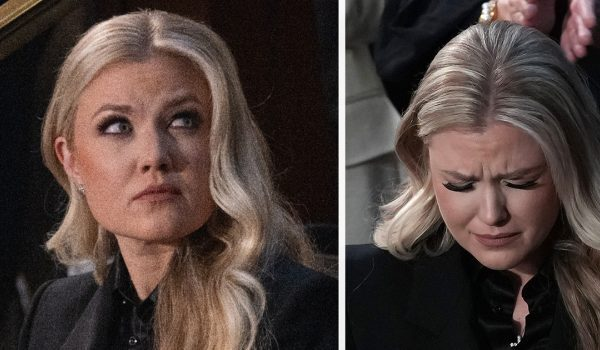
The White House had confirmed Erika Kirk’s attendance in the days leading up to the address, noting that she would be seated in the House Chamber as a distinguished guest.
Her presence came just months after the widely publicized death of her husband, Charlie Kirk, who was fatally shot while speaking at an outdoor event at Utah Valley University in Orem, Utah.
The September 2025 incident reverberated across political circles nationwide. In its aftermath, Charlie Kirk was posthumously awarded the Medal of Freedom — one of the highest civilian honors in the United States, recognizing extraordinary contributions to the country. Reports highlighted that the award coincided with what would have been his 32nd birthday.
Following his passing, Erika Kirk was unanimously appointed CEO and chair of the board for Turning Point USA (TPUSA), the conservative nonprofit her husband co‑founded and led for many years. She also assumed responsibility for guiding the organization while raising the couple’s two young children.
Trump’s Tribute to Charlie Kirk
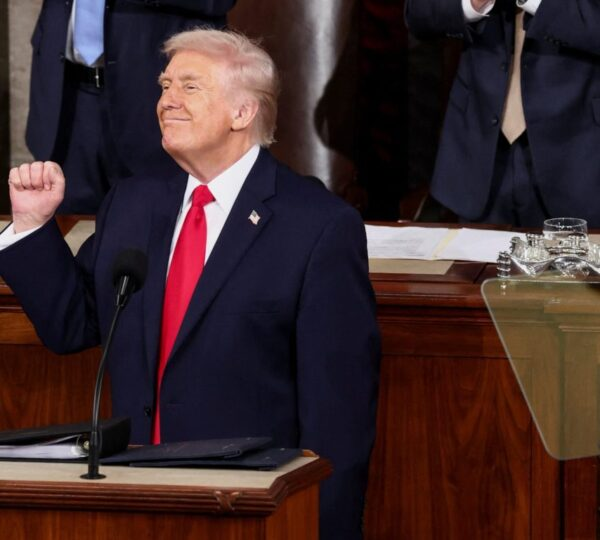
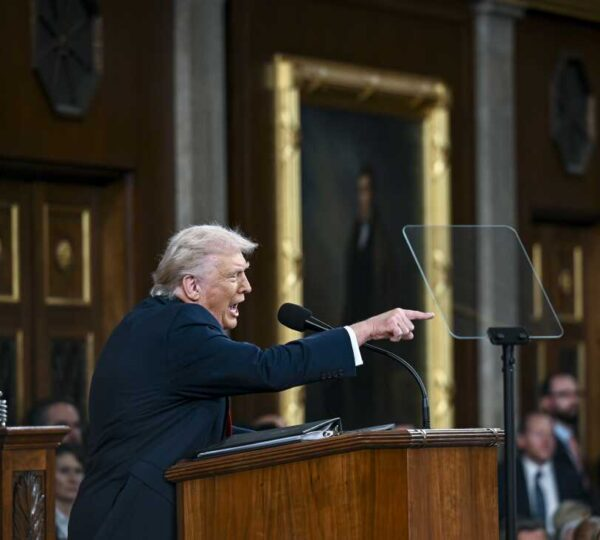
During the 2026 State of the Union address — a speech usually reserved for outlining the president’s policy agenda and national vision — President Trump paused to honor the life and legacy of Charlie Kirk.
Trump highlighted Charlie’s impact on American political culture, noting his role in inspiring a renewed engagement with conservative principles and religious values among young Americans. In a heartfelt moment, the president said:
“…Last year, Charlie was violently martyred for his beliefs. His wonderful wife, Erika, is with us tonight. Erika, please stand.”
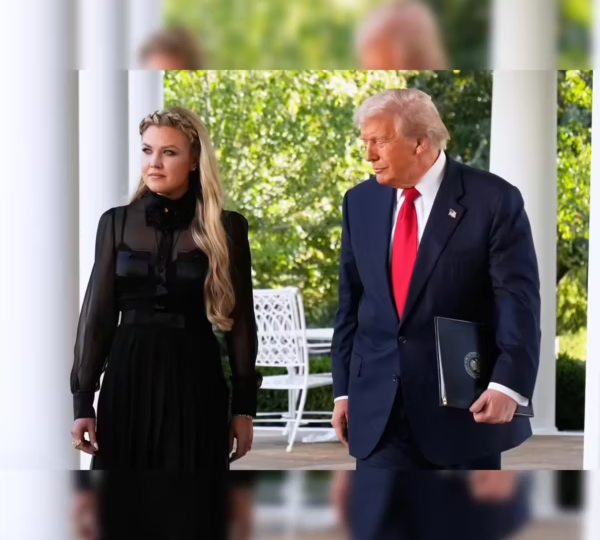
As cameras turned toward Erika, applause and supportive murmurs filled the chamber. President Trump continued, emphasizing that in Charlie’s memory, Americans must unite to “reject political violence of any kind,” framing the tribute not only as a commemoration but also as a broader call for civic unity and the protection of public figures.
Erika’s Emotional Response
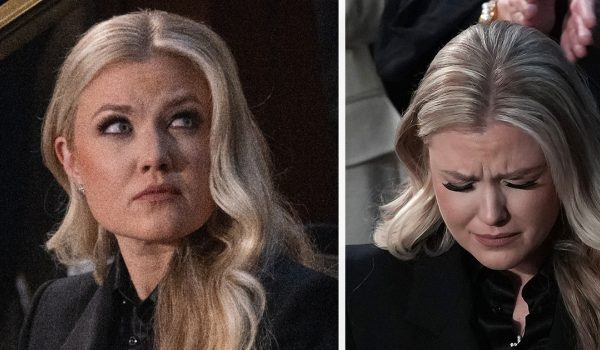
When called upon to stand, Erika was visibly moved, wiping away tears as the chamber erupted in applause. News outlets highlighted the poignancy of the moment, capturing her struggle to maintain composure while lawmakers honored her late husband.
Chants of “Charlie, Charlie!” echoed through the room, underscoring the deep impression he had made on colleagues and attendees alike. At one point, Erika appeared to silently mouth words that many viewers interpreted as “I miss you,” a moment that quickly circulated across social media.
For many watching live, the scene was both touching and heartrending — a public acknowledgment of profound personal loss, coupled with a collective show of respect. Yet, the display also prompted discussion about grief, public mourning, and how intimate emotions are presented on a national stage.
Online Reactions and Debate
Within minutes, clips of Erika’s response spread widely on platforms including X (formerly Twitter), Threads, and Facebook. Reactions were mixed: some expressed empathy and support, while others questioned the authenticity of her visible emotions.
Criticism and Accusations of “Inauthenticity”
A notable segment of online discussion focused on Erika Kirk’s expressions — particularly moments when she seemed to pause, glance at the camera, or compose herself while wiping away tears. Critics on platforms like X used terms such as:
- “fake”
- “performative”
- “cringe”
- “not genuine grief”
Some went further, claiming her reaction appeared staged or timed for the cameras, despite the deeply personal nature of her loss. One widely circulated clip showed Erika mouthing words that some interpreted as sorrowful or supportive, while detractors argued that her expressions did not “align” with their expectations of how someone grieving a spouse should behave.
These criticisms quickly became a topic of discussion across political forums and social media threads.
Support and Defense from Viewers
Not all responses were critical. Many defended Erika, highlighting that grief is highly individual and can manifest in many ways. Supporters commented:
- “Not all people grieve the same way.”
- “Erika is strong and coping through faith.”
- “She has lost so much — judging her isn’t fair.”
These voices emphasized that emotional responses are personal, and it is unfair to assess the authenticity of someone’s grief solely based on their facial expressions or public demeanor.
Grief and Public Figures
The national discussion around Erika Kirk’s reaction should be considered in the broader context of grief as a deeply personal experience.
Psychologists and grief experts emphasize that there is no single “correct” way to mourn. Emotional expression varies widely depending on personality, cultural background, and individual coping strategies.
Social media often simplifies or judges these reactions, expecting visible distress or overt sobbing. Yet, genuine grief does not always align with these public expectations — especially for someone navigating a highly visible, televised moment.
In Erika’s case, being in the national spotlight likely influenced how she displayed emotion. Her composure was not a sign of absence of grief, but a natural way to manage intense feelings while facing millions of viewers.
Erika Kirk’s Public Role Since Charlie’s Death
Since her husband’s assassination, Erika has been in the public eye, navigating both personal loss and leadership responsibilities. In the weeks following Charlie Kirk’s death, she delivered a moving eulogy at his memorial service in Arizona in September 2025, attended by tens of thousands, including President Trump and Vice President J.D. Vance.
During the service, Erika spoke about forgiveness, faith, and carrying forward her husband’s mission — themes that highlighted both her personal resilience and her emerging role as a leader within the conservative movement.
Since Charlie Kirk’s passing, Erika’s leadership at Turning Point USA has elevated her visibility within political activism and media circles, drawing both praise and scrutiny from different audiences.
Why Erika’s Reaction Became a Focal Point
Several factors fueled the intense online attention surrounding her appearance:
- The sudden and violent nature of Charlie Kirk’s death, which left a lasting emotional impact.
- The tribute occurring during a high-profile national address watched by millions.
- Erika’s emerging role as a prominent figure in conservative politics since her husband’s death.
- Social media dynamics, which amplify and dissect every visible reaction in televised events.
In today’s media landscape, deeply personal moments often become subjects of public debate, whether intended or not.
Reflections on Public Grief and Politics
The response to Erika Kirk’s televised emotions underscores larger themes in American political and media culture: the intersection of personal grief with public symbolism, and the way emotional expression is interpreted through ideological lenses.
Supporters viewed her presence as a dignified acknowledgment of loss — a reminder of the real consequences of political violence and the strength of a family enduring tragedy. Critics, meanwhile, questioned the authenticity of her grief, framing emotional displays as potentially performative rather than human.
Yet both perspectives share a fundamental truth: grieving in public is extraordinarily difficult. Whether speaking at a memorial service or seated in the House Chamber during a national address, confronting heartbreak under the scrutiny of millions is a profound emotional challenge.
Conclusion — A Tribute and a Conversation
Erika Kirk’s presence at the 2026 State of the Union, and the subsequent national conversation, highlights more than one widow’s visible emotion. It reflects how American culture navigates grief, politics, and media in the digital era.
While online reactions varied, one fact remains undeniable: Erika was there to honor her late husband, witness his legacy recognized, and participate in a moment that was both solemn and symbolic. That act — independent of social media commentary — serves as a powerful reminder of the human dimension behind political events that often feel distant or abstract.