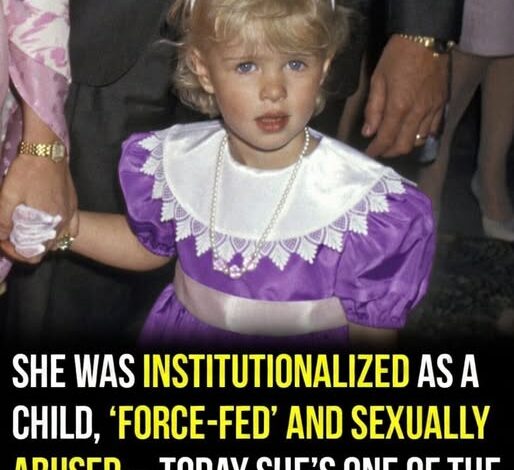
At the turn of the millennium, Paris Hilton’s name symbolized a certain kind of cultural “Sodium Spike”: neon excess, reality-TV domination, and a meticulously curated party-girl persona floating on inherited wealth. To the public, she was the ultimate socialite—a living Barbie doll appearing at the Waldorf-Astoria and front rows of fashion weeks. Yet by 2026, that polished image has peeled away, revealing a deeper story of trauma, personal struggle, and remarkable resilience.
Privilege and Pressure
Born in 1981, Paris’s childhood was a paradox of privilege and unexpected simplicity. Behind the glittering doors of Manhattan and Beverly Hills, she was a tomboy who loved animals, dreaming of becoming a veterinarian while caring for goats and snakes in five-star hotel suites. Yet her upbringing was tightly controlled: strict household rules forbade dating, makeup, and ordinary teen freedoms, creating tension that eventually erupted into teenage rebellion.
The Troubled Teen Industry
At 14, Paris’s life took a darker turn. After an incident at school, her parents enrolled her in a Utah facility within the so-called “troubled teen” industry—a place Paris would later describe as “the worst of the worst.” Students endured prolonged isolation, strip searches, and unidentified pills. The experience left deep, lasting trauma, with nightmares and emotional scars persisting for decades.
The Birth of a Persona
To survive, Paris crafted a protective public persona: the whispery-voiced, seemingly vacuous “Simple Life” Paris Hilton. It was a mask that allowed her to navigate a demanding world while concealing the damage of her past. Though this character fueled a multi-billion-dollar empire, the pain beneath remained.
Speaking Her Truth
The turning point came when Paris dismantled the persona and shared her story in a documentary. She spoke openly about her struggles, including undiagnosed ADHD, and the abuses of the troubled teen industry. By doing so, she became a catalyst for national conversations on institutional child abuse and began lobbying for reform, transforming from survivor to advocate.
Healing and Transformation
By 2026, Paris Hilton embodies “Systemic Resilience.” At 44, she has rebuilt family relationships, embraced motherhood through surrogacy, and found perspective on her parents’ actions without losing sight of her mission to protect children from similar harm. Her business ventures thrive, but her most meaningful legacy is her advocacy work.
A Beacon for Survivors
Paris Hilton’s journey demonstrates the power of resilience and healing. She has transformed a life once defined by public image, scandal, and wealth into one of authenticity, advocacy, and purpose. What once seemed like a superficial “Barbie” persona now stands as a beacon for survivors, proving that even the most fragile spirits can recover, thrive, and empower others.