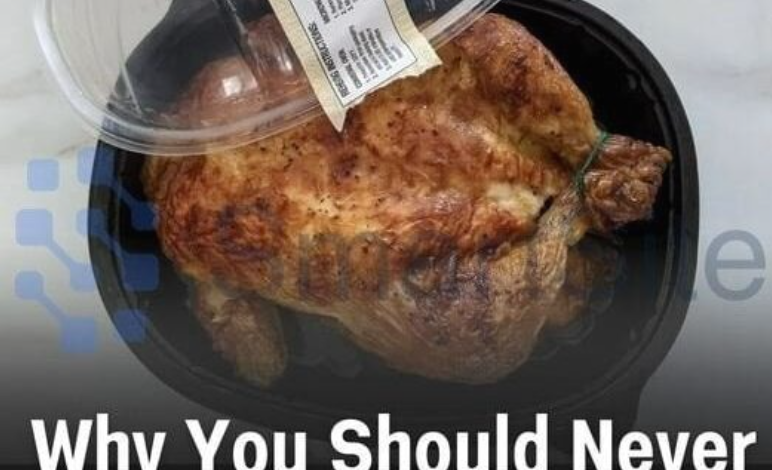
The $4.98 Illusion: Why Not All Rotisserie Chickens Are Equal
In today’s inflation-driven grocery landscape, the rotisserie chicken has become a weeknight survival tool. It’s affordable, ready to eat, and versatile enough to stretch into soups, tacos, salads, and casseroles. For many families, it’s the backbone of a quick dinner plan.
But in 2026, not all $4.98 chickens deliver the same value.
The Weight Problem
At first glance, Walmart’s $4.98 rotisserie chicken feels like a win. It’s hot, convenient, and budget-friendly. But look closer at the label: the average bird weighs about 1 pound 13 ounces—under two pounds total.
By comparison, both Sam’s Club and Costco sell rotisserie chickens for roughly the same price—but theirs typically weigh around 3 pounds.
That’s a substantial difference. For the same five dollars, warehouse clubs often provide close to 40% more product. For a family of four, that can mean the difference between:
- One single dinner
vs. - Dinner plus leftovers for lunch or a second meal
In an inflation-heavy economy, ounces matter.
Yield Equals Real Value
The true value of a rotisserie chicken isn’t just the sticker price—it’s how many meals you can extract from it.
A nearly two-pound bird may barely cover one dinner. A three-pound bird can stretch into:
- Chicken salad the next day
- Tacos or enchiladas
- Soup made from the carcass
- Sandwiches for lunch
When you calculate cost per usable meal, the warehouse option often wins decisively.
Quality and Consistency
Beyond size, consumer reviews frequently describe Walmart’s chickens as inconsistent—sometimes dry, sometimes unevenly cooked, occasionally overly salty. High-volume deli operations can struggle with uniform roasting.
By contrast, Costco’s rotisserie chicken has developed a reputation for consistency and juiciness. Its larger size often allows for more even cooking, and many shoppers report better seasoning balance.
That consistency is part of why Costco treats its $4.99 chicken as a strategic loss leader—it draws customers in, confident they’ll purchase other items.
The Sodium Factor
Most rotisserie chickens across retailers are injected with saline solution to retain moisture. That’s standard industry practice. However, in smaller birds, the salt concentration can taste more pronounced.
For families monitoring sodium intake, flavor balance matters. Larger birds sometimes distribute seasoning more evenly, producing a cleaner taste experience.
Supply Chain Strategy
The difference often comes down to business model.
Warehouse clubs like Sam’s Club and Costco rely on:
- High membership revenue
- Bulk purchasing power
- Rapid inventory turnover
That structure allows them to sell larger chickens at aggressive pricing.
Traditional retailers like Walmart operate on thinner per-item margins across a broader inventory mix, and deli operations vary by location.
The Bottom Line
Walmart’s rotisserie chicken isn’t “bad.” It’s convenient, widely available, and inexpensive.
But if you’re evaluating value per pound, warehouse clubs consistently offer more product for the same price.
In a grocery environment shaped by rising costs, smarter shopping isn’t about spending less at checkout—it’s about extracting more value from every purchase.
When two birds cost the same, but one weighs a full pound more, the decision becomes less about brand loyalty and more about math.
In 2026, inflation makes every ounce count.