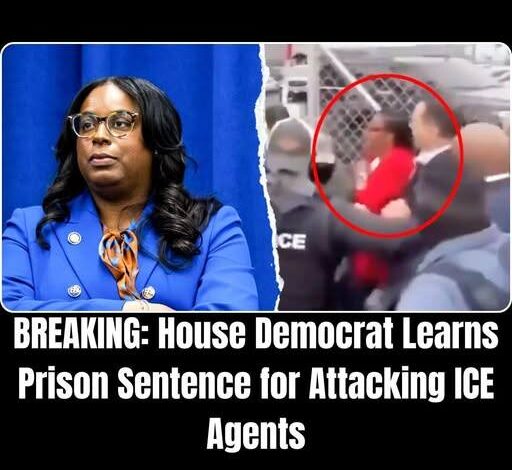
Rep. LaMonica McIver appeared in federal court on Tuesday as she continues to contest a three-count indictment accusing her of impeding and interfering with federal officers at an ICE detention facility in Newark, New Jersey, in May.
Her legal team argued that she is being selectively and politically targeted, asserting that the charges stem from her opposition to the Trump administration rather than any legitimate criminal conduct, according to CNN.
Judge Jamel Semper did not rule on McIver’s motion to dismiss the charges but expressed concern over statements posted online by the Department of Homeland Security (DHS) regarding the incident. The judge noted that “fact-free” social media posts from government officials could prejudice the public and potentially taint a future jury pool if allowed to remain accessible while the case is pending.
McIver, indicted in June, faces allegations stemming from what prosecutors claim was an attempt to physically interfere with the arrest of Newark Mayor Ras Baraka outside the facility. At the time, McIver was visiting the ICE site alongside Democratic Representatives Rob Menendez and Bonnie Watson Coleman as part of an oversight inspection connected to her work on the House Homeland Security Committee.
Defense attorneys argued that ICE staff delayed access to the lawmakers and obstructed their inspection, emphasizing that McIver was performing official legislative duties when the incident occurred. Judge Semper highlighted that some government statements contradicted the indictment, including claims that McIver had trespassed or that the event was linked to Antifa activity.
Prosecutor Mark McCarren told the court that DHS press releases related to the incident have been removed and indicated he would seek to have any remaining social media posts deleted. One post still visible on the official DHS X account described members of Congress as having “stormed” the facility gate.
During the visit, officials removed Mayor Baraka when he attempted to join the group, and he was later arrested outside for trespassing along with protesters. That charge was eventually dropped.
Prosecutors allege that McIver “slammed” her forearm into an ICE agent, grabbed him to restrain him, and struck another officer as she returned to the secure area. If the case proceeds to trial, they plan to rely on surveillance footage and body camera recordings that show a scuffle lasting slightly over one minute. The trial is currently scheduled for November 10.
McIver’s attorney, Paul Fishman, argued that her actions are protected under the Constitution’s Speech or Debate Clause because they occurred during official legislative business. Judge Semper questioned whether any alleged assault outside the facility’s gate could fall within the scope of congressional duties.
The defense described the prosecution as retaliatory and politically motivated, framing it as “part of a broader partisan effort to end ‘wokeness.’” Former President Donald Trump has also weighed in, declaring that “the days of woke are over.” Fishman contrasted McIver’s prosecution with Trump’s pardons for individuals charged in the January 6 Capitol riot, asserting that she would not have faced charges had she been aligned with the Republican Party.
Judge Semper pressed the defense on this point, noting that the other Democratic lawmakers present during the May 9 incident were not charged. Fishman responded that McIver was shoved by an ICE officer and became involved in a confrontation she did not initiate.
McIver herself addressed the situation on X, expressing concern over the potential consequences: “Hearing prosecutors say I could get 17 years in jail for showing up to do my job, for protecting the people that I represent, who have elected me to protect them—it is stressful. Some nights are sleepless, but we have to stand up for each other.”
The case has sparked attention not only for the legal questions it raises but also for its political overtones, highlighting tensions between congressional oversight responsibilities and federal law enforcement operations.