HOW DUTCH SPEED SKATER JUTTA LEERDAM’S GOLD-MEDAL VICTORY AT THE 2026 WINTER OLYMPICS IGNITED A GLOBAL CONVERSATION ABOUT FEMININITY, CRITICISM, ATHLETE IMAGE, AND AUTHENTICITY: THE UNZIPPED SUIT MOMENT, THE ONLINE BACKLASH, THE OFFICIAL RESPONSE, AND THE OLYMPIC CHAMPION’S POWERFUL MESSAGE ABOUT CONFIDENCE, IDENTITY, AND PERSEVERANCE THAT RESONATED FAR BEYOND THE ICE

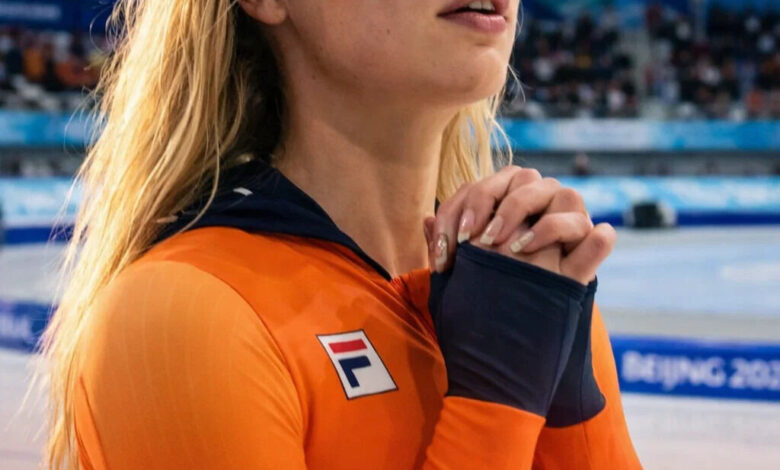
When Jutta Leerdam surged across the finish line in the women’s 1,000-meter race at the 2026 Winter Olympics, the moment carried the unmistakable weight of destiny fulfilled. At 27, Leerdam delivered a performance of pure precision and power, accelerating through the final stretch with remarkable control. The clock confirmed what the roaring arena already knew: she had won Olympic gold — and done so in record-breaking fashion.
The victory was electric. Relief, joy, and disbelief washed over her all at once, emotions visible as she slowed on the ice beneath the glare of Olympic lights. It was the kind of moment athletes spend entire careers chasing — fleeting, overwhelming, and unforgettable.
Yet, as often happens in modern sports culture, the achievement did not exist in isolation for long.
Within hours, online attention drifted away from Leerdam’s historic time and toward a brief post-race moment: the unzipping of her skin-tight racing suit. What was, in the context of speed skating, a routine and practical action — releasing heat after an intense sprint — became the subject of disproportionate scrutiny.
Social media commentary escalated quickly. Some observers questioned intent. Others speculated about visibility and branding. A few went so far as to suggest the moment was deliberate or performative. The conversation, for a time, threatened to overshadow the reality of what had just occurred on the ice.
But the criticism ultimately became the catalyst for something far more meaningful — a response from Leerdam that was measured, confident, and deeply rooted in self-assurance.
A Performance Forged Over Years
Leerdam’s gold medal was no surprise to those who follow speed skating closely. She arrived at Milan–Cortina as one of the sport’s most consistent and technically refined sprinters, shaped by years of relentless training and international competition. Still, expectations can weigh heavily, especially on athletes labeled as favorites.
The 1,000 meters demands a rare balance: explosive speed paired with intelligent pacing. One misjudged push can cost everything. Leerdam executed her race flawlessly, unleashing her power at precisely the right moment and separating herself decisively from the field.
Her reaction after crossing the line — hand to her face, eyes filling — revealed the human reality behind the elite performance. It was not just a win. It was validation.
A Routine Moment, Reframed Online
As she glided to a stop, Leerdam unzipped her racing suit, revealing a sports bra beneath — a common practice among speed skaters after high-intensity races. The suits are designed to be extremely tight for aerodynamic efficiency, and opening them allows the body to cool and recover.
Despite this context, screenshots and short clips spread rapidly. Commentary fractured into familiar camps:
Supporters celebrated her dominance and emotional authenticity.
Critics questioned optics and professionalism.
Others speculated about sponsorship exposure, pointing to the visible Nike logo.
Speed skating officials were quick to clarify: the action was entirely normal, rule-compliant, and carried no disciplinary implications. There was no evidence of marketing intent — only an athlete responding instinctively after a grueling race.
Still, the episode exposed a recurring double standard. Male athletes regularly celebrate shirtless or visibly exhausted without question. Female athletes, by contrast, often find their appearance scrutinized more intensely than their performance.
Reclaiming the Narrative
Rather than allow speculation to define the moment, Leerdam addressed it directly on Instagram. She shared an image from immediately after her victory and reflected openly on the criticism she has encountered throughout her career — not just about that moment, but about her makeup, her style, and her signature winged eyeliner.
She acknowledged that she has long been told she looks “too polished” for an elite athlete, as if personal expression and competitive excellence were mutually exclusive. Her response was simple and resolute: those choices give her confidence. Confidence, in turn, fuels performance.
Leerdam made clear that embracing her identity has never distracted her from success — it has strengthened her focus. Her words resonated widely, drawing praise for their honesty and composure.
Strength and Femininity Are Not Opposites
The conversation surrounding Leerdam’s win highlighted a broader issue in sports culture. Female athletes are often expected to embody physical power while simultaneously limiting expressions of femininity to avoid criticism. It is a balance few male athletes are ever asked to consider.
Leerdam rejected that premise outright. She emphasized that strength and femininity coexist naturally — on the ice and beyond it. Her stance aligned with a growing number of women in elite sports who challenge outdated norms and advocate for authenticity without apology.
Beyond the Noise
In the end, the online debate faded, as it always does. What remains is the result.
On that day, Jutta Leerdam was the fastest woman in the world.
Her gold medal was earned through discipline, sacrifice, and mastery of her craft. No commentary, no speculation, and no fleeting controversy can alter that reality.
Her performance will be remembered for its speed, precision, and emotional power — and for reinforcing an enduring truth in sport: excellence does not require conformity.
What endures is not an unzipped suit, but a champion who skated without hesitation, celebrated without restraint, and spoke with clarity when it mattered most.
And that, ultimately, is the legacy that lasts.