HOW ONE DEATH ROW INMATE’S OUTRAGEOUS LAST-MEAL REQUEST ENDED A CENTURIES-OLD TRADITION IN TEXAS: THE CONTROVERSIAL CASE OF LAWRENCE RUSSELL BREWER, THE NATIONAL RECKONING THAT FOLLOWED, AND THE DEBATE THAT STILL DIVIDES AMERICA OVER JUSTICE, DIGNITY, AND FINAL HUMAN RIGHTS

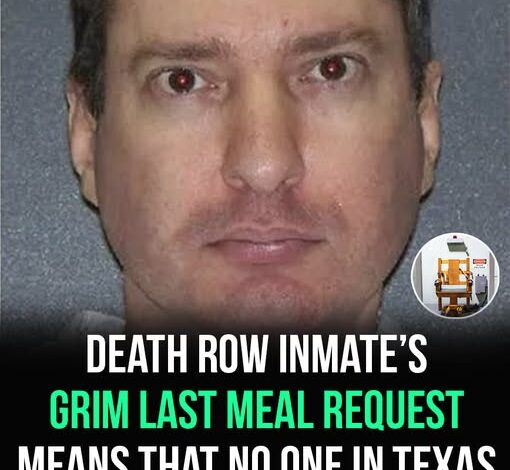
For decades, the idea of a “last meal” before execution occupied a peculiar corner of American culture — a blend of ritual, morbid curiosity, and occasional compassion. In Texas, a state long synonymous with capital punishment, the tradition was firmly entrenched. Condemned inmates were allowed to request a final meal, within practical limits, as a symbolic gesture acknowledging their humanity before the end.
But in 2011, one inmate’s request — and his choice to reject it — changed the practice forever.
A Crime That Shook Texas and the Nation
Lawrence Russell Brewer’s name is tied to one of the most horrific hate crimes in recent U.S. history. In 1998, Brewer and two accomplices brutally murdered James Byrd Jr., a Black man in Jasper, Texas, in a racially motivated attack that shocked the nation. The crime prompted deep reflection on hate crimes, justice, and racial violence, and ultimately contributed to the passage of the James Byrd Jr. Hate Crimes Act in 2009, expanding federal powers to prosecute bias-driven offenses.
Brewer was sentenced to death. His accomplices received separate sentences — one also receiving a death sentence, and another sentenced to life imprisonment.
More than a decade later, in September 2011, Brewer’s execution date arrived — and unexpectedly, his last meal became a national flashpoint.
The Tradition of the “Last Meal”
Across cultures and centuries, final meals have been offered to the condemned as a ritual acknowledging humanity, closure, or spiritual readiness. In the United States, the practice took on its own folklore, especially in Texas. Requests ranged from simple comfort foods — fried chicken, hamburgers, breakfast items — to extravagant spreads, often reflecting personal nostalgia or cravings. Some inmates declined the meal entirely.
Prison regulations required meals to be feasible given available ingredients, and extravagant requests were often adapted or replaced with practical alternatives. Most were modest and symbolic, a quiet gesture in the shadow of execution.
The Meal That Ended a Tradition
Brewer’s request, however, was unlike any Texas officials had seen. Reports, including coverage by the Houston Chronicle, indicate that he asked for an unusually large selection — multiple entrées, sides, and desserts, far exceeding the typical order. Staff prepared everything according to procedure.
But when the trays were delivered, Brewer refused to eat any of it, reportedly telling prison officials he was not hungry. The food was discarded.
The refusal was widely seen as provocative, disrespectful, and wasteful. It outraged public officials, particularly Texas State Senator John Whitmire, chair of the Senate Criminal Justice Committee.
“Enough Is Enough”
Whitmire responded immediately, writing to Brad Livingston, executive director of the Texas Department of Criminal Justice (TDCJ), declaring that the tradition had gone too far.
“It is extremely inappropriate to give a person sentenced to death such a privilege,” he wrote. “Enough is enough.”
Within hours, the TDCJ implemented the change. On September 21, 2011, the practice of allowing death row inmates to select a last meal officially ended. From that point forward, condemned prisoners would receive only the standard prison cafeteria fare. Texas remains the most prominent state to eliminate the tradition entirely.
Public Reaction
The decision ignited a heated debate. Supporters argued that lavish, taxpayer-funded meals were inappropriate, sometimes exploited, and could be disrespectful to victims’ families. Critics countered that last meals were a humane tradition, a small gesture of dignity in a system defined by irrevocable punishment, and that the policy change was a reaction to a single, high-profile case.
Brian Price, a restaurant owner who volunteered for years to prepare last meals, became a vocal critic of the policy change. He noted that most requests were modestly scaled down and that prison kitchens could not fulfill extravagant orders anyway. Price, who later authored Meals to Die For, emphasized that the tradition added solemnity to the execution process rather than indulgence.
A Turning Point in Policy and Culture
Brewer’s uneaten meal marked a significant policy shift, a collision between ritual, public outrage, and political action. It prompted wider reflection on the purpose of last meals: were they gestures of humanity or relics of an outdated system?
When Brewer was executed by lethal injection on September 21, 2011, he offered no final words. Yet the conversation around last meals and the ethics of capital punishment continued across newsrooms, social media, and legislative discussions.
The Legacy
More than a decade later, Texas still serves standard cafeteria meals to death row inmates on execution day. Brewer’s final-meal episode remains a stark example of how a single act — in this case, refusing to eat — can influence statewide policy.
The story underscores a broader philosophical debate: should last meals exist at all? Across the U.S., practices vary — some states allow modest choices, others never have, and some have quietly phased them out. Questions remain about justice, mercy, and dignity, and the extent to which rituals shaped by history should persist in modern policy.
In the end, Lawrence Russell Brewer’s uneaten tray of food stands as one of the most consequential last meals in American history — not for its taste, but for the profound change it inspired.