I Adopted Twins with Disabilities After I Found Them on the Street – 12 Years Later, I Nearly Dropped the Phone When I Learned What They Did

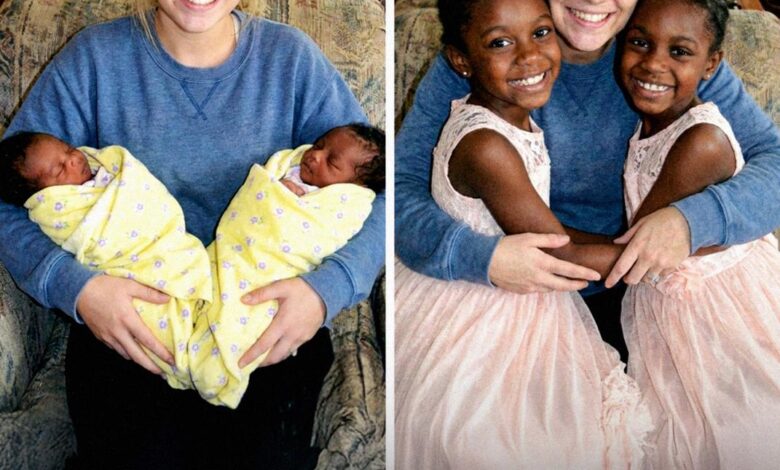
Twelve years ago, during my 5 a.m. trash route, I found abandoned twin babies in a stroller on a frozen sidewalk and ended up becoming their mom. I thought the wildest part of our story was how we found each other—until a phone call this year proved me very, very wrong.
I’m 41 now, but twelve years ago, my life flipped on a random Tuesday at 5 a.m.
I work sanitation — I drive one of those big trash trucks.
At home, my husband, Steven, was recovering from surgery. I’d changed his bandages, fed him, kissed his forehead.
“Text me if you need anything,” I said.
He tried to grin. “Go save the city from banana peels, Abbie.”
Life was simple then. Exhausting, yes, but simple. Just me, Steven, our tiny house, our bills, and quiet nights.
That’s when I saw the stroller.
No children. Just a space where we longed to have them.
I turned onto one of my usual streets, humming along to the radio. And there it was.
The stroller. Just sitting there in the middle of the sidewalk. Not by a house. Not near a car. Just… abandoned.
My stomach dropped.
I slammed the truck into park and turned on the hazards. My heart was racing by the time I reached it.
Two tiny babies. Twin girls. Maybe six months old. Curled under mismatched blankets, cheeks pink from the cold.
They were breathing. I could see little puffs of air in the frigid morning.
I looked around, panicked.
“Where’s your mom?” I whispered.
No one. No doors opening. No voices calling.
One of them opened her eyes and stared right at me.
I checked the diaper bag — half a can of formula, a couple of diapers. No note. No ID. Nothing.
My hands shook.
I called 911.
“Hi… I’m on my trash route,” I said, my voice trembling. “There’s a stroller with two babies. They’re alone. It’s freezing.”
The dispatcher’s tone shifted immediately.
“Stay with them,” she said. “Police and CPS are on the way. Are they breathing?”
“Yes,” I whispered. “But they’re so small. I don’t know how long they’ve been out here.”
I moved the stroller next to a brick wall, out of the wind, and knocked on doors. Nothing. Lights on, curtains twitching, but no one willing to open.
So I sat. On the curb. Next to them.
“It’s okay,” I murmured. “You’re not alone anymore. I’m here. I won’t leave.”
When the police and CPS arrived, my chest ached as the social worker lifted a baby on each hip and carried them to her car.
“Where are they going?” I asked, my voice tight.
“To a temporary foster home,” she said. “We’ll try to find family. They’ll be safe tonight.”
The stroller sat empty. My breath fogged in the air. Something in me cracked open.
All day, their little faces haunted me.
That night, I pushed my dinner around until Steven noticed.
“Okay,” he said. “What happened? You’ve been somewhere else all night.”
I told him everything.
“I can’t stop thinking about them,” I admitted. “They’re just… out there. What if no one takes care of them? What if they get split up?”
He reached for my hand.
“What if we tried to foster them?”
I laughed nervously. “Steven… they’re twins. Babies. We’re barely keeping up now.”
“You already love them,” he said. “I can see it. Let’s at least ask.”
That night, we cried, talked, planned, panicked.
The next day, I called CPS. Home visits, questions about our marriage, our income, our childhoods, our fridge — every detail.
A week later, the social worker sat on our beat-up couch.
“There’s something you need to know about the twins,” she said.
“They’re deaf,” she said gently. “Profoundly. They’ll need early intervention — sign language, specialized support. Some families decline when they hear that.”
I didn’t hesitate. “I don’t care. Someone left them on a sidewalk. We’ll learn whatever we need.”
Steven nodded. “We still want them,” he said.
That was the beginning.
Chaos followed.
They came to us a week later — two car seats, two diaper bags, two wide curious eyes.
“We’re calling them Hannah and Diana,” I signed, hands shaking.
The first months were a blur. Noisy, sleepless, learning ASL from scratch. We watched videos, practiced signs in the bathroom mirror before work. “Milk. More. Sleep. Mom. Dad.” Clumsy fingers, repeated over and over.
Money was tight. We picked up extra shifts. We bought secondhand clothes. Exhaustion weighed on us, but happiness — pure, raw — filled every corner of our hearts.
Their first birthday was unforgettable. When Hannah signed “Mom” and Diana copied her proudly, Steven and I nearly passed out from joy.
People stared when we signed in public. One woman finally asked, “What’s wrong with them?”
“Nothing,” I signed firmly. “They’re deaf, not broken.”
Years passed. School projects. Interpreter battles. Advocacy. Hannah loved drawing, Diana loved building. Together, they created private sign languages, silent giggles, shared worlds.
By twelve, they were unstoppable. For a school contest, they designed adaptive clothing for kids like them — pants with side zippers, shirts that didn’t tug on hearing aids, bright designs that didn’t scream “special needs.”
We were proud. But even we didn’t expect the call from BrightSteps.
“Hi, Mrs. Lester,” a woman said. “We want to develop a real clothing line based on your daughters’ designs. Paid collaboration. Royalties projected over $500,000.”
I sank into the chair. “They… my girls? Hannah and Diana?”
“Yes,” she said. “We want them fully involved, with interpreters, of course.”
I told Steven. He froze. Then we laughed and cried together, hugging.
When Hannah and Diana came home, they were hungry and tired. I told them the news.
Their eyes widened. “WHAT?!” they signed, shouting in unison.
“Because you thought about kids like you,” I signed. “You made life better for other kids. That’s huge.”
They hugged me. I hugged them. “I promised myself I wouldn’t leave you,” I signed. “I found you in a stroller on a cold sidewalk. I meant it. Deaf, hearing, rich, broke — I’m your mom.”
That night, after the house was quiet, I sat alone, scrolling through old baby photos. Two tiny girls, abandoned in the cold. Those girls had saved me as much as I had saved them.
Now, they’re strong teens, creating, learning, changing the world — and I get to watch.
People say, “You saved them.”
They have no idea.
Those girls saved me right back.