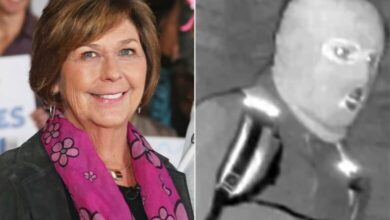
Inside the Explosive Backlash Against Erika Kirk as Leaked Audio of Her Giggling After Husband Charlie Kirk’s Assassination Sends Shockwaves Through Conservative Circles, Fuels Public Outrage, Sparks Conspiracy Theories, and Raises Painful Questions About Grief, Leadership, Loyalty, and the High-Pressure Politics of the Post-September 2025 TPUSA Crisis


When Erika Kirk stepped into public view following the assassination of her husband, Turning Point USA founder Charlie Kirk, she entered a political landscape already trembling with grief, fury, and confusion. But when leaked audio surfaced featuring Erika giggling and discussing organizational “wins” only days after Charlie’s death, the reaction was explosive—igniting controversy across the conservative movement and beyond.
The leaked clip, shared online by commentator Candace Owens and picked up by mainstream outlets, turned an already emotional situation into a firestorm of accusation, speculation, and intense debate about how grief should look—especially for a widow suddenly placed at the helm of a national political organization.
The controversy continues to unfold, testing alliances, dividing audiences, and raising uncomfortable questions about loyalty, authenticity, and the expectations placed on those who grieve in public.
A Devastating Loss Under a National Spotlight
Charlie Kirk’s assassination on September 10, 2025, at Utah Valley University shocked the country. The sniper attack—still shrouded in mystery, with the perpetrator unidentified in some accounts—instantly transformed Erika Kirk from a behind-the-scenes partner into the central figure responsible for maintaining the movement Charlie helped build.
Turning Point USA was thrown into crisis mode. Staff members looked to Erika for reassurance not only as Charlie’s widow but as their new leader. Supporters sought updates. Media outlets descended. Political operatives pushed narratives. Critics speculated about motives. And in the midst of it all, Erika faced the unimaginable: grieving her husband while stepping into his role almost overnight.
It was in this intense environment that Erika joined an internal TPUSA Zoom call around 5 to 12 days after Charlie’s death, depending on the source. On that call, she briefly giggled while discussing several positive outcomes from Charlie’s memorial service. When that audio leaked months later, what might have been an ordinary moment in a private staff meeting became a national controversy.
What the Leaked Audio Revealed
In the audio, Erika is heard talking to TPUSA employees about the memorial. Her tone, cheerful and energetic, struck many listeners as jarring given the recency of Charlie’s death. The details she celebrated included:
The enormous size of the crowd attending Charlie’s memorial
Strong merchandise sales and high engagement during the event
The moment’s significance—or, as one report paraphrased, its feeling like the “event of the century”
She also reassured staff that the organization was strong, that their jobs were secure, and that they were “family.” In isolation, these comments sound motivational. But paired with the giggling, the upbeat tone, and the timing, critics felt it crossed a line.
Candace Owens, who posted the leaked clip, sharpened the criticism. She commented:
“It is the general tone that is off-putting. It is the laughter that is off-putting. We are not even two weeks after watching your husband be assassinated.”
Owens’ framing all but guaranteed the clip would go viral—and it did.
A Surge of Online Backlash
Once released, the audio raced across Reddit, Instagram, TikTok, X/Twitter, YouTube, conservative forums, and mainstream news outlets. Comment sections filled instantly with accusations and concerns:
“This is almost sociopathic.”
“She’s grifting off her husband’s death.”
“Something about this feels off.”
“How could she laugh? How could she talk merch?”
“This fuels every conspiracy theory about Charlie’s death.”
Some speculated she seemed too cheerful—too prepared, too composed, too focused on metrics to be sincerely grieving. Others blamed the audio for confirming pre-existing suspicions about the organization’s motives or leadership structure.
Even within conservative media, reactions were divided. Owens, whose relationship with TPUSA has ebbed and flowed over the years, leaned into the controversy, sharing theories and narratives that had long circulated quietly on the edges of right-wing circles.
The Conspiracy Theories Spread Quickly
Whenever a public figure dies suddenly—especially by assassination—conspiracy theories follow. In this case, the leaked audio poured gasoline on a fire already smoldering beneath the surface.
Speculative questions spread rapidly:
Why was Erika laughing?
How could she be discussing metrics so soon?
Was she always intended to take over TPUSA?
Did she stand to benefit organizationally or financially?
Why wasn’t she more emotional?
Why did Candace Owens release the clip now?
Some theories went further—far beyond anything supported by evidence—suggesting ulterior motives, internal TPUSA conflicts, or even foul play. These speculations circulated widely on platforms known for fueling sensational theories.
No credible reports support such narratives, but the combination of grief, politics, power, and public visibility created fertile ground for suspicion. In today’s digital world, optics often eclipse facts. A single out-of-context audio clip can overshadow days, weeks, or months of private pain.
The Case for Erika’s Defense: Grief Takes Many Forms
Despite the backlash, many people stepped forward in Erika’s defense, arguing that the criticism was unfair, harmful, and rooted in misunderstanding how different people process trauma.
Supporters pointed out several key realities:
- People laugh during grief.
It is extremely common for widows, trauma survivors, and those in shock to laugh, giggle, or appear detached.
Psychologists refer to this as incongruent affect—a stress response, not a lack of emotion.
- Erika was suddenly responsible for a major national organization.
At the moment of the Zoom call, TPUSA employees were looking to her for:
Stability
Direction
Reassurance
She may have believed that presenting strength—even cheerfulness—was necessary to keep the organization from collapsing.
- The call was internal, not public.
In theory, it was aimed at motivating staff, not inspiring the nation or performing grief.
- A memorial event is something organizers often evaluate.
Large gatherings require logistics, metrics, and planning. Discussing outcomes doesn’t negate personal loss.
- Private grief may look very different from public presentation.
No one outside her inner circle knows:
How she cried
How she struggled
How she survived the days after the assassination
Many defenders argued the audio represented one moment out of thousands—a sliver of a much larger, much more painful experience.
Why the Clip Hit a Nerve
The controversy extends beyond Erika herself. It touches deeper cultural tensions:
- Public expectations of widowhood
Society tends to have a rigid script for what grief should look like—somber, quiet, devastated. Anything outside that mold triggers suspicion, especially when the grieving person is a public figure.
- Distrust of political organizations
Many Americans—both left and right—are suspicious of nonprofit political groups, especially those tied to fundraising, merchandise, and branding. That made Erika’s comments about engagement metrics feel opportunistic to critics.
- The influence of Candace Owens
Owens releasing the clip carried heavy weight. She has a massive audience and a strong track record of shaping conservative controversies. Her framing shaped the public response.
- TPUSA’s complicated reputation
As a polarizing organization, TPUSA already attracts intense scrutiny. Any controversy from its leadership spreads quickly.
A Power Vacuum and a Leadership Transition
Charlie Kirk was not just a political figure—he was the face, engine, strategist, and identity of TPUSA. The organization was built around him. His sudden death created a massive vacuum.
Erika stepped into that vacuum in a moment of chaos.
The expectations were enormous. The pressure was unimaginable. The timeline was brutal.
For some critics, the leaked audio symbolized a leader stepping into power too quickly, too enthusiastically. For supporters, it showed a woman rising in a moment of crisis with courage and determination.
The Role of Candace Owens: Exposing or Exploiting?
Candace Owens’ decision to release the audio sparked its own debate. Was she:
Defending Charlie’s legacy?
Calling out inappropriate behavior?
Settling personal or political scores within the conservative movement?
Seeking media attention?
Believing the public had a right to hear the clip?
Her commentary was sharp:
“It is the laughter that is off-putting.”
Owens’ influence guaranteed that the clip would spread far beyond private conservative circles. Critics suspect ulterior motives. Supporters praise her for courage. Neutral observers note the long history of friction between Owens and TPUSA leadership.
Media Coverage and Escalation
Beginning in early 2026, outlets across the political spectrum picked up the story:
Yahoo
Radar Online
BuzzFeed
Bored Panda
Parade
Numerous political commentary channels
The coverage often amplified the most shocking interpretations while burying nuance.
As with many scandals, repetition created perception. The more the clip was discussed, the more damaging it became, regardless of context.
Where Things Stand Now
As of early 2026:
No significant new developments have emerged.
Erika continues leading TPUSA.
The assassin remains unidentified in many accounts.
The audio remains a source of speculation and division.
The controversy has become a case study in public grief and political optics.
Some believe Erika will recover from the backlash. Others think the clip permanently damaged her credibility.
Either way, the incident shows how fragile public perception can be—and how ruthlessly grief, power, and politics intersect.
A Larger Conversation About Grief in the Public Eye
The deeper issue is not about Erika alone. It is about the expectations placed on public figures who experience trauma while holding positions of leadership.
Is a grieving widow allowed to smile?
To motivate staff?
To talk logistics?
To compartmentalize?
To lead?
The leak raises these questions and more:
Does society punish women more harshly for “imperfect” grief?
Do political organizations demand emotional suppression?
Is public mourning inherently performative?
Are we confusing optics with authenticity?
There are no easy answers.
Conclusion
The leaked audio of Erika Kirk giggling after Charlie Kirk’s assassination became far more than a simple moment taken out of context. It became a symbol—one interpreted differently by every listener depending on their politics, their views on TPUSA, their understanding of grief, and their trust in public figures.
Some hear callousness.
Some hear courage.
Some hear awkward grief.
Some hear cynical opportunism.
Some hear a woman thrust into a role she never asked for.
What remains undeniable is this:
One brief recording has reshaped the public conversation about Erika Kirk, TPUSA, and the political and emotional fallout of one of the most shocking assassinations in recent American memory.
The debate is not over.
And the country is still listening.
change the text but stay in conext