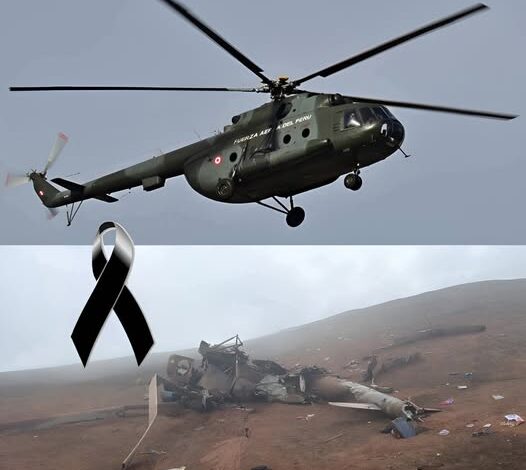
On the morning of March 2, 2026, the precision and resilience that define military aviation were shattered by a catastrophic incident involving a large transport helicopter. Early reports indicate a sudden mechanical failure led to a crash in a remote, unforgiving terrain, leaving the defense community in a somber vigil. Witnesses described a terrifying sequence in which a machine built to endure the harshest conditions became helpless mid-air in seconds. Emergency responders are now navigating a debris field that reflects the violence of the descent.
A Sudden, Critical Failure
The crash occurred in an isolated area, complicating rescue efforts. Social media images captured the helicopter flying unusually low just before impact. Analysts are now reviewing whether this was an emergency maneuver or a symptom of total lift loss. Subsequent photos of the wreckage reveal a fuselage largely destroyed, with debris scattered across parched earth. Black ribbon graphics on military forums hint at widespread fear that lives were lost, though official casualty confirmation awaits next-of-kin notification.
In large military transport helicopters—such as the CH-47 Chinook or CH-53 King Stallion—a sudden failure can be catastrophic despite extensive redundancies. A malfunction in the main rotor gearbox, a tail rotor failure, or an engine surge can render an aircraft uncontrollable. The barren terrain at the crash site left minimal opportunity for a survivable impact.
The Investigative Process
As operations transition from search and rescue to recovery and investigation, a formal Aviation Mishap Board (AMB) will be convened. The board will examine maintenance records, focusing on potential recurring issues with the transmission, engines, or fuel systems. Modern helicopters also record thousands of flight data points per second. If the Flight Data Recorder can be recovered, investigators will reconstruct the final minutes, analyzing engine RPMs, rotor pitch, pilot inputs, and environmental factors such as microbursts or foreign object ingestion.
Strategic and Emotional Consequences
Beyond the financial cost of a multi-million-dollar airframe, the true impact is felt within the unit and among families. Transport helicopters are the military’s “workhorses,” carrying troops and supplies vital to every mission. A mechanical failure can ripple across the fleet, potentially grounding aircraft and affecting operational readiness at a time of heightened regional tension.
Military officials have urged restraint in public speculation, highlighting the harm caused by misinformation. Families of service members live under constant stress, and early social media posts can exacerbate that anxiety before official notifications occur. Transitioning from search-and-rescue to recovery is an emotionally heavy process for base personnel.
Conclusion: The High Cost of Service
As night falls over the crash site, recovery teams continue their work under portable lights. The silence of the desert contrasts starkly with the rotor roar from just hours earlier. This incident is a grim reminder that danger in military aviation is not confined to combat zones—it exists in the daily, routine missions that sustain operational readiness.
The helicopter’s sudden descent leaves a void in a community intimately familiar with the risks of flight. While the fuselage lies in ruins, the memory of those on board and their dedication endures. The formal investigation will ultimately reveal the sequence of events, but the emotional and operational impact will be felt long after the wreckage is cleared. Families, first responders, and fellow service members remain at the center of attention, embodying quiet resilience in the face of tragedy.