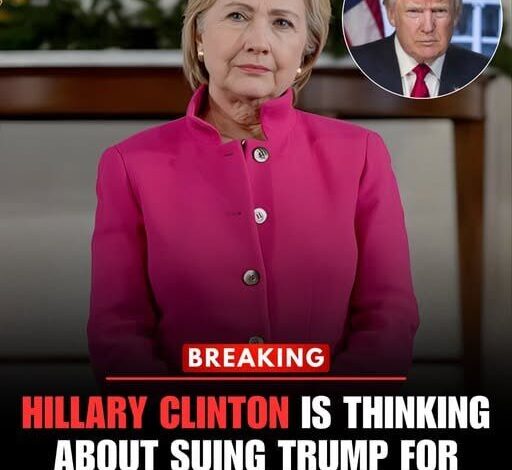
Recent commentary has once again brought Hillary Clinton into the spotlight, prompted by renewed discussion of remarks made over the years by Donald Trump. The resurfacing of these statements comes amid ongoing political analysis and media reflection, illustrating how comments made by prominent figures can continue to resonate long after they were first delivered.
According to media reports, individuals close to Clinton suggest that the repetition of past allegations may have inflicted lasting damage on her public image. These concerns extend beyond partisan rivalry, touching on how continued circulation of such claims can shape public perception, influence professional opportunities, and ultimately affect her historical legacy. The persistence of these narratives has kept them alive in the media cycle, intensifying debate around responsibility and the ethical boundaries of political rhetoric.
Despite the renewed attention, legal analysts caution that defamation claims involving public figures face significant obstacles. Under U.S. law, individuals with public status must meet an exceptionally high standard to prevail in such cases. Specifically, courts require proof of “actual malice,” meaning the statements must have been made with knowledge of their falsity or with reckless disregard for the truth—a threshold that goes well beyond simple inaccuracy or carelessness.
Beyond intent, plaintiffs are also required to demonstrate concrete harm resulting from the statements. This may include verifiable reputational damage, financial loss, or other measurable consequences. Legal scholars emphasize that this burden of proof is substantial, and even statements widely viewed as irresponsible or inflammatory may fail to meet the criteria established by long-standing judicial precedent.
At this stage, no lawsuit has been formally filed, nor have any court proceedings been announced. While this does not rule out future legal action, it reflects the caution typically exercised by legal teams when dealing with politically sensitive claims. For now, the issue remains primarily a matter of public discussion rather than judicial review.
The renewed focus highlights the enduring strains within American political life. It underscores how deeply polarized narratives, unresolved controversies, and long memories continue to shape national discourse. Supporters and critics alike remain attentive, demonstrating how past statements can exert influence well beyond their original moment.
Ultimately, the situation raises broader questions about accountability, the role of media amplification, and the long-term impact of political speech on personal legacy. It invites reflection on the limits of acceptable rhetoric, the responsibilities borne by public figures, and the challenges of reputation management in an era defined by constant scrutiny and entrenched division.