Republican Officials Call for Clarification After Hillary Clinton’s Testimony in Epstein Case Draws Attention


New developments involving Hillary Rodham Clinton and her closed-door deposition before the U.S. House Committee on Oversight and Accountability have fueled renewed public debate over transparency, credibility, and the broader effort to examine the legacy of convicted sex offender Jeffrey Epstein.
The former Secretary of State testified under oath as part of the committee’s ongoing review into matters connected to Epstein’s criminal activities, his extensive social network, and the institutional breakdowns that allowed him to evade sustained accountability for years prior to federal prosecution. While Clinton has not been accused of criminal wrongdoing in relation to Epstein’s offenses, her appearance has drawn significant political and media scrutiny amid heightened congressional interest in understanding how influential figures intersected with Epstein’s sphere.
The deposition itself was conducted privately, consistent with standard investigative procedures, but its existence has intensified calls from various political factions for greater disclosure of testimony, documents, and internal communications tied to the case. Supporters argue that transparency is essential to restoring public trust in institutions. Critics caution that selective leaks or partisan framing could distort facts and undermine due process.
This moment has reignited broader national conversations about accountability mechanisms for powerful individuals, the role of congressional oversight, and the balance between public interest and legal fairness in high-profile investigations. It also reflects continuing public sensitivity surrounding Epstein’s crimes, the individuals who associated with him, and the systemic failures that permitted abuse to persist unchecked.
As lawmakers continue their review, the focus remains on evidence, institutional responsibility, and adherence to established legal standards—issues that extend beyond any single witness and speak to the integrity of investigative processes themselves.

The United States House Committee on Oversight and Accountability, chaired by James Comer, has characterized its review of matters connected to Jeffrey Epstein as part of its broader mandate to conduct congressional oversight and promote public accountability.
Oversight committees in Congress routinely evaluate whether federal agencies, correctional institutions, and related systems operated properly—particularly in cases that draw significant national attention. Such reviews typically examine procedural failures, interagency coordination, and whether existing safeguards functioned as intended.
Epstein, a financier known for cultivating relationships across political, academic, and business circles, was arrested in 2019 on federal sex trafficking charges. He died later that year while in federal custody awaiting trial. His death intensified scrutiny over institutional safeguards within the federal detention system.
His longtime associate, Ghislaine Maxwell, was convicted in 2021 of sex trafficking and related offenses for recruiting and grooming underage girls for Epstein. Her conviction marked one of the most consequential legal outcomes tied to the broader investigation.
According to lawmakers, the committee’s review seeks to better understand how Epstein sustained relationships with prominent individuals and whether institutional gaps—legal, regulatory, or procedural—contributed to delays in justice. Members have emphasized that the inquiry is focused on systemic accountability and victim protection, rather than making unsupported allegations against individuals without evidence.
The broader discussion continues to center on institutional transparency, due process, and ensuring that failures which enabled abuse are thoroughly examined and addressed.
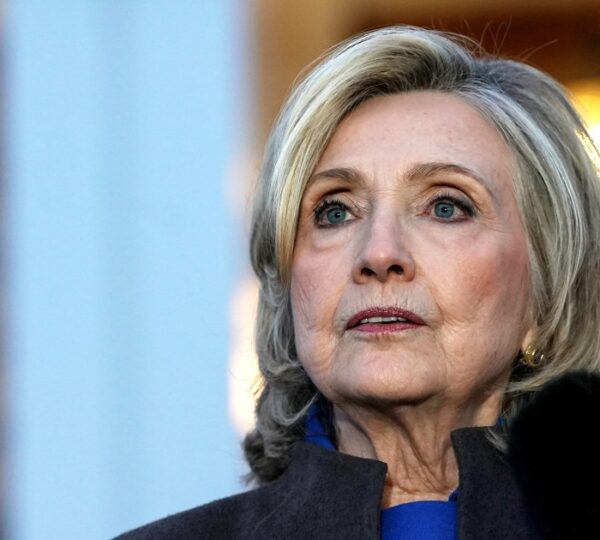
Hillary Clinton—who served as U.S. Secretary of State from 2009 to 2013 and was the Democratic nominee for president in 2016—appeared before investigators for a transcribed, closed-door deposition.
Such private sessions are a routine feature of congressional investigations, particularly when testimony may involve sensitive matters, classified issues, or legally protected information. Committees often rely on this format to gather detailed accounts before determining whether public hearings are warranted.
In the days leading up to her testimony, Clinton voiced reservations about the closed format. In media interviews, she argued that open hearings offer greater transparency by allowing the public to hear testimony directly rather than through summaries or leaks. She suggested that televised proceedings can reduce speculation and minimize the risk of selective disclosure of testimony taken out of context.
Substantively, Clinton’s position has remained unchanged. She has stated that she does not recall having a relationship with Jeffrey Epstein, does not remember traveling on his aircraft, and was unaware of his criminal conduct at the time. Public reporting to date has not produced verified evidence linking her to Epstein’s crimes, and she has not been charged with any offense connected to his activities.
It is also notable that no Epstein survivor has publicly accused Clinton of wrongdoing, and no criminal allegations related to Epstein’s conduct have been brought against her.
Republican Response and Questions About Recollection
Following the deposition, some Republican members of the committee described Clinton’s testimony as cautious and heavily qualified, raising questions about the extent of her recollections. These characterizations have fueled partisan debate, with supporters emphasizing the lack of evidence against her and critics arguing that memory gaps warrant further scrutiny.
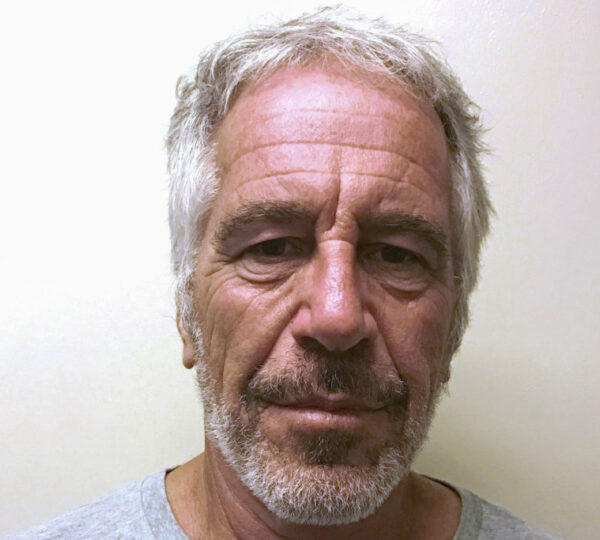
John McGuire, a Republican member of the oversight committee, stated publicly that Clinton frequently relied on phrases such as “not that I recall” or “not that I know” when responding to certain questions during her deposition. Such language is widely recognized as common in legal and investigative settings, particularly in sworn testimony, where witnesses are advised to answer narrowly, avoid speculation, and remain within the limits of their actual recollection.
In depositions, the use of qualifiers is often considered a safeguard for accuracy—especially when testimony concerns events that may have taken place many years earlier. Attorneys routinely counsel witnesses to frame answers carefully to prevent inadvertent misstatements.
Critics, however, argue that repeated reliance on memory-based qualifiers can give the appearance of evasiveness, particularly when the witness is a veteran public official with decades of experience in senior government roles. Supporters counter that this careful phrasing reflects responsible testimony rather than an effort to avoid accountability.
McGuire also voiced skepticism regarding Clinton’s statements about the timing and extent of any indirect association between her husband, Bill Clinton, and Jeffrey Epstein.
Bill Clinton has previously acknowledged traveling aboard Epstein’s aircraft on several occasions in the early 2000s, while maintaining that he was unaware of Epstein’s criminal conduct at the time. He has not been charged with any crime related to Epstein. Publicly available flight records confirm that those trips occurred prior to Epstein’s 2008 Florida conviction. There is no verified evidence that Hillary Clinton participated in any of those flights.
The Transparency Debate: Public Hearing vs. Closed Deposition
A central point of contention surrounding the testimony has been its format. Clinton has argued that if Congress is genuinely pursuing transparency, public hearings are preferable to closed-door depositions. She has stated that televised proceedings allow the public to directly assess demeanor, context, and complete answers, rather than relying on secondhand summaries or selective disclosures that can shape narratives without full context.
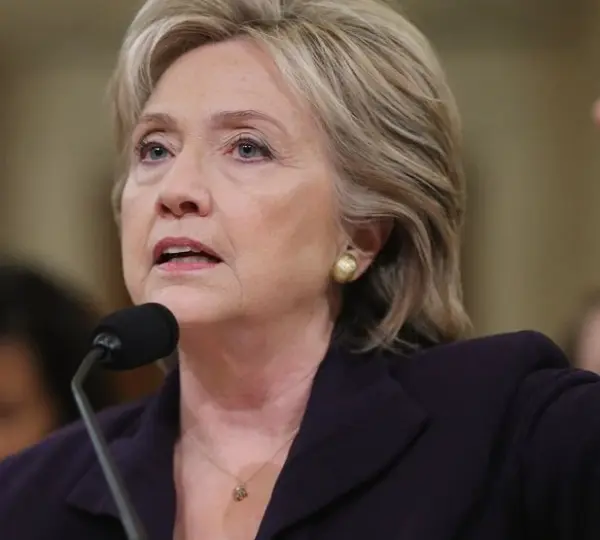
Committee leadership has emphasized that transcribed, closed-door depositions are a standard investigative tool of the United States House Committee on Oversight and Accountability. Lawmakers frequently begin with private interviews to collect detailed testimony, compare accounts, and identify areas requiring further inquiry before determining whether public hearings are appropriate.
Both formats have long-standing precedent. Closed sessions can limit political grandstanding and safeguard sensitive or legally protected material. Public hearings, by contrast, provide visibility and allow citizens to observe testimony firsthand. The tension between investigative efficiency and public transparency is not unique to this case; it has characterized congressional inquiries across administrations of both parties.
The Broader Epstein Legacy
The intensity of public reaction to any testimony linked to Jeffrey Epstein stems from the gravity of his crimes. Epstein was accused of trafficking and abusing underage girls over many years. His 2019 death in federal custody prevented a full criminal trial, leaving numerous factual and legal questions unresolved.
His associate, Ghislaine Maxwell, was convicted in 2021 for sex trafficking and related offenses tied to recruiting and grooming minors. While her conviction provided a measure of legal accountability, many survivors and advocates continue to press for broader institutional transparency.
Investigative reporting over the years documented how Epstein cultivated relationships with prominent figures in politics, academia, finance, and entertainment. Social or professional proximity to him does not, in itself, imply criminal involvement. Nonetheless, public interest persists in understanding how he accessed influential networks and whether warning signs were missed.
Part of congressional scrutiny has focused on whether earlier legal resolutions adequately protected victims. Epstein’s 2008 plea agreement in Florida—negotiated by federal prosecutors at the time—has faced sustained criticism. The U.S. Department of Justice Office of the Inspector General later reviewed aspects of the federal handling of Epstein’s case, identifying serious failures in the 2019 detention process preceding his death.
Memory, Oath, and Public Trust
A recurring theme emerging from Hillary Clinton’s deposition is the role of sworn testimony in democratic accountability. Testifying under oath carries legal consequences for knowingly false statements. At the same time, legal experts routinely observe that human memory—particularly regarding events decades in the past—is imperfect.
Phrases such as “to the best of my recollection” are common in depositions. Witnesses are advised not to speculate or extend beyond what they can confidently state. Yet in politically charged contexts, such caution can be interpreted differently by different audiences. For some observers, it reflects precision; for others, it may appear evasive. That ambiguity can intensify partisan divisions, especially when prominent political figures are involved.
No Criminal Charges or Public Accusations
It remains important to separate verified facts from conjecture. Hillary Clinton has not been charged with any crime related to Jeffrey Epstein, and there is no public record indicating she is the target of a criminal investigation tied to his activities.
Similarly, while Bill Clinton’s past flights on Epstein’s aircraft have been documented in public records, he has stated he was unaware of Epstein’s criminal conduct at the time and has not faced criminal charges related to the matter.
Maxwell remains the only high-profile associate convicted for direct participation in Epstein’s trafficking scheme.
Why the Public Continues to Watch
The Epstein case has evolved into a broader symbol of concerns about elite accountability, institutional transparency, and justice for victims of exploitation. For some Americans, congressional scrutiny represents an effort to ensure that power and influence do not shield wrongdoing. For others, repeated political investigations risk appearing partisan if they fail to produce new evidence.
Underlying these debates is a broader issue: trust in institutions. Many citizens seek assurance that individuals—regardless of status—are subject to the same legal standards.
The Path Forward
Congress retains authority to release deposition transcripts, subject to privacy considerations and other legal constraints. If transcripts are made public, they would allow observers to assess the full context of testimony rather than relying on selective summaries.
Historically, expanded transparency can reduce speculation, though it does not necessarily eliminate disagreement over interpretation—particularly in polarized environments.
Ultimately, the core principles at stake are consistent: due process, protection of victims, and institutional accountability. These standards apply irrespective of party affiliation.
Conclusion
Hillary Clinton’s closed-door deposition before the House Oversight Committee has revived debate about transparency, memory, and public confidence in high-profile investigations.
While critics question aspects of her phrasing, there is no verified evidence linking her to criminal conduct related to Jeffrey Epstein. The broader significance of the moment lies less in a single witness and more in whether institutions can provide credible, evidence-based answers in cases involving power and abuse.
For survivors, accountability remains paramount. For lawmakers, oversight is a constitutional duty. For the public, clarity matters.
In a democratic system, sustained commitment to documented evidence—rather than assumption—remains essential to preserving trust.