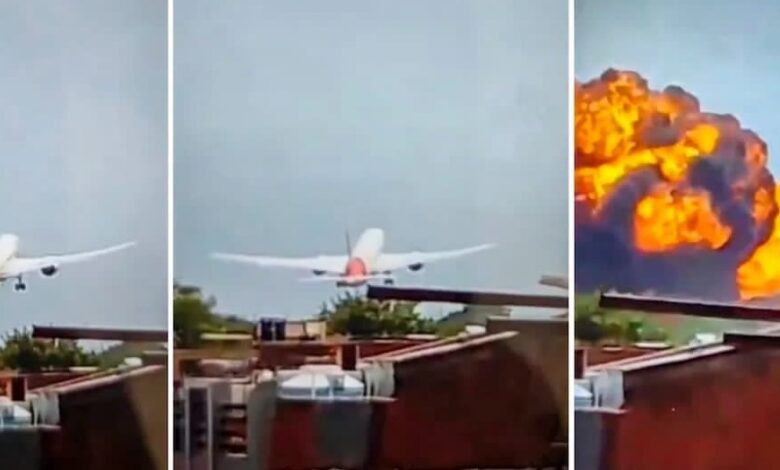
In the digital era, information moves at the speed of thought, yet this swiftness often comes at the expense of truth. On February 26, 2026, a surge of alarm rippled across the globe as social media feeds, news aggregators, and encrypted messaging platforms filled with reports of a catastrophic event: a commercial aircraft allegedly carrying more than 244 people had crashed. These posts, often emblazoned with urgent block letters, panicked emojis, and click-bait prompts like “see more,” were carefully designed to exploit a primal human response to disaster. But as hours passed, it became clear that this was less a news report than a textbook case in modern misinformation and the psychological consequences of unverified breaking news.
To understand why an aviation disaster headline spreads so quickly, one must recognize the historical and emotional weight of such events. Flight is a pinnacle of human achievement—but also one of the rare arenas where even minor errors are perceived as catastrophic. The number “244” does not read as mere statistics; it evokes the lives of hundreds—parents, children, travelers, professionals—suddenly in jeopardy. This instant emotional connection triggers an impulse to share the news, often as a perceived public service or from sheer shock. It is this automatic response that manipulative actors exploit to drive traffic to unverified platforms.
In the first hours after a suspected incident, the absence of official confirmation becomes a dangerous vacuum. Viral claims thrive on vagueness, omitting critical details like the airline, flight number, or country of origin. This ambiguity is a hallmark of misinformation. In reality, large-scale aviation incidents are managed with precision. Regulatory bodies such as the NTSB in the United States, along with established media outlets, prioritize verification over immediacy. Official updates include departure logs, passenger manifests, and GPS-based distress tracking. When these sources are silent, it is almost certain that sensational headlines are hollow.
Another alarming tactic is the “recycled tragedy.” Misleading reports often repurpose images from past accidents, attaching dramatic visuals of wreckage to fabricated stories. A high-resolution photo of a smoking fuselage instantly conveys urgency and authenticity, bypassing rational scrutiny. For a social media user scrolling on February 26, such visuals made the “244 onboard” claim feel indisputable. Beyond misinformation, this practice is an ethical violation, retraumatizing families of past accidents while inflicting needless fear on those currently traveling.
Media literacy in 2026 is no longer optional—it is a survival skill. Responsibility rests both with platforms hosting content and the individuals consuming it. A careful reader looks for corroboration: a true disaster of this scale would dominate global networks from the BBC to CNN, and airlines would release official statements. Verification requires a pause—a measured breath before clicking “share”—to assess whether the source has credibility or is merely chasing clicks.
The human cost of spreading unverified aviation news is immediate and profound. Within minutes, thousands check flight trackers in panic, worrying about loved ones in the air. Emergency responders and airline personnel face an overwhelming influx of calls fueled by lies. As recent cases demonstrate, from the scrutiny over Nancy Guthrie’s disappearance to health updates on Bruce Willis, the public’s hunger for information can overshadow privacy and emotional well-being. In aviation incidents, this demand often leads to false passenger lists and baseless speculation, complicating official investigations.
Patience, though difficult in a culture obsessed with immediacy, is the antidote to panic. Allowing trained investigators and seasoned journalists to verify data—cross-referencing flight manifests, satellite signals, and official reports—ensures that when news is delivered, it is reliable. Truth, however painful, forms the foundation for communal understanding, grief, and organized response. Reacting impulsively to fear-driven claims only muddles clarity and delays facts reaching those who need them most.
As rumors of the supposed crash of a plane with 244 onboard circulate, the most effective public response is cautious skepticism. Waiting for confirmation from credible sources protects both oneself and the community from misinformation’s corrosive effects. Air travel remains one of the safest forms of transportation, and while accidents do occur, they are investigated with a rigor social media speculation cannot replicate. In a world filled with noise, a quiet commitment to facts is a powerful defense.
Pursuing the truth is not merely about correctness; it is about respect—respect for potential victims, their families, and the integrity of our shared reality. Until authorities issue official statements, the most responsible action is vigilance, empathy, and restraint: keeping the “share” button at arm’s length until the facts are verified.