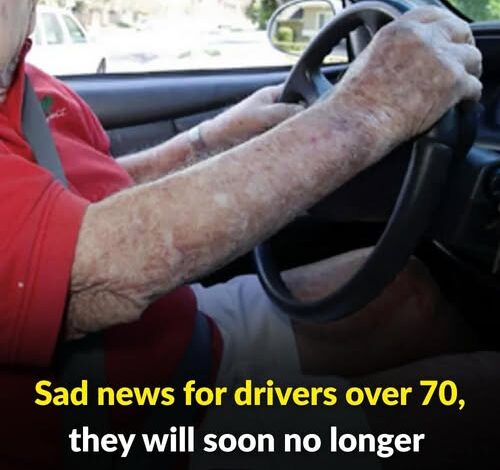
The conversation surrounding senior motorists has reached a critical juncture in 2026, as society grapples with the delicate balance between individual autonomy and collective road safety. Driving has long symbolized independence, freedom, and personal agency—particularly for those over the age of 70. Yet, as the demographic of active drivers ages, high-profile incidents and new statistical data are forcing a candid reassessment: at what point does a lifetime of experience yield to the physiological realities of aging? While some may view increased scrutiny as a “sad” inevitability, the broader conversation is moving toward a more nuanced, supportive framework, one that seeks to maintain mobility without sacrificing safety or dignity.
The Catalyst: La Rochelle and Its Lessons
The urgency of this debate was sharpened by a tragic event in La Rochelle, where an 83-year-old driver inadvertently struck a group of children on bicycles while traveling the wrong way down a one-way street. The accident served as a visceral reminder that aging drivers are not abstract statistics—they are human beings whose lives, habits, and limitations intersect unpredictably with the rest of society. The driver in question had likely spent decades behind the wheel without incident, his record unblemished, only to have a single moment of spatial confusion overshadow a lifetime of careful driving.
The incident in La Rochelle functions as a kind of “x-ray” into the broader risks of senior driving. It forces policymakers, families, and communities to confront a delicate question: how do we preserve autonomy without endangering others?
Statistical Symmetry: The Young and the Elderly
Data from road safety authorities in 2026 illustrate a striking symmetry: drivers over 75 are involved in serious accidents at nearly the same rate as 18-to-24-year-olds. The causes are polar opposites—youthful impulsivity, overconfidence, and inexperience versus age-related declines in vision, hearing, and reaction time—but the outcomes can be equally devastating. Researchers note that cognitive processing speed diminishes with age, while the modern traffic environment continues to accelerate in complexity: sensor-laden intersections, roundabouts, autonomous-vehicle zones, and high-speed expressways present challenges that were unimaginable half a century ago.
[Image: Comparative graph showing accident rates between young and senior drivers]
The Legal Landscape in France
In France, the regulatory environment for senior drivers remains permissive. Unlike neighboring countries such as Italy or Germany, where medical evaluations are mandated after age 70 or 75, the French B license is technically valid for life. Unless a serious offense occurs or a court intervenes, there is no systematic requirement to reassess an older driver’s cognitive or physical capabilities. Critics argue that self-assessment is often unreliable: individuals may fail to recognize or admit subtle declines in perception, reaction time, or spatial awareness.
This permissive system has fostered debate in both policy circles and public discourse. While autonomy is valued, the tension between personal freedom and societal responsibility has never been more evident.
Cognitive Audits and “Graduated Licensing”
Rather than instituting a blanket age limit, 2026 has seen the rise of “Cognitive Audits” and voluntary evaluations. These assessments are not punitive but diagnostic, designed to define an individual’s “Safe Driving Parameters.”
For example, a physician might recommend limiting driving to daylight hours or avoiding high-speed highways. Others may suggest routes that minimize complex intersections or heavy traffic. These graduated recommendations allow seniors to maintain mobility while reducing risk—a spectrum approach rather than a binary “yes or no.”
This paradigm shift reframes aging not as a decline but as an adaptation. Seniors retain their independence while acknowledging the biological realities of time.
Refresher Courses and Technology Integration
Another strategy gaining traction is the “Senior Refresher Course.” Many driving schools now offer curriculum tailored for drivers who learned decades ago, in a traffic environment vastly different from today’s sensor-monitored streets. Participants are encouraged in a non-judgmental environment, correcting habits and reacquainting themselves with modern road regulations.
Moreover, technological adaptations—automatic transmissions, lane-departure warnings, collision-avoidance systems—are increasingly recognized as extensions of a driver’s capability. These tools allow the brain and reflexes to focus on complex spatial decisions rather than on mechanical operations. Workshops across Europe are helping seniors transition into vehicles equipped with advanced safety systems, effectively modernizing veteran drivers while preserving their autonomy.
Experience as an Asset
It is crucial to acknowledge the advantages older drivers bring. They are less likely to speed, rarely drive under the influence, and tend to exhibit patience and caution in congested conditions. Their decades of experience provide a “tactical wisdom” that younger drivers often lack.
The goal of 2026 is not to strip these individuals of their licenses prematurely but to scaffold their expertise with appropriate medical, educational, and technological support. By framing road safety as a collaborative effort, society recognizes that aging is not merely a limitation but a stage requiring adaptation.
[Image: A senior driver navigating a modern roundabout under instruction]
Shifting the Narrative: From Loss to Resilience
The conversation is gradually moving away from fear and punitive measures. “Taking away the keys” is replaced by “upgrading the driver.” Senior drivers are encouraged to participate in awareness programs, health screenings, and skill refreshers, turning what might be framed as loss into an opportunity for growth and resilience.
This approach reframes aging as a process that respects dignity while safeguarding others. Rather than mourning the supposed decline of capability, communities can celebrate and support the ongoing contributions of older drivers.
The Road Ahead
With populations aging across Europe, the presence of drivers over 75 will only increase. The La Rochelle tragedy serves as both a warning and an invitation: to intervene with compassion, to notice early signs of decline, and to implement supportive strategies that balance independence with safety.
Whether through daytime-only restrictions, reflex evaluations, or vehicle adaptations, the future of senior driving is one of partnership. It is a model in which decades of skill are respected, autonomy is preserved, and the road itself becomes a shared space where age is acknowledged—not penalized.
The ultimate goal remains clear: a roadway where every driver, young or old, possesses the health, skill, and awareness necessary to return home safely, every journey, every time.