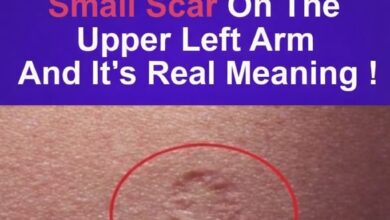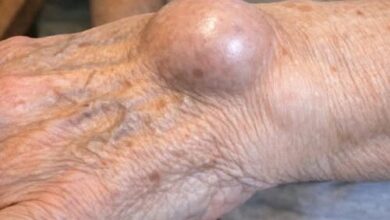
Human skin is not just a protective covering — it is a living archive. Over decades, it records sunlight, stress, laughter, illness, healing, and time itself. The smooth surface of youth gradually shifts into something more textured and storied. Fine lines settle around the eyes. Creases deepen across the forehead. And small, unfamiliar growths sometimes appear, especially on the neck, chest, back, or face.
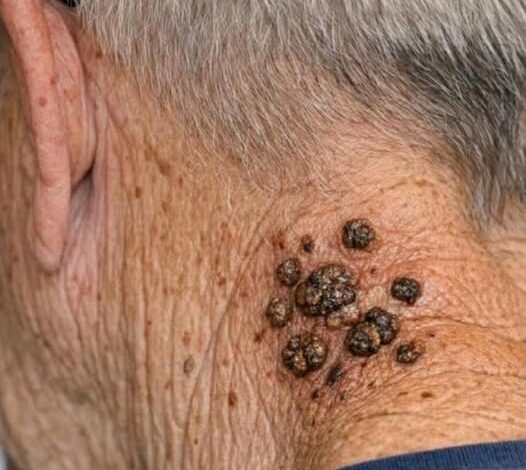
For family members, particularly younger ones, these raised spots can be unsettling. A dark, waxy bump on a grandparent’s skin may look ominous at first glance — a visible reminder that aging carries unknowns. Yet in most cases, these growths are not dangerous at all. They are a common, benign condition known as seborrheic keratosis — one of the most frequent noncancerous skin growths seen in adults over 50.
Seborrheic keratoses are sometimes informally called “wisdom spots” or even “barnacles of aging” because they tend to accumulate gradually over time. They often appear as though they have been gently placed on top of the skin — like a small dab of melted wax or a flattened raisin. Their color can range widely: pale tan, medium brown, charcoal gray, or nearly black. Some feel smooth and slightly velvety; others are rough or crumbly to the touch.
Despite their dramatic appearance, these growths are simply clusters of overgrown epidermal cells called keratinocytes. They are confined to the outermost layer of the skin. Unlike moles, which involve pigment-producing cells, seborrheic keratoses do not originate from melanocytes. They do not spread internally, do not “root” into deeper tissue, and — most importantly — are not precursors to skin cancer.
The exact cause is still being studied, but genetics plays a significant role. If older relatives developed these spots, there is a strong chance younger generations may as well. Sun exposure over time may contribute, though they frequently appear in areas rarely exposed to sunlight, such as the torso.
The real distress surrounding seborrheic keratoses is often psychological. Because they can appear suddenly or darken over time, they sometimes resemble more serious conditions, such as melanoma. The human brain is wired to notice changes, especially dark or irregular shapes. A new spot can trigger immediate anxiety — not because it is harmful, but because it is unfamiliar.
This is where medical evaluation becomes reassuring rather than alarming. Dermatologists are typically able to recognize seborrheic keratoses quickly during a visual exam. In many cases, they use a dermatoscope — a handheld magnifying device with specialized lighting — to examine surface patterns. Under magnification, these growths show distinctive features that separate them from malignant lesions.
For older adults who may quietly worry about a spot for months, a brief appointment can provide immense peace of mind. Relief often comes not from treatment, but from clarity.
Although medically harmless, seborrheic keratoses can sometimes become physically bothersome. Because they sit on the surface of the skin, they may catch on clothing, jewelry, or towels. Irritation can cause redness, itching, or minor bleeding — symptoms that can further heighten concern.
When removal is desired, the process is generally simple and outpatient. Common methods include:
- Cryotherapy, where liquid nitrogen freezes the growth, allowing it to fall away over time.
- Shave excision or curettage, where the lesion is gently removed with a small instrument.
Because these growths are superficial, scarring is usually minimal.
In a digital age where health information — and misinformation — spreads rapidly, it is easy to assume the worst when noticing a new skin change. A useful guideline dermatologists often mention is the “Ugly Duckling” principle: if someone has many similar spots that look alike, they are likely benign. However, if one lesion looks noticeably different in shape, color variation, or behavior, that is the one worth having evaluated.
Encouraging an older loved one to schedule a skin check can be framed not as alarm, but as care. Many seniors were raised to avoid “making a fuss” about their health. Presenting an exam as a routine check-up or reassurance visit can ease resistance and replace uncertainty with confidence.
Ultimately, seborrheic keratoses are part of the natural arc of aging. They reflect years lived, seasons weathered, and biological processes that continue quietly beneath the surface. Understanding them helps shift perspective — from fear to familiarity.
The raised spot on a grandparent’s neck is, far more often than not, a benign marker of time rather than a warning of danger. With knowledge comes calm. And in that calm, we make space for what truly matters: the person beneath the changing skin — still present, still valued, still deeply loved.