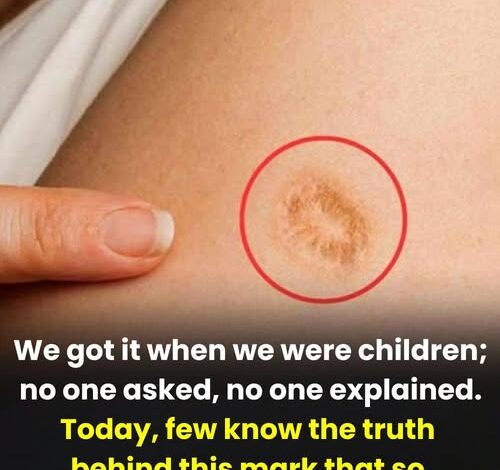
That small, round scar is not a flaw, a mark of neglect, or a sign of weakness. It is the enduring imprint of the BCG vaccine—a purposeful encounter between your immune system and a weakened relative of the tuberculosis bacterium. The redness, the blister, the tiny ulcer that eventually healed into a raised or sunken circle, none of it signals failure. Instead, it tells a story of your body learning, adapting, and recording vital instructions to defend itself. It is a quiet, microscopic rehearsal for survival, written onto your skin.
Far from being a symbol of poverty or lack, the BCG scar reflects deliberate public health decisions made in societies where tuberculosis once claimed countless lives, cutting across wealth, class, and social status. The vaccine was a preventative shield offered to millions, a tangible act of care in a world where medicine was often the difference between life and death. In some individuals, the scar never fully develops, leaving barely a trace; in others, it remains a deep, round mark that persists for decades. Neither variation defines a person’s worth, nor does it serve as a precise measure of immunity. Both outcomes are simply part of how our bodies respond, unique as fingerprints.
The scar itself is medically harmless, stable, and without any ongoing health consequences. Yet emotionally and symbolically, it carries weight. For many, it is a subtle reminder of the intersection between science and human resilience—a small, permanent testament to the efforts of researchers, public health workers, and families who collectively fought an invisible enemy. It is a shared history encoded into skin, a badge that links generations who have undergone the same ritual, and a quiet acknowledgment of humanity’s struggle against disease.
To look at a BCG scar is to glimpse a story of prevention, not pain; preparation, not punishment. It is an emblem of survival—an intimate marker that your body was taught to defend itself, that medicine reached into your life at the right moment, that you carry within you a lesson in immunity handed down through decades of scientific progress. In a world where so much is invisible—efforts, risks, protections—this tiny scar becomes a visible sign of care, foresight, and shared human history.
Ultimately, the BCG mark is not just skin deep. It is a reminder of how science intervenes, how communities protect each other, and how even the smallest acts—a shot, a blister, a healed scar—can carry the weight of prevention, health, and survival. It is, quietly, a badge of resilience: of a body prepared, a society attentive, and a world striving to keep its people safe.