THE FIVE U.S. MEN’S HOCKEY STARS WHO DECLINED DONALD TRUMP’S WHITE HOUSE INVITATION—AND THE COMPLEX MIX OF POLITICS, PUBLIC PRESSURE, OLYMPIC CELEBRATION, AND PERSONAL PRIORITIES BEHIND A DECISION THAT HAS CAPTIVATED THE NATION

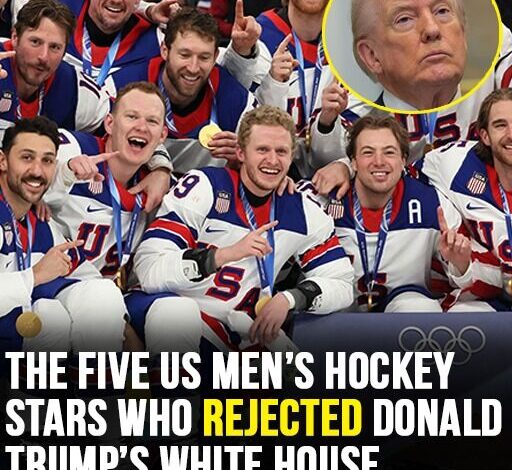
When a team wins Olympic gold, a White House visit usually follows — a moment of national pride, ceremony, and celebration. But in 2026, even America’s most cherished traditions have become lightning rods for division. That was clear when five members of the U.S. men’s hockey team quietly declined President Donald Trump’s invitation to a White House celebration, just days after an emotional 2–1 victory over Canada in the Olympic gold-medal final.
Their absence — four of the five hailing from Minnesota, a state simmering with political tension — immediately sparked speculation. Were their decisions political, professional, personal, or just circumstantial? The reactions rippled across social media, sports commentary, and political forums.
A Gold-Medal Win That Captivated the Nation
On February 23, Team USA defeated Canada in a tense, gripping final. Goalie Connor Hellebuyck cemented his status as an American hero, shutting down Canada’s offense in the final minutes, while Jack Hughes scored the game-winning goal. Footage from the locker room went viral, showing President Trump calling to congratulate the team, offering effusive praise, and extending the traditional White House invitation — even joking about sending a military plane to bring them if needed.
But a comment about the U.S. women’s team — “I must tell you, we’re going to have to bring the women’s team… I do believe I probably would be impeached” — drew sharp criticism online. The remark was widely labeled sexist, overshadowing even the men’s victory in public discussion.
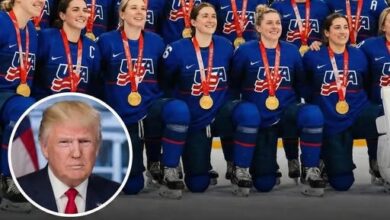
Meanwhile, the women’s team politely declined the White House invitation, citing scheduling conflicts, instead celebrating at an event hosted by rapper Flavor Flav in Las Vegas — a choice that quickly went viral.
The White House — and the Five Missing Names
On February 24, most of the men’s team attended the White House ceremony. But five players were notably absent: Brock Nelson, Jackson LaCombe, Jake Guentzel, Jake Oettinger, and Kyle Connor. Four of them are from Minnesota; Nelson and Connor hail from Michigan.
Minnesota has been under intense political scrutiny following controversial immigration crackdowns, ICE activity, and public unrest after high-profile deaths sparked protests. While no players publicly connected their absence to these events, speculation ran rampant.
Kyle Connor offered a partial explanation, citing NHL commitments and preparation for games the following day. But that didn’t clarify why the other four players also chose to skip the ceremony.
Theories Behind the Decision
Public opinion split quickly:
- Political Motivation: Some see the absence as a quiet protest against the political climate or Trump’s comments about women’s hockey.
- Professional Obligation: The NHL schedule may have made travel and recovery impractical.
- Personal Boundaries: Some players may prefer privacy or wish to avoid controversy.
- Mixed Motives: Likely, a combination of factors influenced each choice.
Jack Hughes defended his teammates, emphasizing pride in representing the U.S. and support for the women’s team. “People are so negative about things,” he said. “Everyone in that locker room knows how much we support [the women], how proud we are of them.”
Sports, Politics, and the Modern Athlete
This moment underscores the pressures athletes face today. Even ceremonial choices can spark political debate, forcing players to navigate public expectation, personal values, and professional obligations simultaneously.
Their reasons may never be fully known — and perhaps that’s the point. Silence, in this context, can be as powerful a statement as any public explanation.
A Victory That Stands Apart
Regardless of attendance, Team USA’s Olympic triumph remains one of the year’s defining sports moments. Whether fans interpret the absences as protest, logistical necessity, or personal choice, no one can deny the significance: five players declined a longstanding White House tradition, igniting a conversation that extends far beyond hockey.