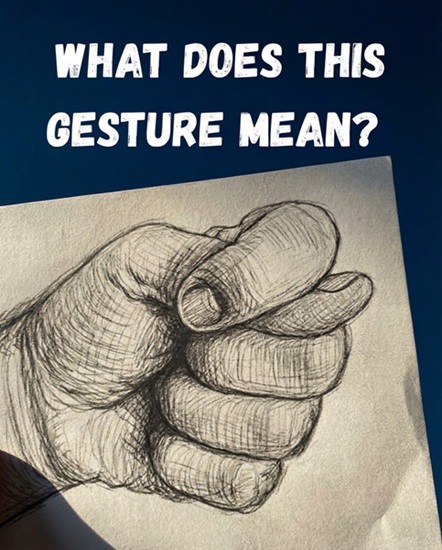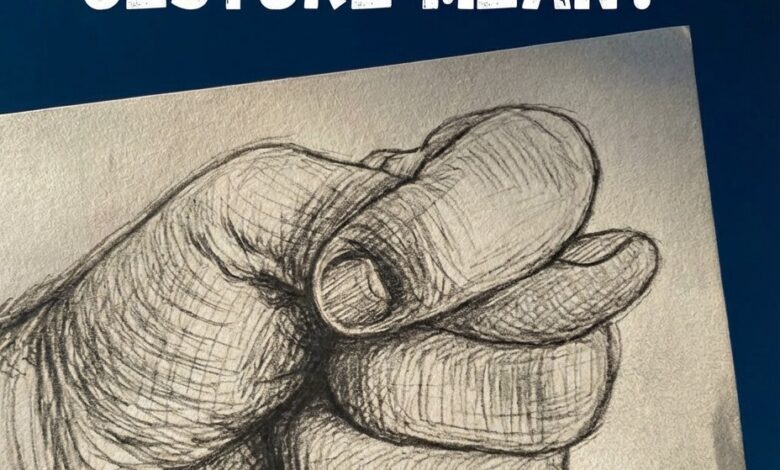
At first glance, a clenched fist might seem ordinary, even mundane. Yet a closer look reveals a subtle, almost secretive detail: the thumb tucked snugly between the index and middle fingers.
This tiny adjustment transforms a simple hand into a gesture known in English as “making a fig”—a sign that has carried layers of meaning across cultures and centuries.
Long before words, images, or digital emojis could instantly convey emotion, this discreet motion spoke volumes. With a single, fluid movement, a person could refuse a request, signal gentle defiance, or deliver a playful “no way” without uttering a sound.
While today it may seem humorous, historically the fig gesture served a serious social function, acting as both a tool of communication and a quiet form of resistance.
Origins and Early Context
The gesture is ancient, emerging across parts of Europe, particularly in Mediterranean and Eastern European societies. Its English name, “the fig,” dates to the 19th century, though similar movements existed long before.
In Italy, the gesture—mano in fica, or “hand in fig”—could be a playful insult or a protective charm. In Russia, known as kuvyn’ka, it symbolized refusal or a way to mock authority.
When direct confrontation could be dangerous, the fig offered a safe alternative. Individuals could convey dissent without speaking, breaking social rules, or drawing unwanted attention.
In close-knit villages, where disputes could escalate, this simple sign provided a socially acceptable outlet for disagreement, humor, or playful resistance.
Symbolism Beyond the Hand
Though physical in form—a fist with a hidden thumb—the gesture also carried symbolic weight. Anthropologists note that a closed fist represented concealed strength, and the tucked thumb often amplified the protective power of the hand.
In many traditions, the thumb was thought to guard against misfortune, envy, or the so-called evil eye. The fig gesture thus blended social and spiritual functions: a way to assert defiance while invoking a quiet form of protection.
Family and Everyday Life
Over time, the gesture moved into homes and families. Older relatives taught it to children as a playful, harmless way to tease, assert minor authority, or respond to challenges.
In childhood play, the fig became a private language. It signaled quiet courage, refusal, or solidarity without words. Parents might use it to reassure a child, offer comfort, or acknowledge small victories.
Its versatility—part social tool, part emotional symbol—made it a subtle yet meaningful form of communication.
Humor, Defiance, and Social Navigation
The fig gesture thrives in the balance between humor and subtle resistance. Unlike blunt protest, it allowed people to reject demands, tease, or assert boundaries without inciting serious conflict.
Workers could use it to decline unreasonable instructions; siblings might employ it to joke with one another. Village markets, fairs, and communal spaces became arenas where gestures like this conveyed complex social dynamics with elegance and safety.
Its strength lay in subtlety. Visible to those who understood the code, yet innocuous to outsiders, the gesture maintained social harmony while communicating a clear message.
Global Variations
Though strongest in European tradition, similar gestures exist worldwide. In parts of South America, Africa, and Asia, subtle hand signals have long expressed refusal, playful mockery, or gentle defiance.
Even within Europe, regional nuances emerged: in Italy, the gesture could be mildly obscene; in Russia and Eastern Europe, it was humorous, sometimes used to reject bribes; in Turkey, known as nah, it conveyed playful teasing.
Across regions, the fig gesture adapted to local norms while maintaining its core function: quiet, clever communication.
Modern Legacy
With instant messaging, emojis, and social media, the fig gesture has largely faded. Today, it survives mainly in memory, folklore, and historical accounts.
Yet its influence remains. The gesture is a reminder of an era when expression relied on subtlety, wit, and shared cultural understanding. Small, nearly invisible actions carried meaning—humor, defiance, protection, or comfort.
Nonverbal Communication Lessons
The fig gesture illustrates the power of nonverbal expression. Across centuries, gestures enabled people to navigate social situations, maintain relationships, and assert autonomy without conflict.
This small sign shows that communication isn’t only about words: subtle, deliberate movements can convey complex, layered messages.
Humor and Resistance
One of the gesture’s most enduring qualities is its combination of humor and gentle rebellion. By delivering resistance with wit, the fig gesture allowed individuals to assert boundaries and challenge authority without escalation.
It demonstrates that strength doesn’t always need to be loud, and that small, understated actions can communicate powerful ideas.
Cultural Artifact
Today, the fig gesture is studied as a cultural relic. Folklorists and anthropologists cite it in explorations of social behavior, family play, and the evolution of communication.
Its presence in oral history, art, and literature reminds us of human ingenuity: how a simple motion could negotiate power, emotion, and relationships without words.
Conclusion: Quiet Power
In a world dominated by instant communication and loud expression, the fig gesture teaches the value of subtlety. Small and easily overlooked, it reflects the enduring lesson that sometimes the most meaningful messages are delivered silently.
From European villages to family traditions, from playful defiance to protective charm, it reminds us that humor, resilience, and self-expression can coexist in a single, understated movement.
Even largely forgotten, the fig gesture stands as a testament to human creativity, social intelligence, and the enduring power of quiet communication.