
For decades, the relationship among the United States, Israel, and Iran has been one of the central fault lines in Middle Eastern geopolitics.
Public discourse often amplifies moments of escalation, creating the impression that open war is perpetually around the corner. However, careful analysis requires separating documented actions from political messaging and media speculation.
Although tensions periodically intensify—through sanctions, proxy conflicts, cyber operations, targeted strikes, or diplomatic breakdowns—there is no verified, ongoing full-scale war between the United States and Iran. Nor has there been a formally declared, coordinated ground invasion or sustained nationwide bombing campaign inside Iran carried out jointly by U.S. and Israeli forces.
To fully understand this triangular dynamic, it is necessary to move beyond headlines and examine its deeper foundations. This includes the historical evolution of U.S.–Iran relations since 1979, Israel’s security doctrine and its concerns regarding Iran’s regional influence and nuclear ambitions, Iran’s network of regional allies and proxy groups, the role of economic sanctions, military deterrence strategies, and ongoing diplomatic efforts—both public and backchannel.
The broader regional security environment also plays a critical role. Gulf states, non-state armed groups, global energy markets, and major powers such as Russia and China all influence the strategic calculations of Washington, Jerusalem, and Tehran. What often appears as a bilateral confrontation is, in reality, embedded in a complex web of alliances, deterrence postures, and competing national interests.
A measured assessment therefore requires acknowledging both the volatility of the situation and the absence of confirmed, large-scale conventional warfare between these actors. The region remains tense and strategically fragile—but not in a state of declared, direct war between the United States and Iran.
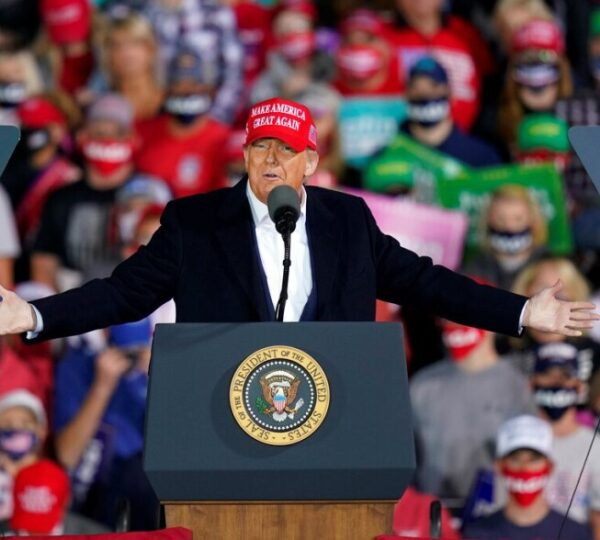
Historical Context: Origins of the Modern Rivalry
The contemporary strain between Washington and Tehran can be traced to the events of 1979. That year, Iran’s monarchy—long supported by the United States—collapsed during a mass revolutionary movement. The Islamic Republic emerged under clerical leadership, reshaping the country’s governance and dramatically redirecting its foreign policy.
Soon after, the seizure of the U.S. Embassy in Tehran and the ensuing hostage crisis led to a complete rupture in diplomatic relations. Formal ties between the two countries have never been restored. In the decades that followed, economic sanctions, political confrontation, covert activity, and indirect regional competition became defining features of the relationship.
Israel’s concerns regarding Iran deepened in the post-revolutionary period. Iranian political leaders have consistently criticized Israeli government policies and challenged the legitimacy of the Israeli state. Supreme Leader Ali Khamenei has repeatedly condemned Israel’s actions, particularly in relation to Palestinian territories.
From Israel’s perspective, Iran’s expanding military reach presents a strategic risk. Israeli officials point to Tehran’s support for regional armed groups, its missile development programs, and its growing influence in countries such as Lebanon and Syria as elements of a long-term security challenge. These concerns shape Israel’s defense planning and its coordination with international partners, including the United States.
The Iranian Nuclear Program and Diplomatic Efforts
A central flashpoint in this triangular relationship is Iran’s nuclear program. Iranian authorities assert that their nuclear activities are designed for civilian purposes—primarily energy generation and scientific advancement.
However, the United States, Israel, and several European governments have expressed concern that aspects of the program could enable the development of nuclear weapons capability. These concerns have led to extensive international negotiations, inspections, and sanctions regimes over the years.
The 2015 Joint Comprehensive Plan of Action (JCPOA) represented a significant diplomatic milestone, placing limits on Iran’s nuclear activities in exchange for sanctions relief. Yet subsequent political shifts, including the U.S. withdrawal from the agreement in 2018 and Iran’s later adjustments to its compliance levels, have reintroduced uncertainty into the diplomatic landscape.
As a result, the nuclear issue remains both a focal point of international diplomacy and a potential catalyst for heightened tension—illustrating how historical grievances, security calculations, and geopolitical rivalry continue to intersect.
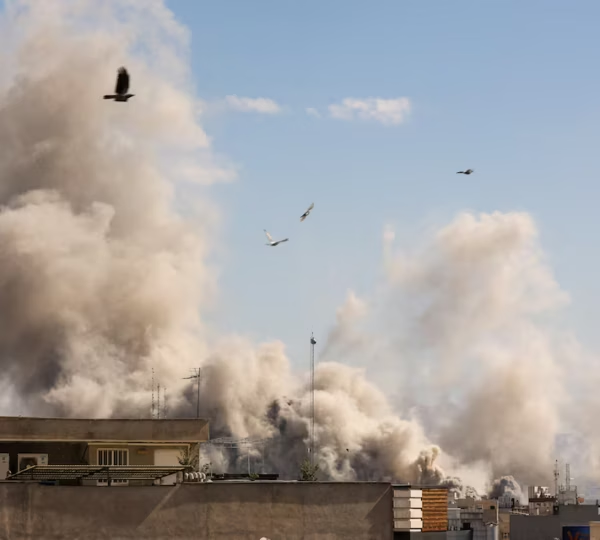
Western governments and international oversight agencies have long scrutinized the scale, pace, and transparency of Iran’s uranium enrichment efforts. While Tehran maintains that its nuclear program is civilian in nature, questions about enrichment levels, inspection access, and long-term capabilities have fueled ongoing debate within the international community.
In 2015, these concerns culminated in the Joint Comprehensive Plan of Action (JCPOA), an agreement between Iran and several major powers, including the United States, the United Kingdom, France, Germany, Russia, and China. The accord placed restrictions on Iran’s nuclear activities—such as limits on uranium enrichment levels and stockpiles—in exchange for phased sanctions relief and expanded monitoring by international inspectors.
The agreement was concluded during the presidency of Barack Obama. However, in 2018, President Donald Trump announced that the United States would exit the deal. The administration contended that the JCPOA did not adequately address long-term nuclear constraints, ballistic missile development, or Iran’s broader regional activities.
After the U.S. withdrawal and the reimposition of sanctions, Iran began scaling back its adherence to certain JCPOA commitments. This included increasing uranium enrichment levels and adjusting monitoring arrangements beyond the original framework of the agreement.
Since then, diplomatic initiatives aimed at restoring or reshaping the nuclear accord have surfaced periodically, involving indirect negotiations and multilateral discussions. Despite these efforts, no fully reinstated or newly structured comprehensive agreement has been finalized.
Throughout this period, the International Atomic Energy Agency (IAEA) has continued to conduct inspections and publish technical assessments regarding Iran’s nuclear activities. These reports play a central role in shaping international responses and informing policy debates, as governments weigh concerns about proliferation against the risks of escalation.
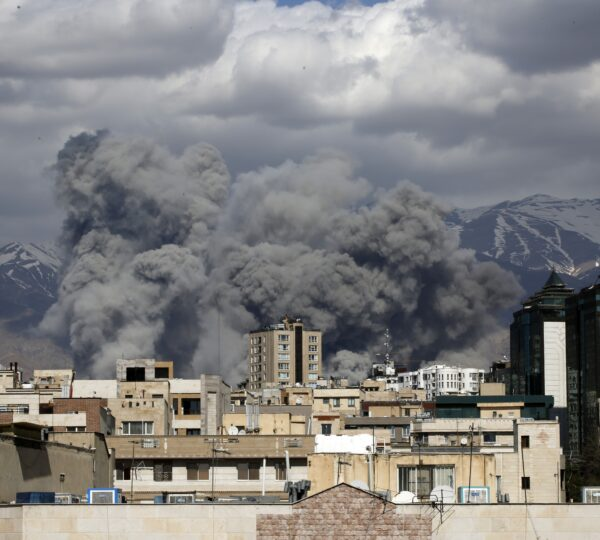
Israel’s Security Doctrine and Regional Strategy
Israeli leaders, including Prime Minister Benjamin Netanyahu, have repeatedly affirmed that Israel will act to prevent Iran from developing a nuclear weapons capability. This position reflects a long-standing Israeli security doctrine that prioritizes deterrence and, if deemed necessary, preemptive measures against perceived existential threats.
In practice, Israel has focused much of its military activity on curbing Iran’s regional entrenchment rather than engaging in direct, large-scale strikes inside Iranian territory. Over the past several years, Israeli forces have conducted numerous air operations in Syria aimed at Iranian-linked facilities, weapons transfers, and militia infrastructure—particularly assets positioned near Israel’s northern borders.
To date, there have been no verified, sustained, nationwide bombing campaigns carried out openly by Israel across Iranian territory itself. Instead, analysts frequently describe the dynamic between Israel and Iran as a “shadow conflict.” This encompasses intelligence activity, cyber operations, targeted strikes, and indirect confrontation through regional actors, rather than conventional interstate warfare.
Military Posturing and Limited Escalations
Although there are no confirmed, ongoing major combat operations between the United States and Iran, the broader region has experienced intermittent flare-ups. These have included targeted strikes, proxy confrontations, maritime incidents, and missile or drone exchanges involving allied or affiliated groups.
The United States maintains a significant military presence across parts of the Middle East, including naval deployments and air assets intended to deter escalation and protect regional partners. Iran, for its part, has developed a network of regional allies and armed groups, as well as missile and drone capabilities that it views as central to its deterrence strategy.
These periodic escalations typically stop short of full-scale war. Instead, they reflect calibrated signaling—each side attempting to demonstrate resolve while avoiding a conflict that could spiral into broader regional confrontation. The result is a tense but managed rivalry characterized more by containment and deterrence than by declared, direct warfare.
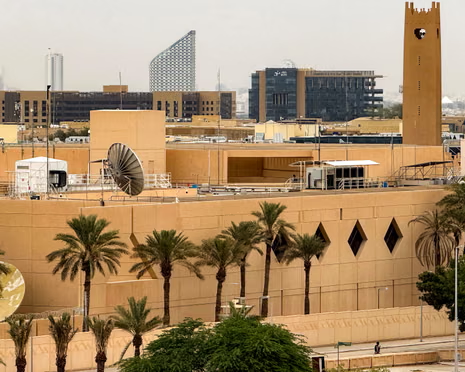
Examples of periodic escalation in the region have included:
- Israeli air operations against Iranian-linked facilities and weapons transfers in Syria
- Rocket and drone attacks carried out by Iranian-aligned groups in Iraq and Syria
- Maritime security incidents involving commercial or military vessels in the Persian Gulf
- Targeted U.S. strikes in response to attacks on American personnel or installations
These actions generally remain below the legal and political threshold of declared war. While they heighten tensions and contribute to regional volatility, they are often calibrated to signal resolve without triggering uncontrolled escalation.
At various points, the United States has responded to attacks on its forces in Iraq and Syria with limited airstrikes against militia infrastructure. U.S. officials have typically characterized these operations as defensive, proportionate, and intended to deter further attacks rather than initiate broader conflict.
Despite strong rhetoric that sometimes accompanies such incidents, there is no verified, formally declared, full-scale war currently underway between the United States and Iran. The pattern has instead been one of deterrence, retaliation, and containment within defined limits.
U.S. Military Presence in the Middle East
The United States maintains a significant military footprint across the Middle East. Key facilities and strategic locations include:
- Qatar – Home to Al Udeid Air Base, a major regional hub for air operations and command coordination.
- Bahrain – Headquarters of the U.S. Navy’s Fifth Fleet, responsible for maritime security in the Persian Gulf and surrounding waters.
- Kuwait – A logistical and staging center supporting regional deployments.
- United Arab Emirates – Hosts air and naval facilities that contribute to joint operations and surveillance.
- Jordan – Supports training, intelligence sharing, and counterterrorism coordination.
These installations enable a range of missions, including counterterrorism operations, protection of maritime trade routes, intelligence gathering, and deterrence against state and non-state threats. The presence also reassures regional partners while serving as a mechanism for rapid response in times of crisis.
Taken together, this posture reflects a strategy focused on maintaining regional balance and preventing escalation—rather than engaging in open, large-scale interstate warfare.
Iranian-aligned militias have, at times, launched rockets or drones toward U.S. positions in Iraq and Syria. In response, American forces have carried out focused retaliatory strikes against facilities or infrastructure linked to those groups. These exchanges, while serious, have remained contained rather than expanding into sustained, large-scale combat.
There has been no verified instance of a coordinated Iranian missile campaign targeting multiple U.S. bases across Gulf states as part of a declared war framework. The pattern has instead reflected limited confrontation calibrated to signal deterrence without crossing into open interstate war.
Airspace Restrictions and Aviation Precautions
During periods of heightened alert, governments in the region sometimes impose temporary airspace limitations. Commercial airlines may adjust flight paths or suspend routes if intelligence assessments indicate elevated risk.
Such measures are precautionary and typically localized. There has been no confirmed, region-wide shutdown of Middle Eastern airspace due to a full-scale war between the United States and Iran. Aviation disruptions, when they occur, are generally tied to specific security concerns rather than broad declarations of conflict.
The Influence of Political Rhetoric
Strong language is a common feature of geopolitical discourse. Leaders frequently emphasize resolve, deterrence, and national defense in public statements. However, rhetoric should not be conflated with confirmed military action.
There is no verified public record of President Donald Trump announcing a military campaign called “Operation Epic Fury,” nor is there credible evidence of a coordinated, nationwide U.S.–Israeli bombing offensive across Iran.
In a fast-moving digital environment, unverified claims can spread quickly. Careful reliance on established reporting and official confirmations remains essential for accurate understanding.
Risks of Miscalculation
Although a full-scale war is not underway, analysts widely acknowledge the risk of unintended escalation. The Middle East contains interconnected conflicts, proxy networks, and closely positioned military forces. Several scenarios could heighten instability, including:
- Misinterpretation of troop movements or military exercises
- Cyber operations targeting critical infrastructure
- Civilian casualties resulting from limited strikes
- Escalatory actions by non-state armed groups
- Naval or maritime confrontations in the Persian Gulf
Given the proximity of regional actors and the speed of modern communication, even isolated incidents can rapidly intensify diplomatic strain. For this reason, crisis communication channels and quiet diplomatic engagement remain vital tools for preventing escalation.
International Stakeholders and Global Implications
Major international actors—including the European Union, Russia, and China—regularly urge restraint when tensions rise among Iran, Israel, and the United States. These governments often emphasize adherence to international agreements and diplomatic resolution of disputes.
The International Atomic Energy Agency (IAEA) continues to provide technical monitoring and assessments regarding Iran’s nuclear activities. Its findings influence policy debates not only in Washington but also in European and other global capitals.
Beyond regional security, the international community is attentive to the broader consequences of instability, particularly regarding global energy supplies, maritime shipping routes, and financial markets.
The Present Situation
Based on the most recent verified reporting:
- There is no confirmed full-scale war between the United States and Iran.
- Iran’s Supreme Leader, Ali Khamenei, is alive.
- There is no confirmed military operation titled “Operation Epic Fury.”
- No coordinated, nationwide joint U.S.–Israeli bombing campaign across Iran has been verified.
While tensions remain significant, they reflect strategic rivalry, deterrence calculations, and regional competition rather than declared interstate war.
Conclusion: Strategic Competition, Not Open War
The triangular dynamic between the United States, Israel, and Iran remains one of the most intricate geopolitical relationships in the contemporary world. Historical grievances, nuclear negotiations, proxy networks, and regional security doctrines all shape its evolution.
At the same time, responsible analysis requires a clear distinction between documented developments and dramatic but unsubstantiated narratives. The region faces real and ongoing security challenges, yet there is no credible evidence supporting claims of a massive coordinated assault on Iran or the death of its supreme leader.
In an age of rapid information flow, accuracy matters. Careful attention to verified sources strengthens public understanding and supports a more grounded global conversation about diplomacy, deterrence, and the pursuit of stability.