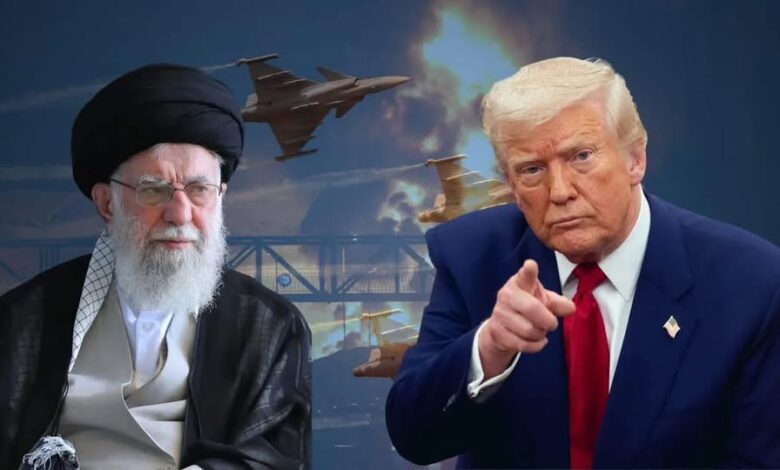
The global security environment has shifted from a state of cautious tension to one of open, high-intensity conflict. In the early hours of March 1, 2026, the long-feared “hot war” in the Middle East erupted, following an unprecedented joint military operation by the United States and Israel. Dubbed “Operation Epic Fury,” the campaign began on February 28 with a series of precise decapitation strikes and systematic bombardment targeting Iran’s nuclear facilities and ballistic missile infrastructure. In a video address from the White House, President Donald Trump declared that “major combat operations” were underway, with the stated objective of “eliminating threats posed by the Iranian regime.” Reports have confirmed the deaths of Supreme Leader Ali Khamenei along with several senior military commanders.
Iran’s reaction was immediate and far more intense than the restrained “strategic patience” it had maintained in recent years. By the afternoon of March 1, Iranian state media announced a broad retaliatory offensive targeting all 27 U.S. military installations across the Gulf region. This was not a limited counterstrike; it was a coordinated regional assault that effectively turned the territories of Bahrain, Qatar, Kuwait, and the United Arab Emirates into active battle zones. In Manama, the headquarters of the U.S. Navy’s Fifth Fleet sustained strikes from Iranian ballistic missiles, sending columns of black smoke rising above the Juffair district. While U.S. and allied defenses intercepted many threats, the sheer scale of the attack has put regional air defense systems under unprecedented strain.
The escalations have also thrown the world’s energy supply into immediate turmoil. Within hours of the U.S.-Israeli strikes, Iran’s Revolutionary Guard warned that the Strait of Hormuz could become a “graveyard for aggressors,” effectively halting the flow of maritime traffic. Although no formal blockade has been confirmed, over 150 oil tankers carrying roughly 15 million barrels per day have anchored in open waters, reluctant to risk passage. Global oil markets are bracing for historic price surges as supply disruptions mount. Civil aviation has similarly ground to a halt, with major hubs in Dubai and Doha suspending flights, leaving thousands stranded amid the crossfire of missiles and drones.
Humanitarian and diplomatic repercussions are mounting. Drone strikes on a naval base in Abu Dhabi hosting French forces sparked major fires, while Saudi Arabia’s air defense successfully intercepted missiles targeting Riyadh International Airport and the Prince Sultan Airbase. Even the British sovereign base areas in Cyprus reportedly came under missile attack. In a tense bid to stabilize the situation, thirteen nations have formed a coalition, yet with Moscow denouncing the “unprovoked aggression” and Beijing expressing “grave concern,” the risk of a broader global confrontation remains extremely high.
Within Israel, the situation is equally precarious. Despite initial success in striking Tehran, Israeli territory is facing sustained retaliatory missile barrages. National emergency measures are in place, airspace is closed, and civilians are instructed to stay near shelters while the IDF continues targeted strikes against remaining Iranian military assets. The elimination of Iran’s Supreme Leader has created a volatile power vacuum, raising fears of unpredictable retaliatory actions by fragmented elements of the Revolutionary Guard.
For the United States, “Operation Epic Fury” represents the largest regional military engagement since 2003. The Pentagon confirmed its first casualties—three U.S. service members killed and five wounded—during initial Iranian strikes. As the campaign enters its second day, the stated objectives of dismantling Iran’s missile program and preventing attacks on U.S. interests face mounting challenges without a potential full-scale ground invasion. Regional partners, including Saudi Arabia, Qatar, and the UAE, find themselves in an impossible position: hosting U.S. forces conducting the strikes while enduring the direct fallout of Iran’s retaliation.
As night falls on March 1, the world watches the Persian Gulf with deep apprehension. The promise of a transformed regional order is underway, but the human, economic, and strategic costs remain immeasurable. What was once a story for tomorrow’s headlines has become the urgent reality of tonight, and the next hours will determine whether this conflict can be contained—or if the 13-nation coalition will be drawn into a war that reshapes the modern world.