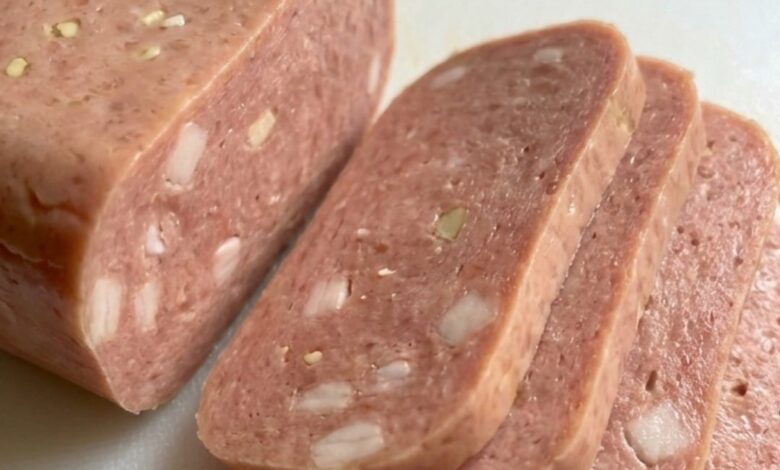
Those chalky white bits scattered through your can of Spam can instantly make your stomach drop. You pop the lid, slide the loaf onto a plate, and there they are—pale, solid specks embedded in the pink meat. They can look suspicious, almost like something has gone wrong. In that split second, your brain jumps straight to worst-case scenarios: Is it mold? Has it spoiled? Is this unsafe to eat?
Take a breath. In nearly every case, those white chunks are completely normal.
Spam is made from ground pork and ham, which naturally contain both lean meat and fat. The mixture also includes salt, water, sugar, modified potato starch, and sodium nitrite to preserve flavor and color. When the product is processed and sealed in the can, everything is blended together. But fat behaves differently from lean meat—especially when it gets cold.
Pork fat turns firm and opaque at lower temperatures. When the can sits in a cool pantry or refrigerator, that fat solidifies into small white flecks throughout the loaf. They can look dramatic against the pink meat, but they’re simply pockets of congealed fat. In fact, that fat is part of what gives Spam its signature texture and taste. Without it, the loaf would be dry, crumbly, and far less flavorful.
If you slice it and cook it in a pan, you’ll notice those white specks soften almost immediately. As the meat heats, the fat melts and blends back into the slice, helping it brown, crisp, and develop that savory, salty finish many people love. What looked alarming a moment ago becomes invisible once it hits the heat.
True spoilage looks very different. Mold typically forms on the surface, not evenly throughout the meat. It often appears fuzzy, powdery, or patchy, and can be green, blue, gray, or black. A sour, rancid, or otherwise unpleasant odor is another strong warning sign. You should also discard the product if the can itself is bulging, leaking, deeply rusted, or dented along the seams—those conditions can compromise the seal and safety of the food inside.
But if the can is intact, the meat smells normal, and the only unusual thing you notice is a few pale, solid bits inside the loaf, there’s no need to panic. Those white pieces are just chilled pork fat doing what fat naturally does.
So before tossing it in the trash, try warming a slice in a skillet. Watch the flecks melt away, listen to the sizzle, and let the surface turn golden and crisp. What seemed unsettling at first is usually just a normal part of how this canned meat is made—and a reminder that sometimes food science looks stranger than it actually is.