We rely on our hands constantly, often without thinking. From the moment we wake up until we fall asleep, they are almost always in motion.
We type on keyboards, scroll on smartphones, grip steering wheels, open doors, prepare meals, carry groceries—performing countless small actions that keep our daily lives moving. Even during rest, our hands are rarely fully still.
Over time, this constant use places subtle but persistent demands on the muscles, joints, and connective tissues in our fingers and palms. Because the strain builds gradually, it often goes unnoticed. Unlike sore backs or tired legs, hand tension develops quietly. Fingers may feel stiff in the morning, movements may seem slightly less fluid, or discomfort might appear only after prolonged activity.
The Power of a Simple Finger Stretch
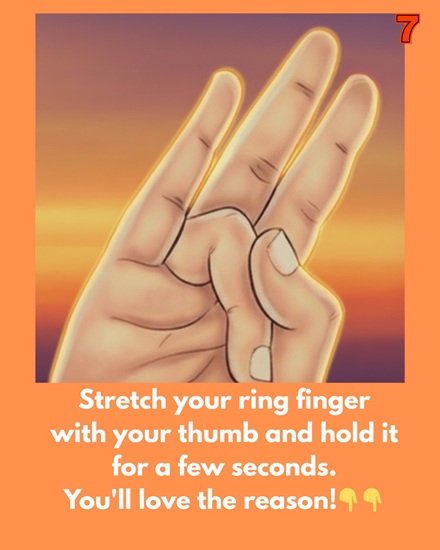
Simple, intentional movements—like gently stretching the ring finger using your thumb—can feel surprisingly soothing. Though small, this action directly targets parts of the hand that work hard all day.
By lightly pressing and stretching the ring finger at its base, you activate muscles and tendons that are frequently engaged but rarely stretched in isolation. Because the ring finger shares connective tissue with neighboring fingers, it plays a crucial supporting role in grip strength and fine motor control. Holding the stretch for several seconds encourages these tissues to relax, easing accumulated tension.
Many people notice an almost immediate sense of release, as if their hand is being reminded to let go of stored tightness.
A Tradition of Mindful Hand Care
Gentle finger stretches aren’t just a modern wellness trend. Across cultures, hands have long been seen as sensitive, responsive parts of the body that reflect overall tension.
Traditional practices often include small movements and pressure-based techniques to promote relaxation, especially after repetitive tasks. Though methods differ, the principle is consistent: intentional, mindful movement can produce meaningful physical and emotional effects.
Physical Benefits
The benefits of finger stretching are straightforward. Light movement increases blood flow to the area, creating a warm or tingling sensation. Improved circulation supports normal muscle function and helps maintain joint flexibility.
Over time, regularly incorporating these stretches may reduce stiffness associated with prolonged hand use. For those who spend hours typing, scrolling, or performing repetitive motions, these modest effects can be significant.
Mindful Moments in Everyday Life
Stretching your fingers offers more than physical relief. Taking even a brief pause to focus on a small movement naturally shifts attention away from external pressures.
This interruption encourages slower breathing, better posture, and a moment of calm. Mindfulness doesn’t require long meditation sessions or quiet environments—sometimes it emerges through simple, everyday actions. A finger stretch can serve as a gentle reminder to check in with your body, particularly during stressful or overwhelming moments.
The gesture itself is simple, but the intention behind it—pausing, paying attention—can influence how you feel emotionally. Many people report that these tiny moments of awareness leave them feeling more grounded and less rushed.
Safe, Accessible Self-Care
It’s important to note that finger stretches are not medical treatments and should not replace professional care or therapy. They are self-care habits meant to support comfort and awareness.
One of the most appealing aspects of this technique is its accessibility. No equipment, training, or significant time commitment is needed. You can do it at your desk, while watching television, or even standing in line. Its subtlety makes it easy to integrate into daily life, increasing the likelihood of consistent use.
Consistency Matters
Small, repeated habits often yield the most lasting benefits. While a single stretch feels pleasant, doing it regularly reinforces awareness of hand tension and encourages mindful use of your fingers.
Over time, you may become attuned to early signs of stiffness or fatigue, allowing you to respond proactively. This awareness alone contributes to a healthier relationship with your daily movements.
The Broader Lesson
This simple practice highlights a larger principle: self-care doesn’t need to be dramatic, time-consuming, or expensive. Tiny actions—stretching a finger, adjusting posture, taking a deep breath—accumulate over time, subtly shaping how the body handles daily stress.
Hands deserve attention because they support so much of our independence and productivity. Offering them a few seconds of gentle stretching is not indulgent—it’s practical.
Even pairing finger stretches with complementary movements, like slowly opening and closing fists or gently rotating wrists, can enhance overall hand mobility. But even on its own, stretching the ring finger provides a small, meaningful moment of relief.
Pause, Notice, Refresh
The true value of this simple stretch lies in its reminder: well-being often comes not from doing more, but from pausing and paying attention.
By adding a few seconds of mindful movement to your day, you create space for both physical comfort and mental clarity. In a world focused on speed and productivity, such small gestures of care can feel surprisingly powerful.
Stretching your ring finger may seem minor—but it embodies a larger approach to life: awareness, balance, and gentle maintenance. Treat your hands with kindness, and even the simplest habits can make your day feel lighter and more comfortable.