I remember lying beneath a thin cotton blanket in the spare bedroom, the curtains breathing in and out with the summer air. I remember the smell of starch and old wood furniture. I remember asking when I could go home.
Grandmother’s voice was gentle but firm, carrying the weight of experience and quiet authority. “Soon, my dear,” she said. “But you must rest first.”
I remember the quiet that settled around me, the kind of stillness that felt almost sacred, except for the faint laughter drifting from my sister in the next town over, a sound I could not join. I would lie there, feeling the fever burn, feeling the world move on without me. My sister’s presence was only hinted at in letters and occasional phone calls—shapes and sounds that were familiar yet distant.
It was in that in-between space, suspended between home and grandmother’s house, health and illness, closeness and separation, that I first understood the shape of absence. Not a loud emptiness, not a loss marked by tears or anger, but a soft gap, a corner torn away that left the rest of the picture whole yet subtly altered.
Even now, decades later, I can feel that missing corner as I run my fingers over the photograph of my life. Faces are still there, memories intact, laughter preserved—but I know, quietly, that some part of the story never returned to me. And perhaps that is why I have always noticed the spaces between people, the silences in rooms, the small absences that others might not see.
Because even in the gentlest form of missing, life leaves a mark.
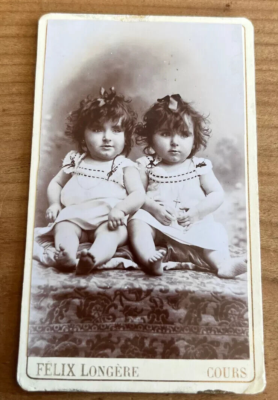
I do not remember the first time I noticed the silence. It was not sudden. It crept into rooms like dust settling on shelves, in the corners of photographs, in the pause when someone asked about school or friends. The word “Ella” became forbidden in small ways — a whisper avoided, a question redirected, a memory folded away.
I remember standing at the window in the spare bedroom, fever-drained and restless, imagining her running through the yard, the red ball bouncing ahead of her, sunlight catching in her hair. I would hold my breath, waiting for a sound that never came.
Sleep became a strange place, a space where memory and longing collided. In dreams, I sometimes found her, laughing, chasing the ball, calling my name. And then I would wake to the quiet house, to my mother’s tight hand, to the knowledge that the world had changed forever while I slept, or lay feverish, or simply could not reach it.
Over the years, the absence grew its own shape. I learned to navigate rooms without her laughter, to walk past the empty corner in the living room, to speak without her voice returning an answer. Friends noticed that I sometimes stared at the playground a little too long, or that I flinched at sudden noises, or that I asked questions quietly, as if testing the air before speaking.
Grief, I came to understand, is not always a river that sweeps you away. Sometimes it is a shadow that follows at the edge of your vision, only visible in the moments you are still enough to feel it. It does not vanish; it mutates. It becomes the shape of the missing corner in your photograph, the unsaid word in the air, the faint echo that makes every laughter slightly brittle, every silence slightly sharp.
Even now, decades later, I carry that quiet, an invisible tether to a sister who will never answer, who will never throw the ball again. And yet, in that tether is memory too — a fragile, persistent proof that love existed, that life once held a joy so simple it could be described in the bounce of a rubber ball.
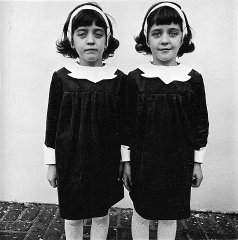
I carried her absence into schoolrooms, playgrounds, and crowded streets. I learned to speak softly, to watch for the fissures in other people’s faces, to guess what they were thinking before they said it. Perhaps it was instinct, or perhaps it was the residue of that early lesson: grief is private, grief is dangerous, grief must be managed alone.
I became skilled at pretending. At laughter that felt like light and curiosity that masked a careful inventory of the world. My parents’ grief was an unspoken contract; I understood that I was to navigate it without disturbing the currents that ran beneath their eyes. And so, I learned to make myself smaller still.
Sometimes, late at night, I would tiptoe past her empty room — the twin bed that had been hastily removed, the dresser that now held linens instead of toys — and I would imagine her there. I would imagine the ball bouncing against the wall, her small hand trying to catch it, the sound of her giggle ricocheting in the corners of the house.
No one else needed to know. Not then. Not ever.
As I grew into adolescence, that silence became a companion. It shaped the way I loved and lost. I found myself drawn to things that required caution, precision, and control. I clung to patterns, to routines, to small certainties. Love, friendship, trust — all these things seemed fragile, as if the moment I reached for them too eagerly, they would vanish like the red ball.
Even now, decades later, there are moments when the world feels too full of sound, too quick with laughter, too careless with time. I pause, half-expecting her to be beside me, calling my name. And then I remember that she is not, that she never will be, and the quiet weight settles back into its place.
I do not speak of her. I do not need to. Her absence has become its own presence, a constant shadow shaping the angles of my life, teaching me how to survive in the spaces grief refuses to leave.
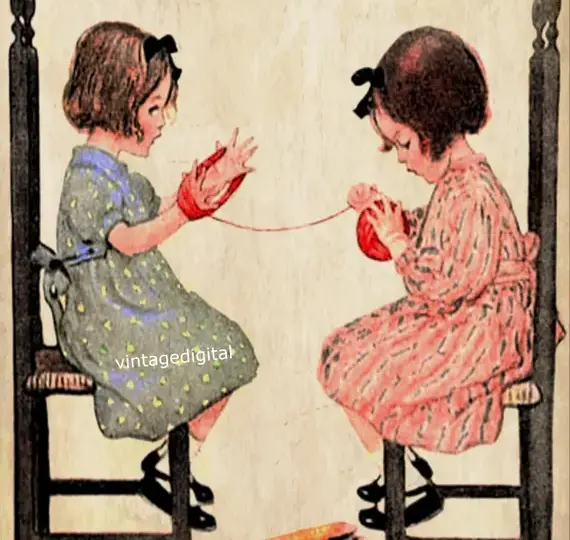
I remember sitting across from her, watching the sunlight pool on her notebook as she scribbled equations and doodles in the margins. Her hair caught the light, gold-flecked and wild, and I realized that the world had moved forward — and I had moved with it — but part of me remained paused, tethered to that missing corner of my life.
She looked up, smiling, and asked about a story from my childhood. I hesitated. The words I had carried for seventy-three years trembled behind my teeth. I had learned to speak carefully, to avoid shadows that might unsettle those around me. But something about her presence — her curiosity, her quiet insistence that I matter — loosened the knot I had held for so long.
“Did you ever have a sister?” she asked, casually, as if asking about a pet or a favorite book.
My breath caught. I set down my coffee cup. The smell of it, bitter and warm, mingled with the past. I could see Ella in that moment, her red ball bouncing somewhere in the corners of memory, and for the first time in decades, I felt allowed to name her aloud.
“Yes,” I whispered. “I had a twin. Her name was Ella.”
Her eyes widened, but she didn’t interrupt. She just listened. And I told her, carefully at first, then more fully, the story of a summer day that had ended too soon, of the silence that followed, of the absence that had shaped every choice, every careful step I had taken since.
I spoke of grief hidden behind polite smiles, of love unspoken, of guilt that had no one to carry but me. And as I spoke, I felt something shift — a thread connecting past to present, memory to living, absence to acknowledgment.
When I finished, there was a quiet between us, but it was not empty. It was filled with understanding, with recognition, with the possibility that some parts of life, no matter how long ignored, can still find light.
For the first time, I realized that speaking her name did not summon pain to the room. It summoned connection, and in that connection, a small piece of my childhood, long lost, returned.
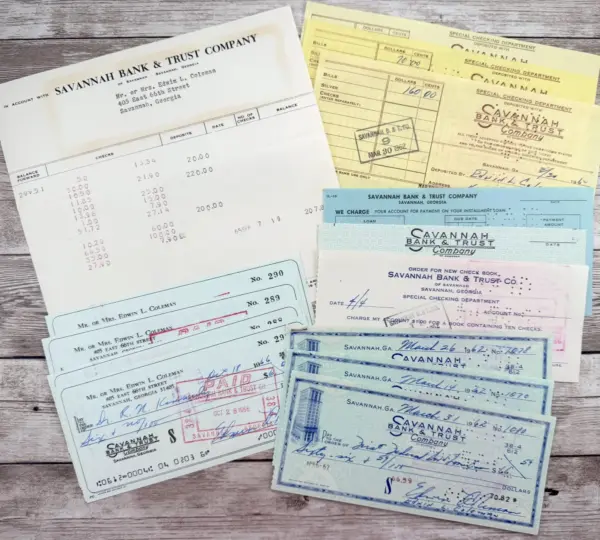
Her story unfolded like a mirror held up to the past I had carried alone. She had been born in the same hospital, on the same day. Circumstances — a foster placement, a hurried adoption — had carried her away before anyone had realized what had happened. Names changed. Records shifted. And yet here she was, decades later, alive and whole, with the same quiet resilience that had always been ours.
I reached out, almost instinctively, and our hands touched across the table. The tremor in mine was met with a gentle steadiness in hers. Words seemed inadequate for the collision of time, loss, and possibility. We spoke of parents we barely remembered, of a childhood split into parallel lines, of the strange, haunting weight of absence.
She told me about the life she had built — small triumphs, deep friendships, quiet sorrows. And I shared what I could without overwhelming her with the burden I had carried all these years: the silent grief, the careful living, the half-presence that had shaped me.
Between sips of coffee and hesitant laughter, I realized something profound. This was not the reunion of a lost twin in the way the world might imagine it — joyful, instantaneous, complete. It was something more delicate: a recognition of a shared origin, a reclaiming of a fragment of myself I had thought forever missing.
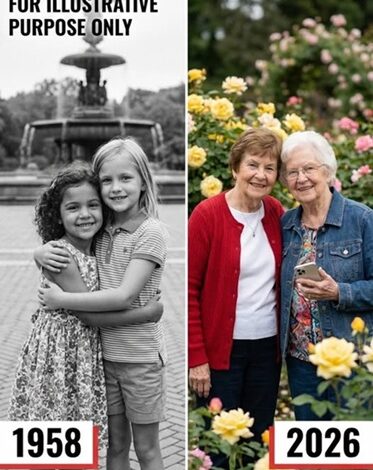
Outside, the sunlight fell in shifting patterns across the café floor. Inside, a new rhythm had begun, tentative but undeniable. We were, in a way, starting again — not as the children we had been, but as women who had lived, separately, through grief, absence, and survival, now finding each other in the quiet, improbable arc of a single afternoon.
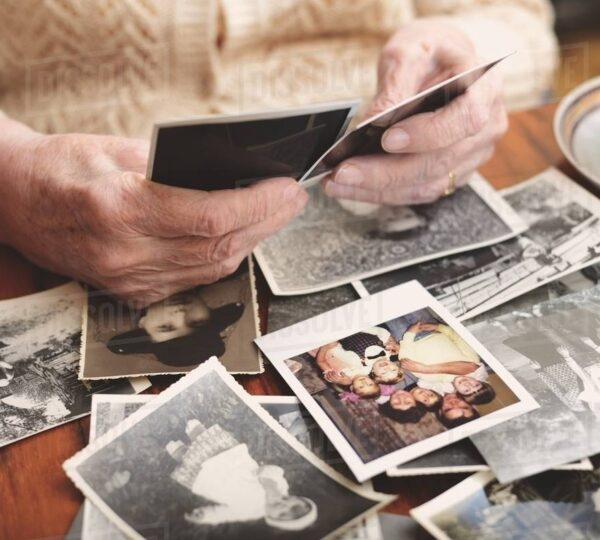
There is a quiet, astonishing beauty in that — the way life can circle back, offering fragments of what was lost, even decades later. The discovery of Margaret is not a replacement for Ella, nor should it be; it is a separate light, one that illuminates a truth long buried beneath layers of grief and silence.
Now, each call with Margaret, each shared laugh, each recognition of habit or phrase, feels like stitching together the edges of a life I thought had only half a story. The world, once so unyielding in its gaps, now feels slightly more hospitable. The absence of Ella is still present — a shadow, a tender ache — but it no longer stands alone.
I have learned, at last, that love does not vanish simply because it is unspoken. It waits in papers folded, in photographs tucked away, in the heartbeats of those who survived beside you. Silence shaped our childhood, but truth, however delayed, reshapes the present.
At seventy-three, I carry both sorrow and joy, absence and reunion, grief and gratitude. And in that balance — fragile, imperfect, profoundly human — I recognize the gift of connection. Not the one I imagined as a child, but a real, breathing, mutual acknowledgment of the lives we each endured.
Ella remains a shadow in the corner of memory, Margaret a presence at the table of now. And I — the one who stayed — can finally, quietly, breathe in the fullness of both.