Restoring a 100-Year-Old Home, We Uncovered a Hidden Relic in the Wall — and It Upended Our View of the House

When we began renovating the old house, we expected the usual problems that come with places built long before us.
Uneven floors.
Old pipes that refused to cooperate.
Hidden water damage.
Maybe a few scraps of newspaper tucked behind plaster, left there by someone who never imagined anyone would find them decades later.
That is the thing about old houses. They never give up their secrets all at once. They carry little habits from the people who lived there before, small traces of older routines hidden beneath paint, wood, dust, and time.
But one discovery stopped us completely.
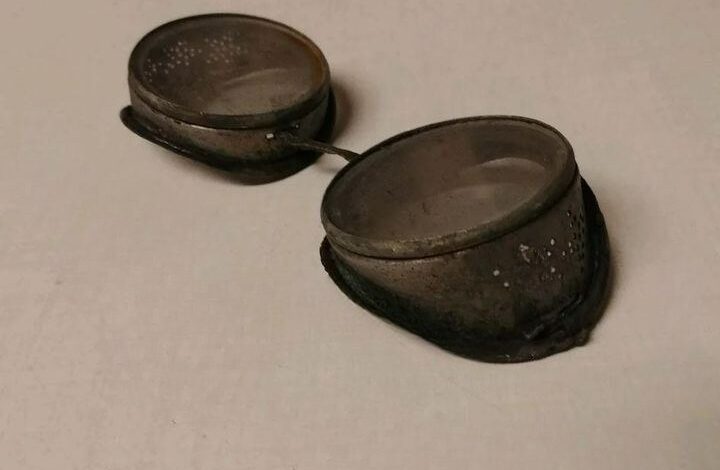
It happened while we were opening an interior stud wall near the back hallway. At first, the objects looked unimportant. Just a few small pieces of dark metal, worn smooth with age and tucked carefully into the space between the studs. Beside them was a narrow strip of metal, its edges softened as though it had been handled many times.
There were no labels.
No markings.
No note explaining why they were there.
Nothing that immediately told us what they had been used for.
And yet, the way they had been placed inside the wall felt intentional.
Not random.
Not forgotten by accident.
Hidden.
Saved.
We stood there holding them in our dusty hands, trying to make sense of them. They did not seem valuable in the usual way. They were not gold, silver, or anything rare. But they felt meaningful.
The house seemed to change around us in that moment.
Until then, the renovation had been practical. It had been about budgets, schedules, repairs, materials, paint colors, and decisions about what could be saved and what had to be replaced.
But those small pieces of metal shifted everything.
The house stopped feeling like a project.
It started feeling like a life someone had left behind.
Someone had touched those objects long before us. Someone had used them, carried them, placed them somewhere safe. They had mattered enough to be tucked inside a wall instead of thrown away or left on a workbench.
We searched afterward, trying to figure out exactly what they were. We compared photos, asked around, and looked through old tool references and household items from earlier decades. Still, we never found a certain answer.
Strangely, that mystery made the discovery even more powerful.
Because it reminded us how quickly ordinary knowledge disappears.
At one time, those pieces probably made perfect sense. Someone in that house may have known exactly what they were for. Maybe they belonged to a trade. Maybe they were used in a repetitive household chore. Maybe they were part of a repair, a tool, or some small daily task so familiar that nobody would have thought to explain it.
Then time moved on.
The people disappeared.
The purpose faded.
And only the objects remained.
That realization stayed with us.
Old houses are full of this kind of quiet evidence. Beneath floorboards. Behind walls. In attics, crawlspaces, basements, and forgotten corners. Tiny remains of ordinary people who woke up, worked, repaired things, cooked meals, raised families, argued, laughed, grew old, and eventually vanished from the rooms they once filled.
The house kept standing.
Their routines did not.
Unlike museum objects placed carefully behind glass, discoveries like this feel intimate because they were never meant to become history. They were not preserved for public memory. They were not labeled, cataloged, or displayed.
They were simply part of someone’s everyday life.
That was what made the moment so moving.
Holding those worn metal pieces created a connection across time, not to famous names or grand events, but to ordinary human beings. People with tasks to finish, problems to solve, and tools they understood so well they never imagined their purpose might one day be forgotten.
Even now, we still do not know exactly what the objects were used for.
But the uncertainty no longer feels frustrating.
In some ways, it deepens the meaning.
Because the discovery was never only about identifying the objects.
It was about perspective.
It reminded us that every old structure contains invisible layers of human experience. The walls do not just hold wood and plaster. They hold decisions, habits, repairs, routines, and small moments of life that no one thought were important at the time.
After that, the renovation felt different.
We were no longer simply removing the old to make room for the new. We were building on top of lives that had already passed through the house. Every board we pulled loose and every wall we opened carried the possibility of another quiet trace, another reminder that the place had existed long before our plans for it.
In the end, that small collection of forgotten metal pieces became one of the most memorable parts of the entire renovation.
Not because of what they were worth.
Not because we ever solved the mystery.
But because they reminded us that history is rarely grand while it is happening.
Most of the time, history looks like ordinary people using ordinary things, never imagining that one day, generations later, someone might stop in silence, hold what they left behind, and wonder who they were.