The Heartbreaking And Heroic Secrets Of The Man Inside The Machine Who Became A Global Legend Despite Standing Only Three Feet Tall

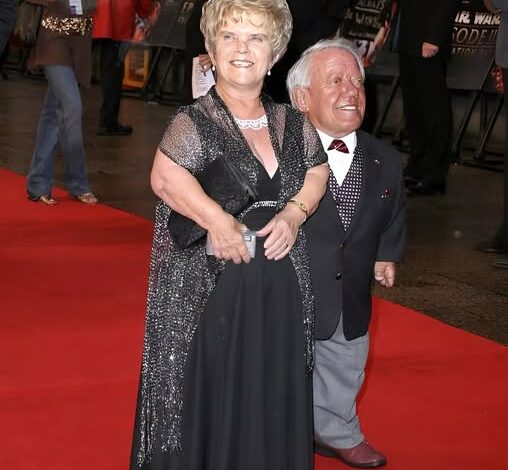
The world of cinema often celebrates the faces that dominate the screen—the actors whose names appear in lights and whose expressions carry the story forward. Yet some of the most meaningful contributions come from those the audience rarely sees, performers hidden behind costumes, mechanics, and illusion. Few lives reflect that quiet impact more powerfully than Kenny Baker’s—the man who gave life to one of the most beloved characters in film history.
Standing at just 112 centimeters tall, Baker defied every assumption about what it meant to leave a mark on the world. His journey didn’t begin in Hollywood, but in the vibrant, demanding world of live performance. Long before stepping onto a film set, he worked in circuses and variety shows, where timing, physical control, and audience connection were everything. It was there that he developed the discipline and resilience that would later define his career.
At a time when the entertainment industry often reduced people of short stature to novelty roles, Baker refused to be limited by expectation. He brought skill, personality, and presence to every performance, proving that talent could not be measured in height. His work as both a musician and comedian demonstrated a versatility that made him stand out in an environment that rarely offered equal opportunity.
His life changed in the mid-1970s, when he was cast in a role that would become iconic. A bold new science fiction film required someone to operate and embody a small, cylindrical droid—a role that demanded both physical endurance and creative expression. Inside the restrictive costume, Baker had little room to move, limited visibility, and no ability to rely on facial expression or voice.
Yet within those constraints, he created something unforgettable.
Through subtle tilts, deliberate movements, and a distinctive way of navigating space, he gave the droid personality. It wasn’t just a machine—it was curious, stubborn, loyal, and quietly brave. Every small motion carried intention. Every shift of weight conveyed emotion. What audiences connected with wasn’t the metal exterior, but the humanity within it—and that came entirely from Baker.
Without him, the character would have remained a prop. With him, it became alive.
As the film rose to global success, the droid became one of its most recognizable figures. While many actors received widespread fame, Baker’s contribution remained largely behind the scenes. Yet his work formed a crucial part of the story’s emotional core, particularly in the dynamic between the film’s robotic characters. His performance bridged humor and heart, grounding even the most fantastical elements in something relatable.
He returned to the role in multiple sequels, adapting as filmmaking technology evolved. Even as digital effects became more prominent, Baker’s physical presence continued to add authenticity that technology alone could not replicate. His work served as a reminder that even in a world of advancing visuals, the human element remains essential.
Away from the cameras, Baker lived a life rooted in connection and family. He married a woman who shared his condition, creating a partnership built on mutual understanding and support. Together, they raised two children, teaching them values that extended far beyond appearance—resilience, kindness, and self-worth.
Despite his growing recognition, he remained grounded. Fame never defined him. Instead, he measured success through the life he built and the people he cared for.
Later in life, as fan conventions brought him face to face with audiences, Baker stepped out from behind the costume that had once concealed him. He met fans with warmth and humor, embracing the chance to share his story. For many, it was a revelation—to see the man behind the character they had loved for years.
And yet, there was something fitting about that delay.
Because his greatest achievement had never been visibility—it had been impact.
Today, his legacy lives on in every moment that droid appears on screen. Each tilt, each movement, each quiet act of courage reflects the spirit he brought into the role. Generations of viewers may not know his name immediately, but they recognize the character—and the feeling it evokes.
Kenny Baker’s life is not just a story about cinema. It is a story about redefining what it means to be seen. He showed that greatness does not require a spotlight, that influence does not depend on recognition, and that true presence can exist even when hidden from view.
In the end, he leaves behind more than a role—he leaves behind a reminder that determination, creativity, and heart are what truly define a legacy.
And by that measure, he stood taller than most.