I was the daughter who never followed the script.
I did not marry by twenty-five. I did not hand my parents grandchildren by thirty. I did not sit quietly at Sunday dinners while Isabelle turned every family gathering into another performance of sweetness and injury.
Isabelle had always been the golden one.
The delicate one.
The pretty one.
The one who could cry beautifully, apologize perfectly, and somehow never change at all.
When she needed money, my parents called it a difficult season. When she spent beyond her means, they called it stress. When she insulted me, they called it sibling tension. When she took something that belonged to me, they told me I should be generous because I had always been the stronger one.
That was the rhythm of our family.
Isabelle created the problem.
My parents softened the truth.
And I was expected to pay the cost.
But this time, she had reached for something she had no right to touch.
The property she wanted was my cabin in Aspen, Colorado. Not an inheritance. Not a childhood home. Not a family asset wrapped in generations of memory.
Mine.
I had bought it myself.
I bought it with years of missed holidays, postponed vacations, canceled birthdays, late nights in offices, and mornings when I woke up with spreadsheets still open beside a cold cup of coffee. Every beam, every stone, every window that caught the mountain light belonged to a life I had built without asking anyone’s permission.
The cabin had cedar beams, stone walls, a narrow private dock, and windows that made the rooms feel alive when the sun crossed the mountains. It was the first place in my adult life where nobody needed anything from me.
No calls from my mother asking me to rescue Isabelle from another unpaid bill.
No messages from my father accusing me of becoming cold.
No family dinners where my success was treated like an accusation.
Just pine trees, cold mornings, heavy blankets, and the sound of wind moving through the mountains.
And now Isabelle had walked into court claiming I had signed it over to her.
She and her husband, Patrick, had produced a document they said proved I had voluntarily given her the cabin. They called it a private family agreement. They said I had promised it to Isabelle because she had a husband, a future, and the type of family legacy I supposedly did not.
It was almost elegant in its cruelty.
They had taken every insult my family had ever aimed at me and turned it into a legal argument.
Patrick stood beside Isabelle in the courthouse hallway wearing a dark suit that looked expensive but uncomfortable. He always dressed like a man trying to convince strangers he belonged in rooms he had not earned entry into. His shoes were polished too brightly, and his expression carried the smug confidence of someone who believed a signed paper mattered more than the truth.
As we approached the courtroom, he brushed past me and lowered his voice.
“It would be better for everyone if you stopped making this ugly,” he murmured. “Your parents are already disappointed enough.”
I looked at him for half a second.
Then I kept walking.
Years earlier, those words would have found their target. They would have taken me back to childhood, standing in the kitchen while my mother told me to let Isabelle keep whatever she had taken because it was easier that way.
But I had spent too many years rebuilding myself to let Patrick watch me flinch.
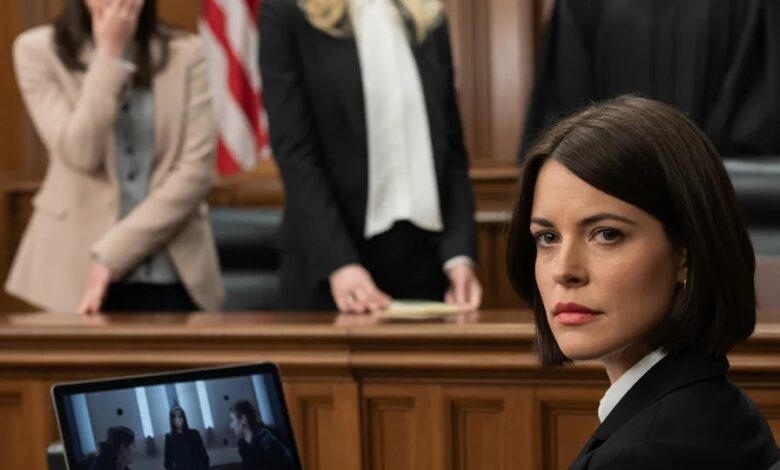
I entered the courtroom and sat beside my attorney, Gregory Vance.
Mr. Vance was calm in a way that made other people’s panic seem unnecessary. He was in his early sixties, with silver hair, rectangular glasses, and an orderly manner that made even silence feel prepared.
For weeks, he had listened to my family’s accusations, Isabelle’s dramatics, Patrick’s arrogance, and my parents’ lectures about loyalty. Through all of it, he kept giving me the same advice.
“Let them talk,” he would say. “People like this always mistake confidence for evidence.”
The courtroom felt colder than the hallway. The walls were pale, the benches polished smooth by years of anxious hands. An American flag stood near the judge’s bench, and above it all hung the court seal, a reminder that family stories sound very different once they are placed under oath.
Judge Katherine Sterling entered, and everyone stood.
She had a steady face and sharp eyes, the kind of expression that suggested she did not waste energy on performance. When she sat, the room seemed to settle with her.
Isabelle’s lawyer stood first.
He was younger than Mr. Vance and much more theatrical, with a voice trained to sound wounded on behalf of people who were not wounded at all.
“Your Honor,” he began, “my client requests that the private agreement signed by her sister, Ms. Felicia Marlowe, be honored. In that agreement, Ms. Marlowe voluntarily ceded the family property in Aspen to my client, Mrs. Isabelle Whitaker. We believe this is fair, especially given that Ms. Marlowe has no children and no direct family legacy that would justify her retaining such a significant estate.”
Behind me, my mother inhaled softly.
Pleased.
Vindicated.
That sentence revealed everything.
They did not believe I deserved what I had built because I had built it for myself. In their minds, a woman without a husband was unfinished. A woman without children was temporary. A woman who owned property without turning it into a stage for motherhood was selfish.
Isabelle had a husband, matching dinner plates, and framed family photos on her mantel.
So, to them, she deserved my sanctuary more than I did.
Her lawyer handed the document to the clerk.
There it was.
The supposed agreement.
My name at the bottom.
Or rather, a poor imitation of it.
The signature slanted weakly across the page, as if someone had studied its shape but never understood its movement. I had signed thousands of contracts in my career. My signature was fast, firm, and unmistakable.
This one looked nervous.
Isabelle dabbed one eye with a silk handkerchief.
“I only want the promise she made to be honored,” she said softly. “That house means so much to our family.”
Her voice trembled in all the right places.
I looked down at my hands and kept them still.
Judge Sterling reviewed the document without revealing much. She scanned the first page, turned to the second, paused, then returned to the first.
Her brow tightened.
“Ms. Marlowe,” she said, looking at me, “this property appears to be registered under a corporate entity rather than under your individual name.”
“That is correct, Your Honor,” I said.
Isabelle’s hand froze halfway to her face.
Patrick shifted beside her.
The judge looked back at the paperwork.
“Is the Aspen cabin one of your holdings?”
A strange quiet entered the courtroom.
Not dramatic at first.
Just the silence of people realizing they had walked into a room without understanding its size.
I looked at Isabelle.
Then at my parents.
Then back at the judge.
“Yes, Your Honor,” I said clearly. “It is one of twelve properties.”
Isabelle’s face changed immediately.
Her lips parted. Her eyes widened. The polished expression she had brought into the courtroom slipped away so fast it almost looked painful.
For a moment, she was no longer the wounded sister asking for fairness.
She was a woman who had just discovered she had been trying to steal one coin from a vault she never knew existed.
“Twelve properties?” my mother blurted from behind me.
Judge Sterling turned her eyes toward her.
My mother shrank back, cheeks flushed.
My father stared at me as if I had wronged him by not announcing the full scale of my success at Thanksgiving dinner.
Patrick’s shoulders lowered slightly. His eyes moved from the judge to my lawyer, then toward the exits, and back to Isabelle.
For years, they had mocked what they failed to understand. They called my business trips obsessive. They called my independence arrogance. They called my late nights sad.
They assumed that because I did not boast, I had nothing to boast about.
That had always been their favorite mistake.
Judge Sterling set the document down.
“For the record,” she said, “what other properties are included in this corporate portfolio?”
Mr. Vance rose.
“Your Honor, my client’s company currently owns multiple commercial retail buildings in Austin, two luxury condominiums in Miami, a logistics warehouse outside Boise, residential properties in Colorado and North Carolina, and additional investment holdings. The Aspen cabin was purchased entirely with Ms. Marlowe’s capital. It was never inherited, never jointly owned, and never part of a family estate.”
My father’s jaw clenched so tightly I saw the muscle jump near his temple.
Isabelle’s lawyer stood again, though his confidence had lost its weight.
“That does not change the existence of a signed agreement,” he said. “Whether Ms. Marlowe owns one property or twelve is irrelevant if she voluntarily executed a transfer.”
Mr. Vance opened his black leather folder.
“Actually,” he said, “it is precisely why we must address the validity of that signature.”
Isabelle blinked quickly.
“What is that supposed to mean?” she asked.
Her voice no longer floated.
It shook.
Mr. Vance handed a thick file to the judge.
“We have submitted a forensic handwriting report,” he said, “which confirms that the signature on this supposed agreement does not belong to my client. The report identifies significant differences in pressure, angle, letter formation, and stroke continuity. In plain terms, Your Honor, the signature is forged.”
“That is a lie!” Isabelle cried, her sweetness vanishing at once. “She signed it. I saw her sign it.”
Judge Sterling struck the gavel once.
“Mrs. Whitaker,” she said sharply, “you will control yourself in my courtroom.”
Isabelle sat back, breathing hard.
Patrick stared straight ahead.
He did not comfort her. He did not touch her hand. He did not whisper reassurance.
He sat frozen, his color draining slowly.
That silence said more than any confession could have.
Mr. Vance stepped toward the display screen at the front of the room.
“We also have evidence showing how the document was fabricated,” he said.
The screen lit up.
Security footage appeared.
My private office in Aspen.
The date in the corner read October fourth, nearly two months after the agreement was supposedly signed.
My mother gasped.
Isabelle’s hand flew to her mouth.
My father stared at the screen with the stunned blankness of a man watching his own judgment collapse in public.
In the video, the office door opened slowly.
Patrick stepped inside.
On screen, he looked smaller than he did in court. Less polished. More nervous. He turned his head left and right, listening.
Then he walked directly to my desk.
The courtroom was so quiet I could hear the faint hum of the projector.
Patrick opened one drawer, then another. He moved quickly, sharply, with the urgency of a man who knew he had no right to be there.
Finally, he pulled out a stack of my company letterhead. He took a pen from the brass cup on my desk, glanced toward the hallway, tucked the papers into his jacket, and left.
Mr. Vance paused the footage on Patrick’s face.
Unmistakable.
“The defendant entered private property without authorization and removed corporate stationery from my client’s office,” Mr. Vance said. “That same stationery was later used to create the document presented by the plaintiff.”
Patrick shot to his feet.
“That proves nothing,” he snapped, though his voice cracked. “And those cameras weren’t supposed to be there.”
For the first time all day, I turned fully toward him.
“I was inside my own home, Patrick,” I said. “You were the one who had no business being there.”
I did not raise my voice.
That made the words land harder.
Isabelle turned toward him, pale beneath her makeup.
“You told me she signed it,” she said. “You said all we had to do was put pressure on her.”
Patrick laughed, but it came out jagged and ugly.
“Don’t act innocent now,” he snapped. “You were the one who said you couldn’t stand seeing your single sister live better than you.”
My mother began crying loudly behind me.
My father closed his eyes.
For a moment, he looked old.
Not wise. Not sorry. Just old.
As if the truth had stripped away the authority he had worn his entire life.
Judge Sterling demanded order, but the room had already broken open.
My parents whispered frantically. Isabelle shook her head like denial might become a legal strategy. Patrick stood with both hands braced on the table, breathing like a trapped animal.
Then Mr. Vance removed one final thick envelope from his briefcase.
“Your Honor,” he said, “there is one more piece of evidence the court should review.”
When Isabelle saw the envelope, her expression changed again.
Before, she had been afraid.
Now she looked cornered.
Mr. Vance opened it carefully.
“We are submitting certified screenshots of private text conversations between Mrs. Isabelle Whitaker and Mr. Patrick Whitaker.”
“No,” Isabelle whispered.
Then louder, “No. You can’t use those. They’re private.”
Patrick turned on her with pure contempt.
“You saved those messages?” he snarled.
She began crying again, but this time her tears had nowhere useful to go.
Mr. Vance read from the pages.
“Isabelle writes, ‘If Felicia says she didn’t sign it, my parents will pressure her. She always gives in when we make her feel guilty.’ Patrick replies, ‘With the paper and the signature, the judge won’t look too closely. She doesn’t have a family, so she won’t fight back.’”
My chest tightened.
Not because I was shocked.
That was the saddest part.
I was not shocked at all.
Some quiet part of me had always known this was how they saw me.
Useful.
Durable.
Someone who could be pushed, guilted, insulted, and still expected to arrive at Christmas with a casserole and a polite smile.
But hearing it read aloud under the seal of the court made the truth sharper and cleaner.
It had never been my imagination.
Mr. Vance continued.
“Isabelle writes, ‘That cabin should have been mine because I have a husband and can fill it with a real family. She only uses it to feel superior to us.’”
My mother lowered her face into her hands.
My father no longer looked angry.
He looked emptied out.
For the first time, he seemed to understand that Isabelle had not been fragile, misunderstood, or unfairly burdened. She had been willing to ruin me because she wanted what I owned and believed my life mattered less because I had built it differently.
Judge Sterling reviewed the documents again before looking directly at Isabelle and Patrick.
“Did you knowingly present a fraudulent document to this court with the intention of taking Ms. Marlowe’s rightful property?” she asked.
No one answered.
Isabelle rose, but her lawyer caught her sleeve. She pulled free and stumbled toward me.
“Felicia, please,” she said, reaching for my hand. “I was desperate. Patrick kept putting ideas in my head. You have so much, and I have nothing.”
I moved my hand back before she could touch me.
“You did not want help, Isabelle,” I said. “You wanted to punish me for building a life without asking for your approval.”
My father stood.
“Felicia,” he said, voice cracking, “think carefully. She is your sister. You cannot destroy this family.”
There it was.
The oldest sentence in my life.
It had worn many forms over the years, but it always meant the same thing.
Let Isabelle have it.
Let Isabelle keep it.
Let Isabelle lie.
Let Isabelle embarrass you.
Let Isabelle take your money, time, patience, and peace.
Do not make this difficult for us.
I remembered being nine, when Isabelle broke the porcelain horse my grandmother gave me and my mother told me not to make her feel worse. I remembered being sixteen, when Isabelle borrowed money from my summer job and never returned it, and my father said sisters should not keep score. I remembered being twenty-eight, when Isabelle joked at Thanksgiving that I was married to my company and everyone laughed while I cut my turkey into pieces too small to taste.
Every time, they told me family came first.
But family, as they defined it, had never been a shelter.
It was a debt I was expected to keep paying.
In that courtroom, with the forged document lying useless on the table, I finally understood something that changed the way I breathed.
A family that only reaches for you when it wants to take something is not a refuge.
It is a liability.
Judge Sterling ruled without hesitation.
“This lawsuit is dismissed with prejudice,” she said. “The District Attorney’s office will be notified immediately to review the evidence and determine whether charges are appropriate regarding forgery, unauthorized entry, theft of materials, and attempted fraud upon this court.”
Patrick sank into his chair.
“No,” he stammered. “There has to be a mistake.”
There was no mistake.
Two officers entered the courtroom shortly afterward. They moved calmly and professionally, without drama. Somehow, that made it worse for Patrick.
He looked as if he expected outrage, negotiation, or one final opening where his confidence could still buy him an escape.
But the room had changed.
He was no longer a husband defending his wife.
He was a man whose choices had walked ahead of him and opened the door.
Isabelle cried his name. My mother begged the officers not to take him. My father tried to speak to the judge as though fatherhood gave him authority in every room.
Nobody listened.
As Patrick was led away, Isabelle turned to me with desperation in her eyes.
“Please,” she said. “Tell them you don’t want this. Drop it. You can’t do this to me.”
I stepped close enough that only she could hear.
“I did not do anything to you, Isabelle,” I said. “I just stopped saving you from your own decisions.”
Her face crumpled.
For years, I would have mistaken that look for pain.
That day, I recognized it as shock.
Not shock that she had hurt me.
Not shock that she had done something wrong.
Shock that I was no longer willing to absorb the cost.
When I left the courthouse, the late afternoon sky was gray and metallic. Traffic moved past in steady waves. People hurried by with coffee cups, briefcases, winter coats, and their own private troubles.
My parents followed me outside.
My mother called first.
“Felicia.”
I kept walking.
Then my father’s voice came sharper.
“Do not walk away from your mother.”
That command might once have stopped me. It had been built into me early and reinforced for decades with guilt and silence.
But sometimes an old chain loses its weight all at once.
I turned on the courthouse steps.
My mother looked smaller than she had that morning. Her lipstick had faded. Her eyes were red. My father stood beside her, rigid and stern, though even his sternness looked tired.
“She is your sister,” my mother said. “You know how emotional Isabelle can be.”
“She forged a document to take my property,” I said.
“She was under pressure.”
“She lied in court.”
“She made a mistake.”
“No,” I said. “She made a plan.”
My father’s expression hardened.
“You have plenty. You could have helped her.”
“I have helped her,” I replied. “More times than either of you ever admitted. I paid her overdue mortgage once. I covered her credit card debt after she called me crying from a parking lot. I paid for medical bills, car repairs, school expenses, vacations she claimed were for her mental health, and dinners where she ordered the most expensive wine and disappeared before the check arrived.”
My mother looked away.
“You never told us all of that,” she muttered.
“You never wanted to know.”
For once, neither of them had an answer ready.
I looked at them and saw the pattern clearly.
They had not really been fooled by Isabelle. They had chosen her version of events because it was easier than admitting they had built a family around one daughter’s entitlement and the other daughter’s endurance.
“I am done being the quiet place where this family hides its shame,” I said.
My mother’s mouth trembled.
“That is cruel.”
“No,” I said. “It is true. You are just not used to hearing the truth from me without an apology attached.”
Then I walked away.
The weeks afterward were not peaceful at first.
People like my family do not respect boundaries just because you finally state them clearly. They test them. They push. They send messages through cousins, neighbors, church friends, and relatives who have not called in years but suddenly care very deeply about unity.
My phone filled with missed calls.
My mother left voicemails that began with sobbing and ended with blame. My father sent stiff, formal texts about shame and forgiveness, as though drafting official notices on family letterhead.
Isabelle sent long messages in the middle of the night, swinging between apology and anger.
I am sorry you feel hurt.
You always wanted to make me look small.
You could fix this with one call.
I read the first few.
Then I stopped.
Mr. Vance told me to preserve everything and respond to nothing.
So that was what I did.
It was harder than it sounds. Silence is not passive when people have trained you to explain yourself.
Silence becomes discipline.
Silence becomes a locked gate.
I returned to work.
I walked through warehouses in Boise and Austin. I sat in conference rooms where nobody cared whether I had a husband, children, or parents who clapped for me. They cared whether shipments arrived on time, whether contracts were sound, whether buildings performed, whether my word meant something.
It did.
That was the part my family had never understood.
I had not built my life by being cold.
I had built it by becoming reliable in a world that rewarded reliability far more honestly than my family ever had.
A few months later, Patrick’s career collapsed.
I heard the official details first, then the messier version through relatives who had suddenly remembered my phone number. He accepted a plea arrangement that spared him the worst possible outcome, but it left a permanent mark on the image he had spent years polishing.
His professional contacts vanished quickly.
Men like Patrick often confuse networking with loyalty. They only learn the difference when the room stops returning their calls.
Isabelle did not escape untouched either.
Legal fees swallowed what savings she had. The suburban house she loved to show off went on the market.
The listing photos looked bright and cheerful in the artificial way real estate photos always do. White kitchen. Staged breakfast nook. Trimmed lawn. Blue front door with a wreath.
Everything looked orderly.
But order had only ever been decoration.
She sold the house and moved back in with my parents. My mother called it temporary. My father called it necessary.
A cousin with no gift for discretion told me Isabelle was staying in the attic room above the garage, the same cramped space where my parents stored old tax boxes, broken lamps, holiday wreaths, and plastic bins full of things no one cared enough to bring downstairs.
I did not celebrate that.
I want to be clear.
I did not smile in my office imagining my sister surrounded by dust and cardboard boxes. I did not feel joy at the thought of her moving from dinner parties to an attic room in the house where we grew up.
What I felt was much quieter than joy.
I felt the absence of responsibility.
For the first time, Isabelle’s crisis did not become my assignment.
That winter, I returned to the cabin in Aspen.
The drive up felt familiar and cleansing. Snow lined the mountain roads in clean white ridges. The sky was pale blue, and the air had that sharp Colorado brightness that made every pine needle look carefully drawn.
When I turned onto the property and saw the cabin through the trees, something inside my chest loosened.
It was exactly as I had left it.
Stone chimney.
Cedar beams.
Wide windows.
The dock quiet beneath a thin edge of frost.
A stillness that asked nothing from me.
Inside, I set my bag by the stairs, made coffee, and lit the fireplace. Then I sat.
No music.
No television.
No phone in my hand.
Only the low crackle of the fire and the slow return of my breathing.
The room smelled faintly of cedar, coffee, and cold air. Outside the windows, the last light moved across the snow.
I watched it fade and realized I had spent most of my life confusing peace with loneliness.
They had taught me that a woman alone was incomplete.
But sitting there in a home I had bought, protected by boundaries I had finally enforced, I felt more whole than I ever had at my parents’ crowded dining table.
That evening, my phone buzzed.
A voicemail from my mother.
I looked at it for a moment before pressing play.
“Felicia,” she began, already wounded, “your sister is struggling and needs money. Do not be so harsh. You have plenty to spare, and family should not turn away when—”
I deleted it before she finished.
Then I placed the phone face down on the table.
The fire shifted behind the glass, sending a brief spray of sparks upward. I wrapped both hands around my mug and let the warmth move into my fingers.
For years, I thought forgiveness meant reopening the door.
I thought it meant answering the call, paying the bill, accepting the apology that was really a tactic, attending the dinner, smiling through the insult, and pretending the past had been complicated instead of deliberate.
But that night, in the quiet of my cabin, I understood forgiveness differently.
Forgiveness does not have to mean returning to the place where people learned how to hurt you.
It does not have to mean offering another chance to someone who only wants another opportunity.
It does not have to mean mistaking guilt for love.
Sometimes forgiveness is simply the decision to stop carrying a debt that was never yours.
Sometimes it is locking the door without anger.
Sometimes it is letting people live inside the consequences they created while you sit beside your own fire and allow your body to learn what safety feels like.
I never received the family apology people expect at the end of stories like this.
My parents never sat across from me and admitted they had been wrong all those years. Isabelle never wrote a clean apology without self-pity stitched through it. Patrick never looked me in the eye and accepted full responsibility.
There was no Thanksgiving reconciliation.
No tearful embrace in the doorway.
No music swelling over three generations finally learning how to love each other properly.
Real life is rarely that generous.
But I received something better than their apology.
I received my life back.
Mornings without dread.
Holidays without negotiation.
A phone that could ring without controlling me.
A house in the mountains that stayed mine because truth, patience, and preparation were stronger than guilt.
And most of all, I received the lesson I should have learned years earlier.
Love does not require you to make yourself smaller so someone else can feel entitled.
Family does not give anyone the right to take what you built.
And peace, once you stop apologizing for protecting it, becomes the most valuable property you will ever own.
THE END.