I Married an Older Woman During a Difficult Time — After Her Funeral, Her Lawyer Gave Me a Box That Changed Everything

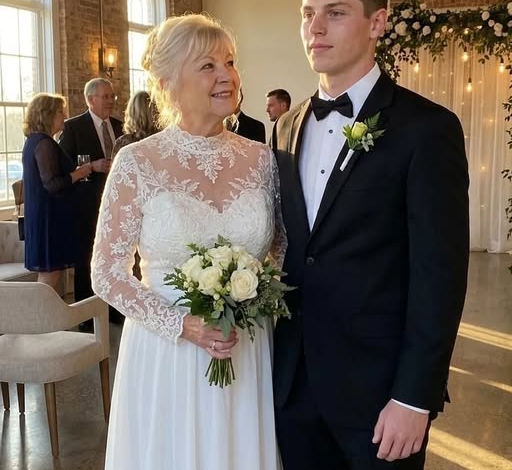
Damon used to tell himself that marrying Evie was not really deception.
It was survival.
At twenty-five, he was buried under debt, sleeping in his truck behind a grocery store, and cleaning himself up in gas station bathrooms before job interviews that rarely went anywhere. He kept a duffel bag beneath the passenger seat and a stack of overdue notices folded inside the glove compartment. Every day felt like a negotiation with humiliation.
Then Evie entered his life.
She was seventy-one, widowed, gentle, and far kinder than he expected anyone to be to a man like him. She offered warmth without demanding an explanation. She offered meals without making him feel like a beggar. She offered him a roof, quiet rooms, and the unfamiliar feeling of being able to breathe without calculating where he would sleep that night.
When she proposed marriage, Damon said yes.
Not because he loved her.
Not at first.
He said yes because he was exhausted from being alone and afraid. He said yes because her house was warm, her pantry was full, and her life seemed steady in a way his had never been. He told himself he could learn to care for her. He told himself companionship was still something valuable. He told himself that maybe this arrangement could help them both.
But beneath every excuse, he knew the truth.
He had entered the marriage because he wanted safety.
And somewhere in the darkest part of his mind, he hoped her comfortable life might one day become his own.
Evie never treated him as if she suspected him.
That made everything worse.
She filled the house with small kindnesses. Coffee waiting in the morning. Clean towels folded neatly in the bathroom. Soup simmering on the stove when he came in cold from another failed shift. She remembered how he took his tea, noticed when his boots leaked, and left aspirin beside the sink when he pretended his headaches were nothing.
Her care was quiet.
Steady.
Undemanding.
And little by little, it began to disturb him more than judgment would have.
Before their courthouse wedding, Evie placed a prenuptial agreement on the kitchen table.
Damon stared at it, feeling heat rise in his face.
Evie sat across from him calmly.
“Loneliness does not make me foolish,” she said.
There was no anger in her voice. No accusation. Just a simple line drawn with dignity.
The agreement protected her house, her savings, and the assets she had built long before Damon ever came into her life. If he had been wiser, he might have understood then that Evie saw more than she said.
Instead, he signed.
He told himself time could still change things.
They settled into married life quietly.
Damon slept in the guest room at first, then later in the room beside hers when her health began to require more help during the night. He noticed every doctor’s appointment. Every prescription bottle. Every new instruction from the clinic.
And each notice filled him with a shameful awareness he hated himself for having.
Evie was not young.
Her heart was not strong.
Her hands trembled some mornings when she buttered toast.
Damon told himself he was not waiting for anything.
But the truth sat inside him like a stone.
Evie continued caring for him anyway.
She bought him winter boots after seeing cardboard tucked inside the soles of his old ones. She gave him a coat heavy enough for January wind. When his truck needed repairs and he could not cover the cost, she paid the mechanic without asking for repayment.
At first, Damon resisted.
“I don’t need charity,” he snapped once.
Evie looked at him gently.
“No,” she said. “You need help. Those are not always the same thing.”
He hated how clearly she saw him.
She noticed the shame hiding beneath his pride. She noticed how he flinched when people offered kindness, as if kindness always came with a trap. She noticed the fear beneath his silence.
But she never forced a confession from him.
That was Evie’s way.
She left room for people to tell the truth when they were ready.
Damon did not become honest quickly.
He helped her around the house. He carried groceries, fixed loose cabinet hinges, drove her to appointments, and sat in waiting rooms pretending not to be anxious. Sometimes, when she fell asleep in her chair, he tucked a blanket around her knees.
Those moments confused him.
Because they were real.
Not pure, perhaps. Not enough to erase his original motives. But real.
There were nights when he looked at Evie across the kitchen table and felt something like affection settle in his chest. Not romantic love in the way young people imagined it. Something quieter. A strange loyalty. A tenderness he had not planned for.
Then fear would return.
Fear of being poor again.
Fear of sleeping in his truck again.
Fear of becoming nobody.
One evening, after a bad day and too much resentment, Damon sent a careless text to an old friend.
She’s got everything protected, but once she’s gone, at least I’ll finally be secure somehow.
He regretted it almost immediately.
But not enough to delete it.
Not enough to confess.
A few days later, Evie suffered heart failure.
It happened suddenly, in the early morning, while the house was still gray with dawn. Damon called the ambulance. He rode beside her, holding one of her frail hands while the paramedics worked. At the hospital, he sat in a plastic chair beneath fluorescent lights and listened to machines measure the distance between hope and goodbye.
By evening, Evie was gone.
At her funeral, the church was full.
Neighbors came.
Women from her book club cried openly.
The pastor spoke of generosity, patience, and the kind of faith that showed itself through casseroles, winter coats, handwritten cards, and quiet visits to people everyone else had forgotten.
Damon stood near the front, wearing the only suit he owned, surrounded by people who had loved Evie honestly.
And he carried the weight of what he had not been.
The next morning, Evie’s lawyer called.
Damon arrived at the office expecting a formal reading of the will. He did not expect much, not after the prenup, but some small part of him still hoped.
That hope died quickly.
Evie had left her house to her niece.
Most of her savings went to charity.
Several personal items were distributed among friends and church members.
Damon received one shoebox.
The lawyer placed it on the table in front of him.
It was old, the cardboard soft at the corners. Inside were receipts, handwritten notes, and a printed copy of the text message Damon had sent his friend.
His stomach turned cold.
Beneath the papers was a letter.
Damon recognized Evie’s handwriting.
Dear Damon,
If you are reading this, then I have gone where you cannot follow yet, and I hope by now you are tired of running from yourself.
He sat very still.
Evie wrote that she had known the truth about him almost from the beginning. She knew he had married her for shelter. For security. For fear. She had seen the hunger in him, not just for food or money, but for safety.
But she also saw something else.
She saw him help an old man carry groceries when he thought no one was watching. She saw him repair a neighbor’s porch step without asking for payment. She saw the way he softened around children and stray animals. She saw him try to care, even when shame made him cruel and fear made him selfish.
You came to me for the wrong reasons, she wrote. But wrong reasons do not have to be the end of a person’s story.
Damon pressed the letter flat with trembling fingers.
Evie did not call him a monster.
Somehow, that hurt more.
She wrote that the shoebox contained every quiet kindness she had offered him, not as a debt, but as a record. Boots. Coat. Truck repair. Medical co-pays. Grocery money. Small loans he pretended he had not needed.
Not to shame him, she explained.
To show him the difference between being loved and being used.
I knew what you wanted from me, Damon. I gave anyway. Not because I was foolish. Because I hoped one day you would learn how to receive without taking.
At the end of the letter, she left him one final request.
Tell the truth.
Not to her. It was too late for that.
To everyone else.
And most of all, to himself.
For days, Damon lived in a fog.
He read the letter again and again. He sat in the room he had rented after leaving Evie’s house and spread the receipts across the bed like evidence of a trial only he could attend.
Every item told the same story.
Evie had known.
Evie had seen.
Evie had given him the chance to become better, and he had nearly wasted it.
The charity gathering was held two months later in her honor.
Evie’s donation had funded a church pantry, a winter clothing drive, and emergency assistance for local families. The fellowship hall was filled with people who had been touched by her generosity. There were framed photographs of her on the tables, small bouquets of yellow flowers, and a guest book full of stories.
Damon almost did not go.
Then he remembered the final line of her letter.
Tell the truth.
When the pastor invited anyone to share a memory, Damon stood.
The room quieted.
He walked to the front with shaking hands and looked out at the faces of people who knew Evie far better than he had allowed himself to.
“My name is Damon,” he began. “And I need to tell the truth about why I married her.”
A few people shifted uneasily.
He continued anyway.
He told them he had been desperate. Broke. Homeless. Afraid. He admitted that he had accepted Evie’s proposal because he wanted shelter and security, not because he understood love.
His voice broke, but he did not stop.
He told them she had known.
He told them she had still shown him kindness.
He told them she had protected herself without becoming cruel, and that she had seen something in him he was not sure he deserved to have seen.
“I used fear as an excuse,” he said. “I let it make me selfish. Evie did not leave me her house or her money. She left me something harder. She left me the responsibility to become the man she kept hoping I could be.”
By the time he finished, the room was silent.
No applause came at first.
Then the pastor stepped forward and placed a hand on Damon’s shoulder.
“That is a beginning,” he said softly.
It was not forgiveness.
Not yet.
But it was truth.
Months passed.
Damon began volunteering at the church pantry funded by Evie’s charity. At first, people watched him carefully. Some with suspicion. Some with curiosity. He accepted that. Trust, he was learning, was not owed because a person felt sorry.
It had to be built.
Week after week, he unloaded boxes, stocked shelves, carried groceries to cars, and listened to people who reminded him painfully of himself.
Men ashamed to ask for help.
Mothers calculating how to stretch food until payday.
Elderly people choosing between medicine and heat.
He saw fear in them and recognized it.
Slowly, he began sending money into a small account set aside for repayment. Not because Evie had demanded it. Not because anyone was forcing him. But because he needed to stop living as though other people’s kindness had no cost.
The amounts were small at first.
Then larger.
Every payment felt like one brick laid beneath a new life.
He moved into a modest apartment. Found steadier work. Sold his truck and bought an older sedan he could afford outright. He stopped calling old friends who laughed at cruelty and started spending time with people who expected honesty from him.
Some nights, he still read Evie’s letter.
The paper softened at the folds.
Her words did not.
You came to me for the wrong reasons. But wrong reasons do not have to be the end of a person’s story.
For the first time in years, Damon stopped running from the truth.
He had married Evie for safety.
That would always be part of the story.
But it did not have to be the final part.
Evie’s last gift was not money.
It was not property.
It was the painful mercy of being seen completely and still being called toward something better.
And in the quiet, ordinary work of rebuilding himself, Damon finally began creating a life he could stand inside without shame.
THE END.