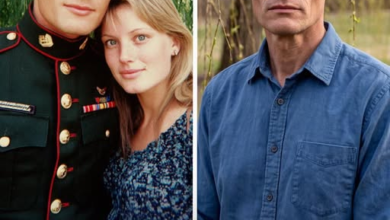
The Dance That Carried Forward
At seventeen, a car accident changed the direction of my life before I had even fully understood where I was going.
One moment, I was a teenager thinking about school, friends, college applications, clothes, music, and all the ordinary things that make up a life before it is interrupted. Then everything narrowed into hospital rooms, physical therapy, pain scales, medical equipment, and the strange silence that follows when people do not know what to say to you anymore.
Six months later, prom arrived.
I did not want to go.
By then, I was using a wheelchair, and the idea of entering a gymnasium full of classmates felt unbearable. I imagined the stares before they happened. The pity. The awkward smiles. The careful voices people used when they were trying not to make you feel different, but somehow made you feel more different than ever.
I told my mother I wanted to stay home.
She listened quietly, then said something I have never forgotten.
“You do not have to feel ready,” she told me. “But you do not get to disappear from your own life.”
So I went.
Not bravely.
Not confidently.
I went because she believed some part of me still belonged in that room, even when I could not believe it myself.
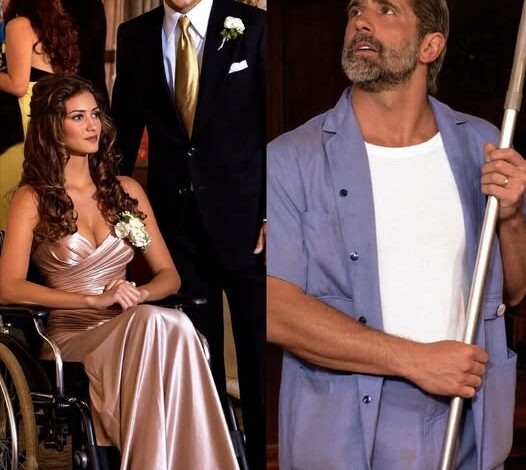
The gym was full of music and lights and laughter. Everyone seemed impossibly alive, moving easily in bodies they did not have to think about. I stayed near the wall, hands folded in my lap, watching from the edge of a night that felt like it had been designed for someone else.
I was there, but not really inside it.
Then Marcus walked over.
He had been in my history class since sophomore year. We were friendly, but not especially close. He was the kind of person who never seemed to need much attention, yet somehow noticed things other people missed.
He stopped in front of me, smiled, and held out his hand.
“Dance with me.”
I laughed because I thought he was trying to be kind in a way neither of us could survive.
“Marcus, people are going to stare.”
He did not argue.
He did not reassure me with speeches or tell me not to care what anyone thought. He simply leaned a little closer and said, “Let them.”
Then he brought me onto the dance floor.
He moved carefully, naturally, as if nothing about the moment needed explaining. He did not make a performance of including me. He did not turn it into an act of charity. He simply danced with me in the way my body could dance then, and for the first time in months, I was not a patient, a tragedy, a warning, or a question people did not know how to ask.
I was included.
For those few minutes, the room changed.
Or maybe I did.
The music softened the edges of everything. The stares, if they were there, mattered less. My chair was not an interruption. My body was not an apology. Marcus did not rescue me that night, and he did not fix what had happened.
He simply reminded me that I was still allowed to take up space.
That memory stayed with me long after prom ended.
Not because it was dramatic.
Because it was simple.
And sometimes simple kindness reaches places grand gestures never touch.
After graduation, our lives moved in different directions. My family relocated so I could focus on rehabilitation. The work was slow, painful, and often discouraging. Progress did not come in clean, inspiring scenes the way people like to imagine it does. It came in inches. In repetition. In exhaustion. In learning how to celebrate things I once would have considered too small to notice.
Eventually, I learned to walk again.
Not the same way as before.
But enough.
Life filled in around the injury. I went to college. I built a career in architecture, though the accident never fully left the work I chose to do. If anything, it shaped it. I became interested in spaces that did more than satisfy regulations. I wanted buildings that actually understood bodies. Real bodies. Tired bodies. Injured bodies. Aging bodies. Bodies moving through the world with limits others rarely noticed.
Accessibility, to me, was never a checklist.
It was dignity translated into design.
Years passed.
Then, thirty years after that prom night, I saw Marcus again.
It happened in a small café near my office. I was waiting for coffee before a meeting when I noticed a man behind the counter moving with careful concentration, favoring one leg slightly as he turned. There was something familiar in the angle of his shoulders, something in the way he smiled at a customer without making the moment about himself.
Then he looked up.
For a second, neither of us spoke.
“Marcus?” I said.
His face changed slowly, surprise opening into recognition.
We talked during his break at a small table near the window. The years were there, of course. In his face. In mine. In the pauses between questions. He told me he had once planned to study engineering, but his mother became ill not long after graduation. He stayed to care for her. One year became several. Several became many.
By the time he was free to think about his own life again, he said, the path he had imagined felt too far away.
He said it without bitterness.
That made it sadder.
He had a limp now from an old workplace injury he had never properly treated. He had postponed doctor visits, therapy, and rest for years because someone else had always needed something more urgently. I recognized that kind of self-erasure immediately. It looked different from mine, but it belonged to the same family of wounds.
I remembered the prom.
Not as a debt.
Not as something I needed to repay.
But as proof of what one small act can carry across a life.
A week later, I asked him to meet with my team.
Not as a favor. Not as charity. I told him the truth: we were developing a community accessibility project, and I wanted someone in the room who understood what most designers missed. Not theory. Not policy language. Lived experience.
Marcus hesitated.
He said he was not qualified.
I told him that noticing what others overlook is a qualification.
He joined us first as a community consultant, then gradually became part of the team. His perspective changed the work. He noticed entrances that technically complied but still felt unwelcoming. He noticed seating arrangements that assumed everyone could stand while waiting. He noticed lighting, distance, fatigue, surfaces, thresholds, and the small humiliations hidden inside careless design.
He helped us make better spaces.
At the same time, we helped him reconnect with care he had postponed for too long. Medical appointments. Physical therapy. Support for his mother’s remaining needs. None of it was framed as repayment, because repayment would have made the whole thing smaller than it was.
It was not about settling a debt.
It was about restoring balance where life had taken too much and given too little back.
A year later, we opened a new community center designed around the principle that access should feel natural, not exceptional. Wide entrances. Quiet rooms. Flexible seating. Clear paths. Rest areas placed where people actually needed them. A building that did not ask people to apologize for the way they moved through it.
At the opening, there was music.
Someone recognized the coincidence before I did and laughed.
Marcus and I stood together near the edge of the room, older now, both carrying our own histories in the way we moved. Then he held out his hand again.
This time, neither of us pretended it was the same as before.
It was not about recreating the past.
It was about acknowledging that something from the past had survived.
We moved carefully. Slowly. Aware of our limits, but also aware of what remained. The music played softly, and around us people talked, laughed, rolled, walked, leaned, rested, and entered the building without needing permission from anyone.
I thought of my seventeen-year-old self at the edge of the prom floor.
I thought of Marcus walking toward me.
I thought of how many lives are changed not by rescue, but by recognition.
Some moments seem small when they happen.
They are not.
They travel forward quietly, shaping choices before we know they are shaping them. They become part of how we build, how we love, how we notice, how we decide who deserves room.
Marcus did not change my life in a single night.
He reminded me that it was still mine.
And sometimes, that is the thing that stays longest: not the grand gesture, not the perfect words, but the person who meets you at the edge of your own life and gently helps you move back into it.