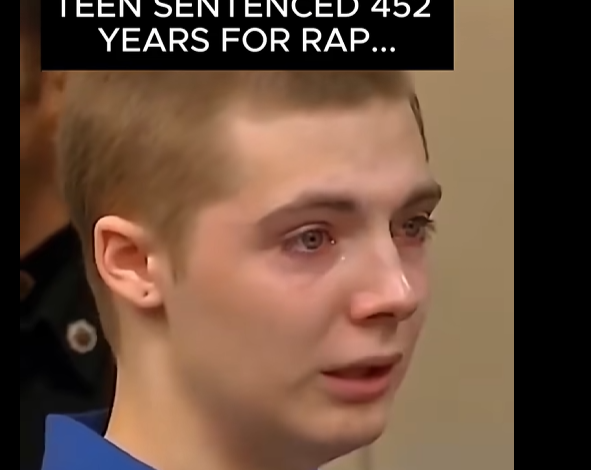
In the days and weeks that followed, the case became more than a courtroom outcome. It became a reflection of the country’s deepest fears, frustrations, and unresolved debates about crime, punishment, youth, and mercy. For many who supported the ruling, the sentence represented something they felt had been missing for far too long: a firm recognition of the suffering endured by the victims and their families. To them, the length of the sentence was not meant to be understood in ordinary human terms. No one expected the years to be lived out one by one. Instead, the sentence carried symbolic force. Each count, each additional year, each severe consequence was seen as a way of acknowledging that every act of violence had its own weight, every victim had their own story, and every moment of fear left behind damage that could not simply be folded into a single number.
For those supporters, mercy for the offender could not come at the expense of memory for the harmed. They argued that the justice system had a responsibility to speak clearly when lives were broken beyond repair. The stacked years, in their eyes, were not excessive but necessary. They were a public declaration that the pain inflicted would not be minimized, negotiated down, or forgotten with time. To them, the sentence gave language to grief that often feels impossible to measure. It told the victims’ families that the law had finally seen the full scale of what was taken from them.
But others looked at the same courtroom image and saw something profoundly troubling. They saw a teenager sitting quietly, staring forward, while a future that had barely begun was effectively erased. Legal scholars, youth advocates, psychologists, and critics of extreme sentencing questioned what it means for a society to permanently discard someone who was still developing when the crimes occurred. They pointed to research on adolescent brains, impulse control, peer influence, trauma, and the capacity for growth. In their view, a sentence that no human being could ever complete does more than punish. It closes the door entirely on the possibility that a person might change, mature, feel remorse, or one day become something other than the worst thing they ever did.
To them, the ruling raised painful questions about the purpose of justice itself. Is justice only about retribution, or must it also leave room for rehabilitation? Can accountability be meaningful without becoming permanent condemnation? And when the offender is young, how should the law balance the seriousness of the harm with the reality that youth is often marked by immaturity, volatility, and an incomplete sense of consequence? Critics argued that a sentence stretching far beyond a natural lifetime turns punishment into theater. It may satisfy a desire for moral certainty, but it also risks transforming the justice system into a place where redemption is treated as impossible before it can even be tested.
Between these two visions, the country now finds itself unsettled. On one side is the demand for unflinching accountability, especially for victims whose lives were shattered in ways that can never be undone. On the other is the belief that even terrible crimes committed by the young should not erase the possibility of human transformation. The case lingers because it forces people to confront questions with no easy answers: how much punishment is enough, who deserves a second chance, and whether a society can honor victims without surrendering its belief in change.
That still image from the courtroom continues to haunt the public imagination. It captures more than one person’s sentence. It captures a national argument about fear, grief, justice, and the fragile line between punishment and abandonment. For some, it is an image of long-awaited accountability. For others, it is a warning about a system willing to bury a child beneath centuries of time. And for everyone watching, it remains a reminder that the hardest questions in justice are rarely about numbers alone, but about what kind of country those numbers reveal.