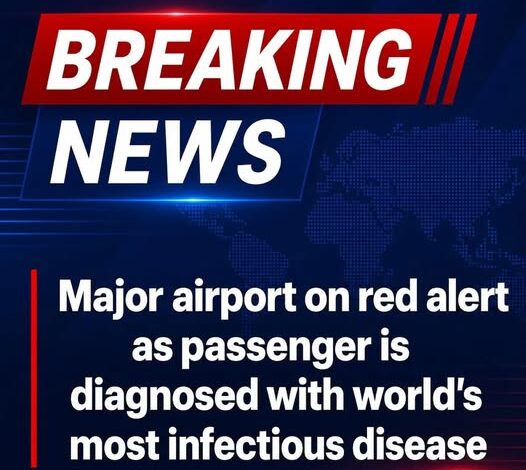
Health officials have issued a public advisory after a confirmed measles case was linked to recent travel through O’Hare International Airport in Chicago, prompting renewed attention to vaccination, exposure monitoring, and the risks associated with highly contagious illnesses in busy transportation hubs.
The alert was released after an individual who had traveled through the airport later tested positive for measles. The person is now recovering in home isolation, according to public health officials. Authorities emphasized that the overall risk to the general public remains manageable, but they are urging anyone who may have been in specific airport areas during the identified exposure window to stay alert for official updates and monitor their health closely.
O’Hare is one of the busiest airports in the United States, with thousands of travelers moving through terminals, gates, security areas, baggage claim zones, restaurants, restrooms, and shuttle spaces every day. Because measles can spread easily in crowded or enclosed environments, even a single confirmed case can require a broad public health response.
Measles is a highly contagious viral infection that spreads through the air when an infected person coughs, sneezes, or breathes near others. The virus can linger in the air or on surfaces for a period of time after an infected person has left an area, which makes exposure alerts especially important in places like airports, schools, healthcare facilities, and public transit centers.
Public health agencies are now working to identify people who may have had close contact with the infected traveler. Contact tracing efforts are underway, including reviews of travel information, possible airport movement, and any known interactions that may have occurred during the exposure period. Officials are also coordinating with healthcare providers and other agencies to ensure that potentially exposed individuals receive timely guidance.
Authorities have noted that another measles case in the same region is also under investigation. At this stage, officials are assessing whether the cases may be connected or whether they represent separate exposures. This type of investigation is part of standard public health practice and is designed to limit further spread before additional cases emerge.
Medical experts continue to stress that vaccination remains the strongest and most reliable protection against measles. The MMR vaccine, which protects against measles, mumps, and rubella, is widely recommended and provides strong immunity for most people after two doses. Public health officials are encouraging individuals, especially travelers, parents, students, healthcare workers, and those who spend time in crowded settings, to check their vaccination records and confirm that they are fully protected.
The advisory is also a reminder that measles is not just a mild childhood illness. Although many people recover, the disease can lead to serious complications, particularly in infants, pregnant individuals, people with weakened immune systems, and those who are unvaccinated. Complications may include pneumonia, ear infections, severe diarrhea, dehydration, and, in rare cases, brain inflammation.
Symptoms of measles usually begin with fever, cough, runny nose, and red or watery eyes. A few days later, a rash typically develops and spreads across the body. People who believe they may have been exposed are advised to monitor for symptoms and contact a healthcare provider if they begin feeling ill.
Health officials are also urging people not to go directly to a doctor’s office, urgent care center, or emergency department without calling first if they suspect measles. Because the virus is so contagious, arriving unannounced at a medical facility could expose other patients, including those at higher risk of severe illness. Calling ahead allows healthcare providers to arrange safer evaluation procedures.
The situation has raised concern because measles outbreaks can occur quickly in communities where vaccination rates are low. Even though the disease is preventable, gaps in immunity can create opportunities for spread. Airports add another layer of concern because travelers may disperse to different cities, states, or countries before symptoms appear, making early public communication essential.
Public health officials are encouraging residents and travelers to rely on verified information from local health departments, the Illinois Department of Public Health, the Centers for Disease Control and Prevention, and healthcare providers. They have also warned against spreading unverified claims online, since misinformation can create unnecessary fear or discourage people from taking appropriate precautions.
For now, authorities say they will continue monitoring the situation, notifying those who may have been directly exposed, and updating the public as more information becomes available. The goal is to prevent additional cases, protect vulnerable individuals, and ensure that anyone at risk understands what symptoms to watch for and when to seek medical advice.
The confirmed case connected to O’Hare serves as an important reminder that public health depends on both individual awareness and community cooperation. Staying up to date on vaccinations, paying attention to official advisories, practicing good hygiene, and responding responsibly to possible symptoms are all important steps in reducing the risk of further transmission.
While officials are not urging panic, they are urging vigilance. Measles spreads quickly, but it is also highly preventable. With timely contact tracing, vaccination awareness, and careful monitoring, health authorities hope to contain the risk and prevent a broader outbreak.
In the meantime, travelers and residents who may have passed through affected areas are encouraged to remain informed, check their immunization status, and contact medical professionals if symptoms develop. Public health officials say these simple steps can help protect not only individuals, but also families, workplaces, schools, and the wider community.