Tragic Thirteen Year Old Child Star Drew Barrymore Becomes Hollywood Pariah Until Shocking Multi Million Dollar Lifestyle Reinvention Completely Erases Dark Past

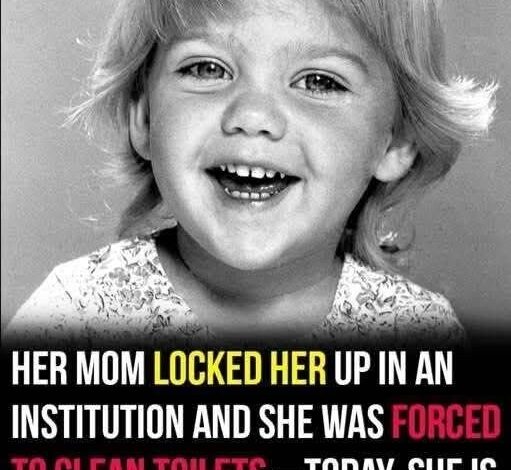
Drew Barrymore’s life began in front of a camera before she was even old enough to understand what fame was.
At just eleven months old, she appeared in a commercial, stepping into the entertainment world almost before she could walk. She did not yet know what a set was, what an audience meant, or what it would cost to become recognizable before she had the chance to become herself. But that early moment marked the beginning of a life that would unfold under public attention.
By the time she was seven, Drew had become a global star.
Her role in E.T. the Extra-Terrestrial made her one of the most beloved child actors in the world. Audiences were captivated by her warmth, her expressiveness, and the natural honesty she brought to the screen. She seemed effortless in a way that only certain child performers can be—funny, emotional, curious, and completely unforgettable.
Hollywood adored her. Reporters wanted to speak with her. Cameras followed her. Viewers saw her as a bright, charming little girl whose future seemed guaranteed.
But behind the image of a celebrated young actress was a childhood filled with instability, loneliness, and pressure no child should have been expected to carry.
Fame came early, but protection did not.
Drew was born into the legendary Barrymore acting family, a name associated with Hollywood brilliance, creativity, and performance across generations. But that legacy also carried shadows. The same world that gave her access to fame also exposed her to chaos, addiction, emotional turbulence, and adult spaces long before she was ready to understand them.
While the public saw premieres, interviews, magazine covers, and red carpets, Drew was living a very different reality. She was a child surrounded by adult expectations. She was praised for being talented, but not always shielded from the dangers that came with attention. She was famous before she had a stable sense of self, and the world expected her to keep smiling.
By the time she reached adolescence, the pressures around her had become overwhelming.
At thirteen, when most children are still trying to understand school, friendships, and their place in the world, Drew was facing a crisis that played out in public. Her struggles with substance abuse and emotional pain became widely known, and after a suicide attempt, she entered a psychiatric facility. It was a devastating chapter, one that could easily have become the defining tragedy of her life.
But for Drew, it became a turning point.
The eighteen months she spent in treatment were difficult, strict, and life-altering. The environment was not glamorous or gentle. It demanded discipline, structure, and accountability. For a girl who had grown up with too much freedom in some ways and not enough safety in others, that structure was painful but necessary.
In that place, she began learning lessons she had not been given consistently before. She learned boundaries. She learned routine. She learned that actions had consequences. She learned how to survive without the chaos that had once surrounded her. Most importantly, she began learning that she could rebuild herself from the inside out.
When she came out, the world did not immediately welcome her back.
By fifteen, Drew Barrymore had already lived more public life than many adults, but Hollywood saw her differently now. The same industry that had once celebrated her innocence and charm began treating her as a risk. She was no longer simply the adorable child from E.T. She was labeled troubled, unpredictable, damaged, and difficult to insure.
The industry that had helped make her famous now seemed unsure whether it still wanted her.
Instead of walking easily back onto film sets, Drew had to start over. She worked ordinary jobs. She cleaned bathrooms. She waited tables. She experienced the humbling reality of being publicly known but professionally uncertain, of having once been adored by millions and then being forced to prove she was worth trusting again.
Those years were painful, but they were also clarifying.
They stripped away illusion.
Without constant applause, studio attention, or Hollywood approval, Drew began discovering who she was when fame was no longer holding her up. She learned how to work without glamour. She learned how to keep going when no one was cheering. She learned that being underestimated could become its own kind of freedom.
Slowly, she began rebuilding her life and career.
Not as the child star people remembered.
Not as the troubled teenager tabloids had judged.
But as a young woman determined to write her own story.
Her return to the screen was not a simple comeback. It was a reinvention. Drew brought with her a different kind of presence now—still warm, still funny, still bright, but grounded in something deeper. She had lived through pain, and audiences could feel that. Her charm no longer seemed innocent in the same way. It carried survival.
In films like The Wedding Singer, Never Been Kissed, and 50 First Dates, Drew found a new connection with viewers. She became known for roles that combined humor, vulnerability, awkwardness, sincerity, and hope. She had a rare ability to make characters feel both romantic and real, both funny and emotionally open.
People loved her not because she appeared perfect, but because she seemed human.
Her laughter had history behind it. Her sweetness did not feel shallow. Her emotional honesty made audiences trust her. She was not trying to erase the past. She was proving that the past did not have to own her.
Then she made an even more powerful move.
She co-founded Flower Films, a production company that gave her greater creative control and independence. This was more than a business decision. It was a statement of self-determination.
Drew Barrymore was no longer waiting for Hollywood to decide whether she belonged.
She was building her own place within it.
Through Flower Films, she helped create projects that reflected her voice and instincts. The stories often carried her signature blend of humor, sincerity, emotional openness, and resilience. She proved she was not merely a survivor of child stardom. She was a producer, a businesswoman, a storyteller, and a creative force with the ability to shape her own opportunities.
That shift mattered because control had been missing from so much of her early life. As a child, fame happened to her. As an adult, she began choosing what she wanted to build.
Her reinvention did not stop with acting and producing. Over time, Drew expanded into books, beauty, lifestyle, home goods, and eventually daytime television. Her brands reflected the same spirit that had made her beloved on screen: colorful, approachable, imperfect, warm, and sincere. She built a public identity around joy that did not deny pain, but grew out of it.
That balance became central to her appeal.
Drew never presented herself as someone who had escaped hardship untouched. She spoke openly about addiction, institutionalization, public rejection, divorce, parenting, healing, and the ongoing work of becoming stable. Her honesty helped challenge the polished image many celebrities are expected to maintain. She did not pretend to have life perfectly figured out. Instead, she showed that healing is a process, not a performance.
Her transition into daytime television deepened that connection even further.
As host of The Drew Barrymore Show, she created a space that feels more like an emotional living room than a traditional celebrity platform. Her interviews are often intimate, tender, enthusiastic, and disarmingly open. She has a way of making guests feel safe, whether they are famous actors, authors, everyday people, or individuals sharing deeply personal stories.
That ability comes from experience.
Drew knows what it feels like to be judged. She knows what it feels like to be misunderstood. She knows what it means to rebuild after public pain. Because of that, her warmth does not feel performative. It feels earned.
Today, Drew Barrymore stands as more than an actress, producer, host, or entrepreneur. She has become a symbol of resilience. Her success is not measured only by box office numbers, television ratings, companies, or awards. It is measured by the life she has intentionally created after surviving a childhood that could have broken her.
For Drew, the greatest victory was never fame.
It was peace.
It was stability.
It was motherhood.
It was creating a safe and loving home for her daughters, Olive and Frankie. After growing up in instability, Drew made a conscious decision to give her children something different. She has spoken often about wanting to provide structure, protection, emotional presence, and normalcy—the very things she lacked when she was young.
That choice is one of the most meaningful parts of her story.
She did not simply survive a difficult childhood. She worked to break the cycle.
The chaos that once seemed woven into the Barrymore legacy did not get to define the next generation. Addiction, abandonment, emotional turbulence, and instability did not have to be inherited as destiny. Drew chose healing. She chose accountability. She chose to become the kind of mother and woman her younger self needed.
Her move toward a more grounded life reflected that priority. She sought not just professional success, but a real life—one centered on family, emotional health, and the kind of safety that cannot be measured by fame.
That is why her story remains so powerful.
It is not simple. It is not a fairy tale. It does not pretend that pain disappears because someone becomes successful. Drew’s journey matters because it is complicated. She struggled. She fell apart publicly. She was judged. She was dismissed. She had to begin again while the world watched.
And still, she rose.
Not by denying what happened to her, but by refusing to let it become the whole story.
Drew Barrymore’s life is a reminder that a difficult beginning does not have to determine the ending. A person can be publicly wounded and still privately rebuild. A person can lose stability and still create it later. A person can carry trauma and still become a source of warmth, humor, kindness, and light for others.
Her journey shows that survival is not only about escaping darkness. It is about learning how to walk through it, gather the pieces that remain, and build something more honest on the other side.
Drew did not simply return to Hollywood.
She returned to herself.
And in doing so, she became far more than a former child star. She became a woman who turned pain into purpose, vulnerability into connection, and a fractured childhood into a legacy of resilience, compassion, and hard-earned peace.