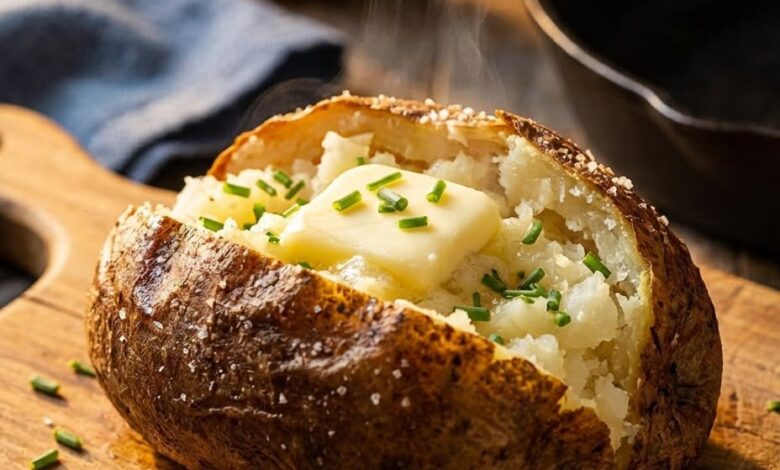
Few foods offer as much comfort, satisfaction, and simplicity as a perfectly baked potato. It is one of those humble dishes that never needs to be complicated in order to feel special. With only a few basic ingredients and a little patience, an ordinary potato can become something warm, filling, and deeply satisfying. Crack one open after it comes out of the oven and you get that classic contrast: a lightly crisp, salty skin on the outside and a soft, fluffy, steaming center on the inside. It is simple food, but when done well, it feels almost impossible to improve.
Part of the charm of a baked potato is that it does not demand attention. It does not require complicated techniques, expensive ingredients, or constant supervision. You prepare it, place it in the oven, and let time do most of the work. Yet the result feels generous and comforting, the kind of dish that can sit quietly beside a main course or become the main event all on its own. Whether served with grilled meat, roasted vegetables, soup, salad, or a spoonful of hearty chili, a baked potato has a way of making a meal feel complete.
The appeal also comes from its versatility. A baked potato can be plain and nourishing, rich and indulgent, or bright and fresh depending on how you finish it. On its own, the potato is naturally wholesome. It provides fiber, potassium, vitamin C, and other important nutrients, especially when the skin is eaten. It is filling without being fussy, affordable without feeling boring, and easy to adapt to different tastes and diets. That balance is one reason baked potatoes have remained a favorite in home kitchens for generations.
Choosing the right potato makes a noticeable difference. Russet potatoes are often considered the best choice for classic baked potatoes because of their high starch content. When baked, they develop a dry, fluffy interior that absorbs butter, sauces, and seasonings beautifully. Their thicker skins also crisp nicely in the oven, giving the potato structure and texture. Other varieties can still be baked, but waxier potatoes tend to have a denser, creamier texture rather than the light, airy center most people associate with a traditional baked potato.
Preparation is simple, but the small details matter. Start by scrubbing the potatoes thoroughly under running water to remove dirt from the skin. Since the skin becomes one of the best parts after baking, it should be clean and well prepared. Dry the potatoes completely with a towel, because excess moisture can prevent the skin from crisping. Once dry, prick each potato several times with a fork. This allows steam to escape while the potato cooks and helps prevent pressure from building inside.
For extra flavor and texture, rub the outside of each potato lightly with oil or melted butter. A neutral oil works well, but olive oil can add a subtle richness. Then sprinkle the skins with salt. This step may seem small, but it helps create that savory, slightly crisp exterior that makes a baked potato so enjoyable. The goal is not to overpower the potato, but to enhance its natural flavor and give the skin a satisfying finish.
Preheat the oven to 400°F, or 200°C. Place the potatoes directly on the oven rack if you want the skins to crisp evenly all around, or set them on a baking sheet for easier handling. Bake for about 45 to 60 minutes, depending on the size of the potatoes. Larger potatoes may need a little more time, while smaller ones may finish sooner. For the most even results, choose potatoes that are similar in size so they cook at the same rate.
You will know the potatoes are ready when the skins feel slightly firm and crisp, and a fork or knife slides easily into the center without resistance. Another good test is to gently squeeze the potato with a towel or oven mitt. If it gives easily and feels soft inside, it is done. Once removed from the oven, let the potatoes rest for a few minutes before cutting them open. This short pause allows the steam to settle and makes them easier to handle.
To serve, slice each potato lengthwise across the top, then gently press the ends toward the center to open it up. The inside should loosen into a fluffy mound, ready to absorb whatever toppings you choose. A pat of butter and a sprinkle of salt may be all it needs. For a traditional version, sour cream, shredded cheese, chives, and black pepper are always reliable. The richness of the butter and sour cream melts into the hot potato, while the chives add freshness and color.
But baked potatoes can go far beyond the classic toppings. They can be turned into a full meal with beans, roasted vegetables, sautéed mushrooms, broccoli, grilled chicken, tuna, chili, or lentils. A spoonful of Greek yogurt can replace sour cream for a lighter option. Salsa, avocado, and black beans can give the potato a fresh, Southwestern feel. Steamed broccoli and cheese sauce make it hearty and familiar. Caramelized onions, herbs, and a drizzle of olive oil can make it feel rustic and elegant. For plant-based meals, toppings like hummus, dairy-free sauces, chickpeas, vegetables, and fresh herbs can make the potato both filling and flavorful.
Baked potatoes are also practical. They are easy to prepare in batches, making them useful for family dinners, meal prep, or casual gatherings. Leftover baked potatoes can be stored in the refrigerator and reheated later, or repurposed into other dishes. They can be sliced and pan-fried for breakfast, scooped and mashed into potato cakes, added to soups, or turned into twice-baked potatoes with a flavorful filling. Their usefulness does not end after the first meal.
Another reason baked potatoes remain so beloved is that they fit into nearly every season. In colder months, they feel cozy and substantial, especially when topped with warm, savory ingredients. In warmer months, they can be served with lighter toppings like herbs, yogurt, fresh vegetables, or grilled proteins. They work just as well at a weeknight dinner table as they do at a backyard cookout or casual lunch.
In a world full of complicated recipes and endless food trends, the baked potato is a reminder that good cooking does not always require doing more. Sometimes the best results come from treating a simple ingredient with care. A clean potato, a hot oven, a little salt, and enough time can create something that feels honest, nourishing, and deeply comforting.
That is the quiet magic of a baked potato. It is humble, but never disappointing. It is easy, but never empty. It can be dressed up, stripped down, shared, saved, or enjoyed exactly as it is. With its crisp skin, fluffy center, and endless possibilities, the baked potato proves that some of the most satisfying foods are also the simplest.