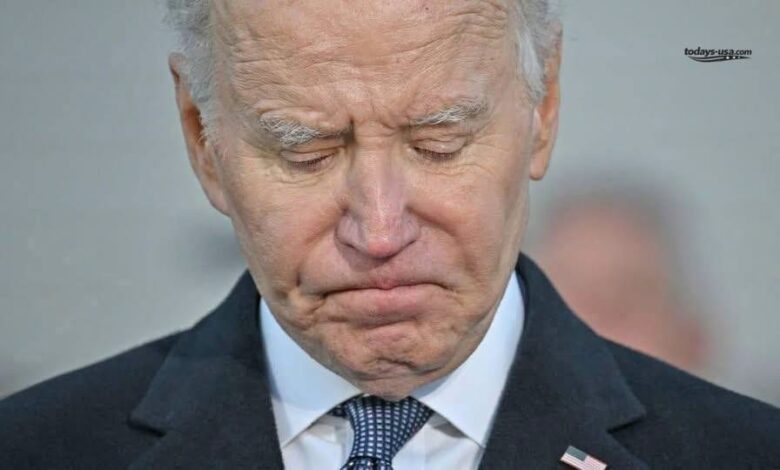
The announcement landed like a shockwave: the President was in critical condition.
Within minutes, the nation’s emergency protocols began moving with quiet urgency. Phones rang across secure government lines. Markets trembled. World leaders demanded updates. Across the country, millions of people turned toward their screens, searching for clarity as uncertainty spread faster than confirmation.
Behind closed doors, officials began discussing constitutional procedures that most Americans know only from history books. The 25th Amendment, usually spoken of in theory, suddenly became part of an urgent national conversation.
The reported hospitalization of President Biden placed the United States in a rare and fragile moment. At Walter Reed, doctors focused on his condition while the machinery of government shifted into contingency mode. Vice President Harris stood ready to assume the responsibilities of Acting President if required, as advisers, cabinet officials, and legal teams reviewed every step with extreme caution.
Inside the West Wing, the usual rhythm of power gave way to a tense calm. Staff members moved quickly but spoke softly. Phones did not stop ringing. Briefing papers were updated by the hour. Every statement was weighed carefully, knowing that even a few words could affect public confidence, global markets, and diplomatic stability.
Outside the White House, the country watched with a mix of fear, sympathy, and disbelief. Political divisions did not disappear, but for a brief moment, they seemed quieter. Many Americans found themselves focused less on party lines and more on the human reality of a man fighting for his life — a husband, father, grandfather, and public servant at the center of a deeply uncertain moment.
Around the world, allies and adversaries alike monitored the situation closely. Foreign leaders were not only waiting for medical updates; they were also watching the strength of American institutions under pressure. In moments like this, the world looks for signs of stability: clear communication, constitutional order, and a government capable of continuing its work even in crisis.
The situation carried both fear and solemnity. It revealed the vulnerability of leadership, but also the resilience of the system built to withstand unexpected emergencies. The presidency may rest on one person, but the continuity of government depends on rules, preparation, and the steady hands of those tasked with protecting the nation through uncertainty.
For now, the country waits.
Every update matters.
Every silence feels heavier.
And until doctors, officials, and constitutional leaders provide the next clear answer, an anxious nation remains suspended between hope, fear, and the possibility that one announcement could change everything.