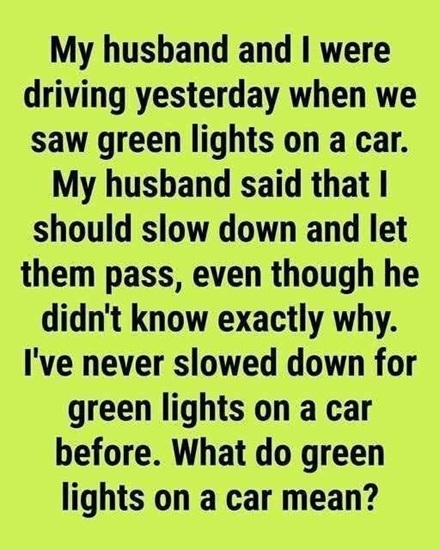
Driving on today’s highways requires drivers to understand a variety of signals, lights, and vehicle markings. Most motorists recognize red and blue flashing lights as signs of police, fire, or emergency medical vehicles. These lights usually mean that drivers should slow down, move over, or yield so emergency responders can pass safely.
However, some drivers may also notice vehicles using green flashing lights, which can be confusing if they are unfamiliar with their purpose. Unlike red or blue emergency lights, green lights are not usually connected to law enforcement or urgent emergency response. In many places, they are used by specific authorized vehicles that provide important services but may not have the same priority as emergency vehicles.
Green flashing lights are often used to make certain vehicles more visible on the road. Depending on local laws, they may appear on medical transport vehicles, patient transfer services, community assistance vehicles, or other approved service vehicles. Their main purpose is usually to alert nearby drivers to the vehicle’s presence, especially in traffic, poor weather, or low-visibility conditions.
The meaning of green lights can vary from one region to another. In some areas, their use is carefully regulated and limited to certain licensed vehicles. In other places, they may function mainly as a visibility tool rather than a signal that requires other drivers to take specific action. Because traffic rules differ between states, provinces, and countries, motorists may encounter different uses for green flashing lights depending on where they drive.
In most situations, green flashing lights do not carry the same legal meaning as red and blue emergency lights. Drivers are generally not required to immediately pull over or give way unless local laws specifically say so or the vehicle is accompanied by official emergency signals. Normal traffic rules still apply, and drivers should avoid sudden or unsafe reactions.
Even though green lights may not demand immediate right of way, they still play an important role in road safety. Vehicles using them may be carrying people with medical needs, mobility challenges, or scheduled healthcare appointments. Giving these vehicles space and driving carefully around them can help ensure a smoother and safer trip for passengers who may already be in vulnerable situations.
Because there is no single rule that applies everywhere, confusion about green flashing lights is understandable. Some drivers may assume they indicate an emergency, while others may ignore them completely. The safest response is to stay aware, remain calm, and observe the vehicle’s movement without making abrupt decisions.
When approaching or following a vehicle with green flashing lights, drivers should keep a safe distance, avoid aggressive passing, and pay attention to surrounding traffic. If the vehicle is moving slowly, stopping frequently, or trying to merge, patience can help prevent unnecessary risk. These simple habits support safer road conditions for everyone.
Modern road systems depend on clear communication between many types of vehicles. Emergency vehicles use standardized lighting to signal urgency, while service vehicles may use other colors to improve visibility. Green flashing lights usually represent a different category of road use—one focused more on awareness and safe movement than immediate emergency response.
Understanding these differences can reduce confusion and improve driver behavior. Many road misunderstandings happen because drivers are unfamiliar with less common signals. Learning what different lights may indicate helps motorists respond more safely and confidently.
In general, any vehicle using special lighting deserves extra attention. Whether the light is red, blue, amber, or green, it is being used for a reason. Staying alert, patient, and predictable helps protect not only the vehicle using the signal but also other drivers, passengers, pedestrians, and road workers nearby.
Ultimately, green flashing lights remind drivers that not every important trip is an emergency, but some journeys still involve care, assistance, or special attention. By recognizing this and responding responsibly, motorists can help create a safer and more cooperative driving environment.
Responsible driving is about more than simply following traffic laws. It also involves awareness, patience, and respect for the many different vehicles sharing the road. When drivers understand the purpose of different signals and react calmly, they help traffic move more safely and smoothly for everyone.