My Stepmom Left Me Her $3M House While Her Own Children Only Got $4,000 Each – But Then I Found a Letter from Her

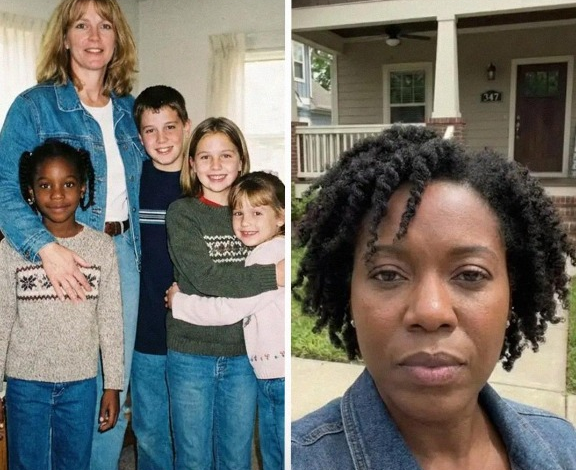
I grew up feeling invisible in my own home — overlooked in my father’s second marriage. So when my stepmother passed away years later, I was completely unprepared for what she had left me.
When the lawyer slid the envelope across the polished desk, my hands went cold. I had expected a routine reading of a will, nothing more. I certainly hadn’t imagined walking out as the sole owner of a $3 million house — a place I had never really thought of as mine.
But before I explain how this inheritance upended relationships I had long assumed were over, I need to go back to the moment when my life first split in two.
I was ten when my mother died. One day she was humming in the kitchen, stirring her famous chicken soup, and the next she was gone, taken by a sudden illness that left our lives hollow and silent.
After her funeral, the quiet in our house was deafening. My father and I ate our meals without a word, clinging to each other like survivors of a shipwreck.
Two years later, he remarried.
Her name was Helen. To everyone else, she was elegance and poise, her presence marked by immaculate attire and a faint, expensive perfume. To me, she was a wall I couldn’t climb.
The first night she arrived, she brought her three children: Lisa, Emily, and Jonathan. They were boisterous and confident, marking their territory in a home that suddenly felt foreign.
“This is Anna,” my father said, resting a hand on my shoulder. “My daughter.”
Lisa’s eyes swept over me, a smirk playing on her lips. “She’s… quiet.”
“She’s shy,” Helen corrected, her smile polite but distant. “You’ll get along with my children just fine if you try, won’t you?”
I nodded, though inside I knew I had already been cast as an outsider.
From then on, family dinners were performances in which I had no role. The attention was always on Helen’s children — their music lessons, trophies, and perfect grades. I sat on the sidelines, unseen.
When I turned eighteen, the weight became unbearable. “I can’t do this anymore,” I whispered as I zipped up my suitcase. By then, my father had already passed, and leaving meant severing not just ties with Helen, but with a chapter of my life steeped in loneliness.
I never imagined I would hear her name again — until the day I learned she was gone.
Fast-forward nearly twenty years. By thirty-eight, I had built a life far removed from the lonely teenager who once slipped away from Helen’s house: a loving husband, a fulfilling career, a home that felt safe. The ghosts of my childhood rarely visited.
That night, however, they knocked.
I had just returned from work, exhausted, my heels clicking against the floor as I set down my bag. I reheated leftovers in silence, letting the quiet calm me. Then my phone buzzed.
An unknown number flashed. I hesitated. Bill collector? Wrong number? But something compelled me to answer.
“Hello?”
“Is this Anna?” The voice was steady, professional.
“Yes…”
“My name is Mr. Whitman. I represent your stepmother, Helen.”
My fork froze midair. The name echoed in my mind like a ghost.
“Helen?” I whispered.
“Yes,” he said gently. “I’m calling to inform you that Helen has passed, and you are requested to attend the reading of her will.”
Shock and disbelief coiled inside me. “I haven’t spoken to Helen in decades. Why would you call me?”
“I cannot discuss details over the phone,” he replied. “Your presence is required. You may be surprised by what she left you.”
I drove to the law office the following week, my mind a jumble of emotions. The building’s tall windows and polished brass handles seemed to mock the tension I felt inside.
Inside, the room was tense. Helen’s children were there: Lisa, Emily, and Jonathan. They barely looked at me, their expressions sharp, dismissive. I sat at the far end of the table, a familiar outsider.
Mr. Whitman entered, folder in hand. “We are here to read the last will and testament of Helen.”
He opened the folder. “To my stepdaughter, Anna, I leave my home on Lakeview Drive, valued at approximately three million dollars.”
The room erupted. Lisa shouted, Jonathan slammed his fists on the table, Emily glared like I had personally wronged her. I sat frozen, unsure what to say.
Mr. Whitman continued: “Helen’s biological children — Lisa, Emily, and Jonathan — will each receive four thousand dollars.”
The disbelief and rage in the room were palpable.
I left without a word, my chest tight, my mind spinning. Driving to Lakeview Drive, I was overwhelmed. The mansion loomed before me, ivy climbing the walls, a grand porch stretching across the front.
“This… is mine?” I whispered.
Inside, the air smelled of old wood and lavender. I wandered through immaculate rooms, the house unfamiliar yet strangely mine.
Drawn to her study, I found a sealed envelope addressed to me in Helen’s elegant handwriting. My hands shook as I opened it.
Her words were raw and honest: she acknowledged her failures with her children, the coldness I had endured, and the resilience she had always admired in me.
“You were quiet, excluded, yet resilient. I admired you for it… Leaving you this house is not about money. It is about giving you what I could not when you were younger: a place where you belong.”
For the first time, I realized that someone had truly seen me.
In the weeks that followed, Helen’s children protested and raged, but the will was unassailable. And for the first time, I understood — this house wasn’t a fortune. It was an inheritance of acknowledgment, regret, and belonging.
At night, I sit by the lake, Helen’s letter in hand, letting her words settle into my heart.
“You belong.”
And finally, for the first time in decades, I believe it.