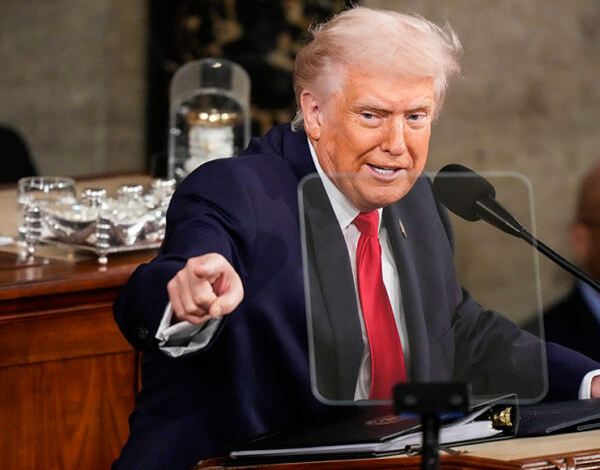
U.S. President Donald Trump released an 8-minute video today announcing major combat operations against Iran in a joint U.S.-Israeli assault aimed at crippling its nuclear program, missile capabilities, and military forces. In the message, Trump urged the Iranian people directly: “When we are finished, take over your government. It will be yours to take.”

February 28, 2026 — Tehran / Washington, D.C. / Jerusalem
The Middle East has entered one of its most volatile moments in decades following a coordinated military assault by the United States and Israel against Iran, launched in the early hours of Saturday morning.
The operation was publicly confirmed by U.S. President Donald Trump in an eight-minute video posted to Truth Social, in which he described the strikes as “major combat operations” intended to neutralize Iran’s nuclear ambitions, ballistic missile infrastructure, and regional military networks.
A Coordinated Strike Across Iran
The joint offensive involved extensive airstrikes targeting multiple Iranian cities, including Tehran. According to U.S. military officials, the strikes hit Revolutionary Guard command centers, air-defense systems, missile manufacturing facilities, drone launch sites, military airfields, and other high-value strategic assets.
U.S. Central Command confirmed that the objective was to significantly degrade Iran’s capacity to threaten American personnel and allied forces throughout the region.
Throughout the day, explosions were reported across the Iranian capital and other locations. Iranian state media claimed more than 200 fatalities and hundreds of injuries, including civilians near certain impact zones. One incident reportedly caused damage near a primary school, though independent verification remains difficult due to communication blackouts and restricted access.
Trump’s Message: Warning and Provocation
In his address, Trump framed the operation as a defensive necessity.
“A short time ago, the United States military began major combat operations in Iran,” he said. “Our objective is to defend the American people by eliminating imminent threats from the Iranian regime.”
He cited Iran’s long history of attacks on U.S. personnel, support for militant groups, and continued nuclear enrichment efforts in defiance of international agreements.
Trump then delivered an unprecedented direct appeal to the Iranian population, blending caution with revolutionary rhetoric:
“Don’t leave your home. It’s very dangerous outside. Bombs will be dropping everywhere. When we are finished, take over your government. It will be yours to take.”
He characterized the moment as a rare opportunity for political transformation, promising U.S. backing and urging Iranians to “seize control of your destiny.”
The video spread rapidly across social platforms, marking one of the most direct interventions by a sitting U.S. president into another nation’s internal politics during active hostilities.
Iran Strikes Back
Iran’s response was swift.
Within hours, Tehran launched multiple waves of ballistic missiles and armed drones toward Israeli territory and U.S. military installations across the Gulf region. Air defenses intercepted many of the incoming projectiles, though some caused limited damage and injuries inside Israel.
Additional strikes targeted bases in Bahrain, Qatar, Kuwait, the United Arab Emirates, and Jordan, with allied defense systems engaging threats midair.
Iranian officials described the retaliation as restrained but resolute, warning that further attacks would be met with sustained reprisals. State media condemned the U.S.-Israeli campaign as an illegal act of aggression, emphasizing that the strikes occurred during Ramadan and violated Iranian sovereignty and international law.
Netanyahu and Strategic Coordination
The operation followed the collapse of recent nuclear negotiations, with Trump accusing Iran of deliberate stalling and deception. Reports indicate close coordination with Israeli Prime Minister Benjamin Netanyahu, who described the strikes as preemptive and necessary to eliminate existential threats.
Netanyahu stated that the campaign would continue “as long as needed,” with objectives including dismantling Iran’s missile capabilities and weakening its influence through regional proxies such as Hezbollah and the Houthis.
Global Fallout and Economic Shockwaves
International reaction has been immediate and deeply divided.
Several Western allies expressed alarm over the escalation while acknowledging Iran’s long record of provocation. The United Kingdom and multiple Gulf states warned of instability in global energy markets, as oil prices surged sharply. Brent crude jumped more than 10% amid fears of disrupted shipping through the Strait of Hormuz.
Russia and China condemned the strikes as violations of the UN Charter, calling for de-escalation and an immediate ceasefire. The United Nations Security Council convened an emergency session to address the rapidly deteriorating situation.
Political Firestorm in Washington
At home, Trump’s decision ignited fierce political debate.
Critics from both parties accused the president of bypassing Congress and initiating what amounts to war without formal authorization. Several lawmakers called for a War Powers Resolution vote, warning that the action risks entangling the United States in a prolonged regional conflict.
Supporters countered that the strikes were decisive and necessary to prevent Iran from acquiring nuclear weapons and to protect American forces and allies.
Uncertainty Inside Iran
Conditions inside Iran remain fluid and opaque.
Widespread communication disruptions and heightened security measures have limited independent reporting. Unconfirmed accounts suggest scattered protests in some cities, with civilians expressing frustration toward the regime amid the bombardment.
Iranian authorities have deployed security forces to suppress dissent, raising questions about whether Trump’s call will inspire broader unrest or instead reinforce nationalist resistance against foreign intervention.
A Conflict With Global Stakes
Analysts warn that prolonged hostilities could trigger asymmetric warfare, cyberattacks, and expanded proxy conflicts throughout the region. Iran’s ability to sustain retaliation will depend on the resilience of its command structure and remaining missile stockpiles.
For the United States and Israel, the challenge lies in degrading Iranian capabilities while avoiding a full-scale ground war.
As night fell across the region, strikes and counterstrikes continued, with both sides signaling resolve rather than restraint. Whether this moment marks a decisive blow or the opening chapter of a prolonged and dangerous conflict remains uncertain — but its global consequences are already unfolding