Born Into a Legend Yet Determined to Be More How Patrick John Wayne Quietly Built a Career on His Own Terms

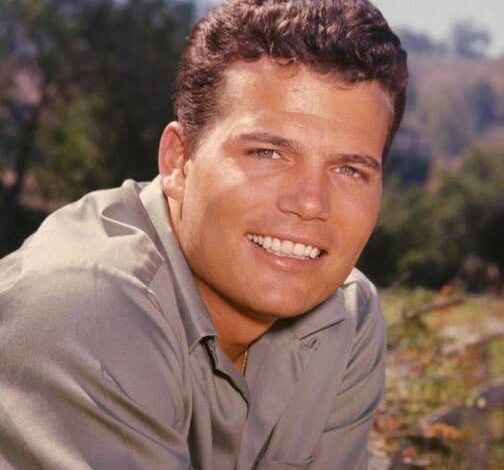
Growing up beneath the immense shadow cast by John Wayne, Patrick John Wayne understood early that Hollywood had already written a script for him—whether he agreed to it or not. The industry expected broad shoulders, a commanding stride, and a ready-made swagger that could summon the Duke’s legend on cue. What it did not expect was restraint. What it did not expect was patience. And yet, those were the qualities Patrick quietly chose to cultivate.
Rather than chasing leading roles or demanding recognition by virtue of his surname, Patrick John Wayne took a slower, more deliberate path. He accepted modest parts, background appearances, and ensemble roles that offered little glamour but immense opportunity. Each set became a classroom. Each production was a place to observe—how directors communicated, how seasoned actors carried themselves between takes, how discipline mattered as much as talent. Where others might have seen obscurity, Patrick saw apprenticeship.
This approach required a particular kind of courage, one rarely celebrated in an industry addicted to instant success. It meant enduring comparisons he never asked for, and resisting the temptation to shortcut the process by leaning on his father’s reputation. Instead, he focused on fundamentals: listening more than speaking, showing up prepared, respecting the rhythms of collaboration. Crew members noticed. Fellow actors noticed. Slowly, quietly, trust accumulated—not because of who he was related to, but because of how he worked.
That trust became his real currency in Hollywood. It opened doors not through spectacle, but through reliability. Patrick became known as someone who elevated a project rather than overshadowed it, who fit seamlessly into a cast rather than bending it around himself. In an era when loud personalities often dominated attention, his professionalism stood out precisely because it didn’t demand applause.
By the time audiences began to recognize him in films such as Sinbad and the Eye of the Tiger and The People That Time Forgot, the most important battle had already been won—one fought far from box office numbers or magazine covers. Patrick had proven to himself that he belonged on set not as an inheritance, but as an earned presence. He had learned how to carry a role without borrowing gravity from a legend, how to command respect without invoking a famous name.
Living with the legacy of John Wayne meant accepting that comparisons would never fully disappear. But Patrick’s answer to that reality was neither rebellion nor imitation—it was integrity. He allowed his career to unfold on its own terms, guided by discipline rather than ego. In doing so, he redefined success for himself, measuring it not by stardom, but by craft.
In a town endlessly drawn to noise, notoriety, and mythmaking, Patrick John Wayne chose a quieter distinction. His greatest achievement was not eclipsing a legend or escaping it, but coexisting with it—secure enough to let the work speak, and confident enough to know that authenticity, patiently built, outlasts even the loudest fame.