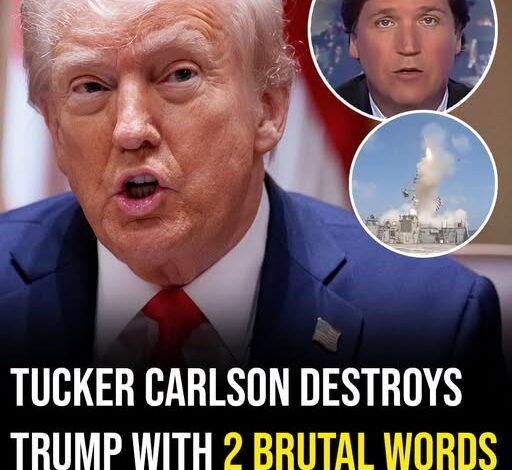
The strikes on Iran have revealed a raw, bitter fault line within the conservative movement, one that is as emotional as it is ideological. For years, Donald Trump’s most devoted allies framed him as the antiwar populist—the outsider who would finally end the endless cycle of U.S. military engagement abroad. From cable news pundits to high-profile Republican lawmakers, the narrative was simple: Trump would protect American blood and treasure by keeping the nation out of costly foreign entanglements.
Now, however, as Trump publicly boasts of decapitating Iran’s leadership and pledges to continue striking “until all of our objectives are achieved,” the sense of betrayal among that same cohort is palpable. Figures who helped define the movement—Tucker Carlson, Marjorie Taylor Greene, Rand Paul, and former presidential contender Bill Walsh—are not marginal actors; they constitute the emotional core of the populist right. Their criticisms are pointed and personal: Trump, in their eyes, is repeating the very mistakes he once condemned, trading principled restraint for the traditional, interventionist posture of American power.
The Emotional Stakes: Beyond Policy
This schism is not merely about strategy or foreign policy doctrine; it is about trust, legacy, and the moral calculus of American power. The conservative populists who once rallied around Trump believed in a narrative of protection: protecting American lives, defending taxpayers, and prioritizing domestic over foreign concerns. Now, confronted with a conflict that risks sending yet another generation of young Americans into harm’s way, they are questioning whether the promises that once united them were ever genuine.
Carlson, Greene, Paul, and Walsh voice fears that resonate across the movement: How many young Americans must die for a campaign of intervention in a country whose population neither requested U.S. involvement nor shares a direct threat to American soil? They see a generational gamble being made on the same principles Trump once criticized, and for many, it feels like an erosion of the movement’s moral core.
The Policy Paradox
Trump’s hawkish pivot highlights a paradox at the heart of the conservative base. Populist messaging promised restraint, yet the execution mirrors traditional interventionist Republican policies. Military strikes in Iran carry immediate strategic risks and long-term geopolitical consequences, from destabilizing the Middle East further to provoking regional allies and adversaries. Critics within the movement argue that this contradiction threatens the ideological coherence that held the populist coalition together.
Moreover, Trump’s rhetoric on nuclear escalation—couched in stark warnings about Iran’s capabilities—places additional pressure on a movement that has historically been skeptical of multilateral entanglements. In some ways, the criticism is as much about optics and credibility as it is about principle: a movement that once prided itself on keeping America safe at home now faces the prospect of being associated with a war abroad.
The Fracture in Public Discourse
This internal debate is playing out in public, which is itself a departure from previous generations of conservative discourse. No longer are disagreements quietly hashed out behind closed doors; they are broadcast across social media, news networks, and podcasts, creating a feedback loop of division. Every comment, every op-ed, every viral clip serves as both a symptom and a catalyst of the fracture, amplifying dissent while simultaneously challenging the unity of Trump’s base.
The divide also underscores a deeper question of identity: What does it mean to be a conservative populist in 2026? Is the movement defined by antiwar principles, nationalist protectionism, loyalty to a single leader, or a combination of these elements? The Iran strikes force a reckoning: the movement must confront itself, its principles, and the compromises it is willing—or unwilling—to accept.
A Movement at a Crossroads
The significance of this rift extends beyond the immediate conflict. It is a moment of introspection for a movement that has, for decades, relied on a unified narrative of grievance, loyalty, and cultural identity. The tension between interventionist action and antiwar rhetoric is more than a policy disagreement; it is a test of the movement’s cohesion, its priorities, and its ability to reconcile ideology with leadership.
In the coming weeks and months, this internal debate will likely shape the trajectory of the populist right in America. Will the dissenting voices be silenced in favor of loyalty to Trump, or will the conversation catalyze a reexamination of principles that once defined the movement? The stakes are high: the answers may determine not only the future of the conservative coalition but also the broader American posture in a volatile region.
In the end, the Iran strikes are more than a military maneuver—they are a mirror, reflecting the contradictions, fears, and unresolved questions of a movement that once marched in lockstep. Between the president’s bold action and his base’s anxious scrutiny lies a question that is at once practical and existential: Who are we, and what are we willing to sacrifice to be that?