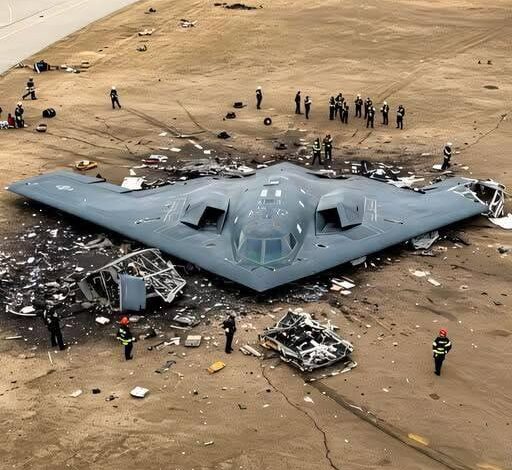
The morning of March 2, 2026, brought a chilling development at Andersen Air Force Base in Guam: a catastrophic mishap involving a B-2 Spirit stealth bomber. In what is being described as a somber day for the U.S. Air Force and Global Strike Command, the multi-billion-dollar aircraft crashed and erupted in flames shortly after takeoff. For those stationed at this critical Pacific hub, the sight of a “flying wing”—a marvel of modern engineering and a symbol of American power—engulfed in thick black smoke was a jarring reminder of the inherent risks of military aviation.
A Strategic Asset Lost
The B-2 Spirit is more than an aircraft; it is a cornerstone of the U.S. strategic triad and one of the most sophisticated pieces of military hardware ever built. Its loss represents more than a financial setback—it is a blow to operational capability. As emergency teams worked to suppress the flames and secure the wreckage, attention turned immediately to the two pilots who had been tasked with flying the complex machine.
The Crash: What We Know
Details remain fluid as the Air Force secures the site. Early reports suggest the crash occurred moments after liftoff, with the bomber struggling to maintain its climb before impacting the runway. The resulting fire required a massive response from Andersen’s crash-fire-rescue teams.
Andersen Air Force Base serves as the “tip of the spear” for U.S. operations in the Indo-Pacific, and the incident underscores that even meticulously maintained aircraft are subject to catastrophic failure.
A Fleet in Crisis
The loss of a single B-2 Spirit carries enormous strategic implications. The Air Force maintains a fleet of only 20 active B-2s—already down from 21 following the 2008 loss of the Spirit of Kansas. The B-2 is no longer in production, making each aircraft irreplaceable. Valued at roughly $2.2 billion each when accounting for development and inflation, the fleet’s remaining capacity is now reduced by approximately 5%. These aircraft are uniquely capable of delivering large-diameter bunker-buster munitions while remaining virtually invisible to advanced radar systems—a capability unmatched worldwide.
The Human Element
While analysts assess the loss of hardware, Air Force leadership is focused on the pilots. B-2s are flown by just two aviators, each undergoing some of the most rigorous training in the world. As of this afternoon, official updates on the crew’s condition are pending. In the 2008 crash, both pilots ejected safely just before impact; the aviation community hopes for a similar outcome in Guam. Support for families and first responders remains the base’s immediate priority.
The Investigation Ahead
A formal Safety Investigation Board (SIB) will be convened, composed of experts in aerodynamics, maintenance, human factors, and meteorology. The board will examine all potential causes—from foreign object debris or bird strikes to maintenance issues or environmental effects on the B-2’s radar-absorbent coating and electronics.
Until the investigation concludes, the remaining fleet will likely face a temporary stand-down or intensive inspections. The grounding comes amid heightened regional tensions, complicating Global Strike Command’s operational planning.
Strategic Consequences
The crash affects the scheduling of the Continuous Bomber Presence in the Pacific and underscores the urgency of the B-21 Raider program, which is still in early testing and production. For now, the U.S. relies on the aging B-2 fleet to penetrate the most contested airspace. The iconic “flying wing” has long symbolized American technological superiority; seeing it destroyed on a Guam runway is a sobering reminder that even the most advanced aircraft are vulnerable to the hazards of takeoff and landing.
Reflection and Solidarity
As night falls over Andersen AFB, recovery efforts continue under portable lights. The fire is extinguished, but the investigation is just beginning. The tarmac bears the scars, and a multi-billion-dollar hole has appeared in the national defense posture. Yet the true cost is human: the airmen who lost a “sister ship” and the families awaiting news.
The B-2 community is tightly knit. Every pilot, maintainer, and fueler knows these 20 aircraft by name. Tonight, one of those names—whether the Spirit of South Carolina or the Spirit of Mississippi—has been removed from active service. The Air Force and the public await further updates, standing in solidarity with the personnel at Andersen and hoping for the best possible outcome for the crew who fly the world’s most complex aircraft.