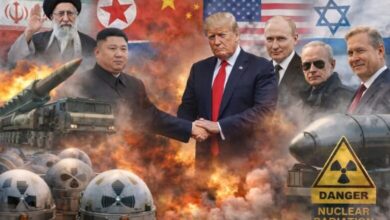
What began as another strained and inconclusive round of nuclear negotiations has rapidly transformed into something far more dangerous—an open confrontation that many fear could define an era. Diplomatic tensions that once simmered behind closed doors have now erupted into direct military action, shattering assumptions that certain lines would never be crossed.
The coordinated U.S.–Israeli strike targeting senior leadership infrastructure in Tehran marked a dramatic escalation. For years, analysts warned that attacks on the heart of Iran’s political and military command structure would represent a point of no return. Iranian officials have described the operation as crossing their “ultimate red line,” framing it not merely as an act of aggression but as an existential assault on state sovereignty.
Tehran’s response was swift and forceful. Waves of ballistic missiles and armed drones were launched in what Iranian commanders called the opening phase of a broader campaign. Statements broadcast on state media promised the “most devastating offensive operation” in the country’s modern military history. The threats were not limited to Israel; American bases and personnel across the Middle East were explicitly named as potential targets.
The rhetoric on all sides has hardened to an alarming degree. Israeli officials vowed decisive retaliation against any further strikes, while U.S. defense leaders warned that attacks on American assets would be met with overwhelming force. Words like “obliteration,” “unprecedented response,” and “war crimes” now dominate official statements and televised addresses. The language no longer carries the ambiguity of deterrence—it carries the certainty of confrontation.
Across the region, air defense systems have been activated. Military aircraft patrol contested skies. Naval assets reposition in strategic waterways. Governments from the Gulf to Europe have urged restraint while simultaneously reinforcing their own security postures. Civilian populations watch anxiously as sirens sound and missile interception footage circulates in real time across global media platforms.
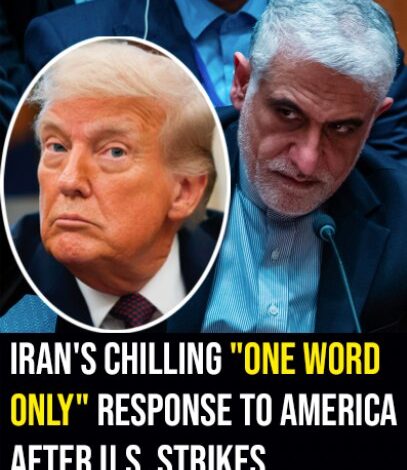
Inside the headquarters of the United Nations, the diplomatic atmosphere has grown increasingly strained. Emergency sessions have been convened as ambassadors exchange accusations rather than proposals. Iran’s representative denounced the strikes as crimes against humanity and invoked Article 51 of the UN Charter, asserting Tehran’s right to self-defense. In a pointed remark directed at Washington, he urged the United States to “choose its words carefully” if it wished to avoid further escalation.
The U.S. envoy responded with equal sharpness, condemning Iran’s leadership as destabilizing and dangerous, accusing it of sponsoring regional violence for decades. There was little sign of compromise in the chamber—only competing narratives of legitimacy and survival.
Caught between the two positions, the Secretary-General delivered a somber appeal. He warned that once direct state-to-state conflict crosses certain thresholds, reversing momentum becomes extraordinarily difficult. “Peace,” he stressed, “is not weakness. It is the only sustainable outcome.” Yet even as he spoke, reports confirmed additional projectiles launched and intercepted, underscoring the widening gap between diplomatic language and battlefield reality.
Military analysts caution that the situation is volatile not only because of the strikes themselves, but because of the cascading risks. Miscalculation, misidentification, or technical malfunction could expand the conflict beyond its current scope. Proxy groups aligned with Iran may open additional fronts. Regional powers could feel compelled to intervene. Shipping lanes and energy infrastructure remain vulnerable, raising concerns about global economic repercussions.
Meanwhile, intelligence assessments suggest both sides are carefully calibrating their actions—even amid fiery public statements. Behind the scenes, indirect channels of communication reportedly remain open, facilitated by intermediaries seeking to prevent a slide into full-scale war. History shows that even at moments of peak hostility, quiet backchannel diplomacy can serve as the last barrier against catastrophe.
Still, the present trajectory feels perilous. The psychological threshold has shifted. What was once theoretical—a direct clash between Iran, Israel, and the United States—has moved into tangible reality. The normalization of missile exchanges between state actors carries implications that extend far beyond immediate casualties or infrastructure damage.
For civilians across the region, the stakes are deeply personal. Families prepare emergency supplies. Airports operate under tightened security. Businesses pause operations as uncertainty clouds the near future. In global capitals, leaders balance calls for solidarity with appeals for de-escalation, aware that any misstep could entangle additional nations.
The coming hours and days will likely prove decisive. Whether this confrontation escalates further or begins to stabilize depends on a fragile mix of military restraint, diplomatic initiative, and strategic calculation. What is clear is that the longstanding tension surrounding Iran’s nuclear ambitions and regional posture has entered a new and unpredictable phase.
As missiles streak across night skies and diplomats trade accusations under fluorescent lights, the world confronts a stark reality: once certain red lines are crossed, rebuilding stability becomes far more difficult than preserving it.