Iran Launches Widespread Attacks Across Middle East After US and Israel Strike Leadership Sites!

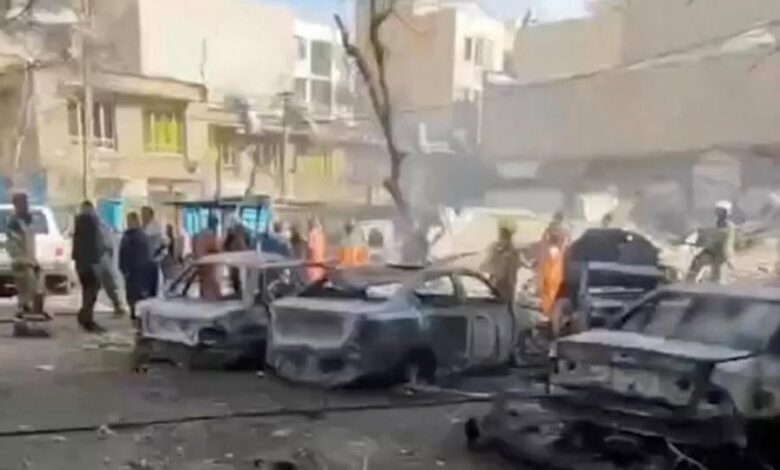
The balance of power across the Middle East has shifted dramatically after a sweeping, multi-front military escalation that erupted in the early hours of February 28, 2026. What began as a tightly coordinated U.S.–Israeli strike campaign against Iranian command structures and strategic assets has since widened into a fast-moving regional crisis. By March 2, the pattern of retaliation had spilled beyond the initial battlefield, casting uncertainty over the Persian Gulf, the Levant, and critical global energy routes.
The Opening Salvo: February 28
The confrontation was triggered by a synchronized air and cyber offensive carried out by U.S. and Israeli forces. According to Washington, the objective was to disable Iran’s long-range missile systems and nuclear-related infrastructure. Strikes were reported in major urban centers including Tehran, Isfahan, Tabriz, and Qom—locations considered central to Iran’s political, military, and religious networks.
Satellite assessments indicated significant structural damage to government facilities in Tehran. Unconfirmed reports also suggested that senior Iranian officials may have been killed in what observers described as a “decapitation-style” operation. Meanwhile, Iranian state outlets alleged civilian casualties, including claims of a strike affecting a girls’ school in the southern city of Minab. Independent verification has been limited, but the allegations have intensified regional outrage and fueled calls for retaliation.
Iran’s Counteroffensive: Expanding the Theater
Iran’s response unfolded within hours. The Islamic Revolutionary Guard Corps (IRGC) announced “Operation Martyr Soleimani II,” unleashing a large-scale barrage of ballistic missiles and loitering drones. Unlike previous tit-for-tat exchanges, the targets extended beyond Israel to encompass U.S. bases and infrastructure across Gulf states.
Air defense systems in Qatar, Bahrain, Kuwait, and the United Arab Emirates were activated at full capacity. While many incoming projectiles were intercepted, several penetrated defensive layers. In Dubai, debris from an intercepted missile reportedly caused damage near the Fairmont The Palm, igniting a major fire and underscoring the spillover risks for states not directly party to the original strike.
The widening arc of hostilities has revived long-standing fears that any Gulf escalation could disrupt the Strait of Hormuz, through which a significant portion of the world’s oil supply transits daily.
Global Reaction: Condemnation and Paralysis
International responses have revealed sharp geopolitical divisions. Russia and China condemned the U.S.–Israeli strikes, calling them destabilizing and unlawful. An emergency meeting of the United Nations Security Council produced little consensus, reflecting the entrenched rivalries among permanent members.
European leaders have taken a more cautious tone. Officials in Paris, Berlin, and London urged restraint, warning that a prolonged conflict could devastate global energy markets. Brent crude prices surged sharply in the days following the strikes, mirroring anxiety about shipping disruptions and broader economic fallout.
Civilians Under Pressure
For residents in affected cities, the crisis is measured not in diplomatic statements but in sirens and uncertainty. In Tehran, reports describe families relocating toward rural provinces amid fears of additional strikes. In Israel and parts of the Gulf, repeated air-raid alerts have disrupted schools, businesses, and air travel.
The psychological toll has been significant. Gulf states that long positioned themselves as safe hubs for tourism and finance have confronted the reality of vulnerability. Airspace closures over Iran and Iraq have forced international carriers to reroute flights, increasing travel times and operational costs worldwide.
The Diplomatic Dilemma
Analysts characterize the moment as a severe stress test for regional stability. Iran has warned that countries hosting U.S. military assets could be treated as active participants in the conflict. The White House, meanwhile, has framed the initial strikes as preventive measures aimed at halting Iran’s strategic ambitions.
Yet both sides now face a dilemma: escalation risks a broader war, while restraint could be interpreted domestically as weakness. Without a credible diplomatic channel—whether through quiet talks in Oman or mediation by European intermediaries—the conflict may harden into a prolonged cycle of retaliation.
A Precarious Crossroads
As of March 2, the trajectory remains uncertain. The coming days will determine whether the region settles into a tense but contained standoff or slides toward multi-state warfare. The immediate human impact—civilian displacement, economic disruption, and mounting casualties—continues to grow beneath the surface of high-level strategy.
A durable “red line” acceptable to all parties is urgently needed. Absent such a framework, the fragile equilibrium that has supported decades of economic integration in the Middle East may give way to a sustained period of instability—one whose consequences will reverberate far beyond the region itself.