Natalee Holloway, An 18-Year Search for Truth, a Familys Enduring Strength, and the Confession That Closed a Chapter

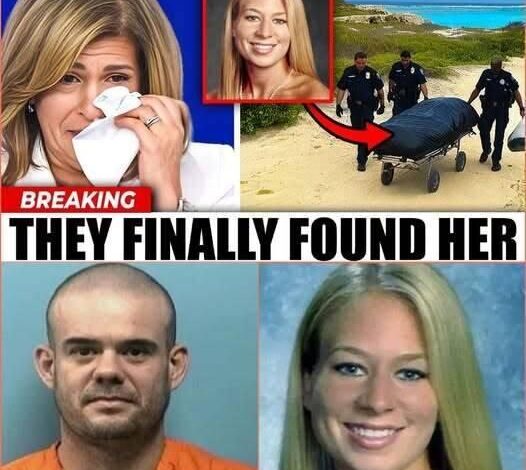
The disappearance of Natalee Holloway in May 2005 remains one of the most widely known and emotionally charged missing-person cases of the modern era. What began as a celebratory high school graduation trip to Aruba transformed into an international investigation that spanned nearly two decades. For years, the case unfolded in headlines and courtrooms, marked by shifting stories, legal obstacles, and a suspect whose conflicting accounts deepened the anguish of a family searching for answers. It was not until October 2023 that a formal confession in a U.S. courtroom provided long-awaited clarity, bringing legal closure to a tragedy that reshaped conversations about travel safety and international justice.
Natalee Ann Holloway was born on October 21, 1986, and raised in Mountain Brook, Alabama. She was known as a dedicated student and an active member of her school community. An honor student and National Honor Society member, she planned to attend the University of Alabama with aspirations of pursuing a medical career. In May 2005, she joined more than 100 classmates on a five-day trip to Aruba to celebrate their graduation—a milestone marking the transition to adulthood.
The trip proceeded without incident until the final night. On May 29, 2005, Natalee went out with friends to Carlos’n Charlie’s, a popular nightclub on the island. Witnesses later reported seeing her leave the venue in a vehicle with three young men: Joran van der Sloot, a Dutch student residing in Aruba, and brothers Deepak and Satish Kalpoe. When Natalee did not arrive at the airport the next morning for her return flight—and her belongings were found untouched in her hotel room—her disappearance was immediately reported.
Her mother, Beth Holloway, traveled to Aruba almost at once and began what would become an unwavering pursuit of the truth. Authorities launched an extensive search involving Aruban police, international agencies, and volunteers. Beaches were combed, waters were scanned, and properties were searched. Despite these efforts, no physical trace of Natalee was recovered.
From the outset, the investigation was complicated by conflicting statements from van der Sloot and the Kalpoe brothers. The three were detained and released multiple times as authorities worked within the framework of Aruban and Dutch law, which requires substantial evidence for continued detention—especially in cases lacking a recovered body. Van der Sloot’s accounts of that night shifted repeatedly. At various times, he claimed to have left Natalee on a beach, suggested third-party involvement, or made other statements that later proved false. Each new claim reignited hope before leading to further disappointment.
As media coverage intensified, the case became a fixture of 24-hour news cycles in the United States. Natalee’s disappearance prompted discussions about international travel safety, investigative transparency, and the responsibilities of foreign governments when crimes involve American citizens abroad. At the same time, commentators later examined how media focus in high-profile cases can shape public awareness and resource allocation.
In 2010, five years to the day after Natalee vanished, van der Sloot was arrested in Peru for the murder of Stephany Flores, a 21-year-old student. He was later convicted and sentenced to prison there. Around that same period, U.S. authorities charged him with attempting to extort $250,000 from Beth Holloway in exchange for information about Natalee’s remains—information that ultimately proved false. In 2012, Natalee was legally declared dead, though the absence of confirmed details about her final moments left her family without full closure.
A significant development came in 2023 when van der Sloot was temporarily extradited to the United States to face federal charges related to extortion and wire fraud. As part of a plea agreement in Alabama, he provided a sworn account of what occurred on the night Natalee disappeared. In court, he admitted to killing her during a confrontation on the beach and disposing of her body in the ocean. Although her remains were never recovered, the confession established an official narrative after years of uncertainty.
For Beth Holloway and her family, the admission represented a complicated milestone. It did not restore what was lost, nor did it allow for a traditional burial. However, it ended years of speculation and removed the ambiguity that had lingered for nearly two decades. In the years following Natalee’s disappearance, Beth Holloway founded organizations focused on travel awareness and personal safety education, channeling her grief into advocacy aimed at preventing similar tragedies.
The broader impact of the case has been substantial. It underscored the challenges of cross-border investigations, highlighted differences in legal systems, and spurred ongoing dialogue about travel risk awareness among young adults. It also prompted reflection on media practices and the disparities in attention given to missing-person cases.
As the twentieth anniversary of Natalee’s disappearance approaches, her story remains a powerful reminder of both vulnerability and resilience. Though her life was cut short, the case influenced policy discussions, educational efforts, and public awareness in lasting ways. The legal proceedings of 2023 closed a significant chapter, but her memory continues to shape conversations about justice, safety, and the enduring determination of families seeking answers.