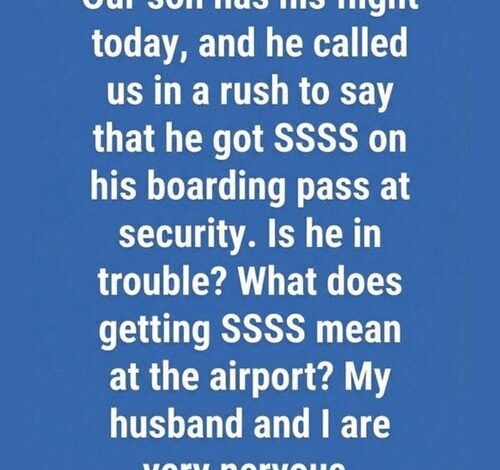
Air travel today feels like a carefully staged production — part logistics drill, part endurance test. You move from kiosk to counter, surrender your suitcase to the conveyor belt, and finally receive the most important artifact of the journey: your boarding pass. Most travelers glance at it for the basics — seat, gate, boarding time. But every so often, four bold letters appear beside a passenger’s name: SSSS.
For those unfamiliar with it, the code can feel ominous. It sparks immediate questions. Is something wrong? Am I on a list? Did I do something suspicious without realizing it? While the reality is far less dramatic than the imagination suggests, those four letters do signal that your trip through the airport is about to involve extra steps. Understanding what “Secondary Security Screening Selection” means can turn confusion into clarity.
What SSSS Actually Means
SSSS stands for Secondary Security Screening Selection. It is used within the U.S. aviation security system, primarily overseen by the Transportation Security Administration (TSA) under the Department of Homeland Security.
If the code appears on your boarding pass, it means your travel profile has been selected for enhanced screening on that particular flight. Importantly, it does not mean you are on the No-Fly List. If you were prohibited from flying, you would not receive a boarding pass at all. Nor does it automatically imply criminal suspicion.
Instead, it indicates that the Secure Flight system has flagged your itinerary for additional review before departure.
What Happens During Secondary Screening
Passengers marked with SSSS often notice the difference before they even reach the security line. Many cannot check in online or use a mobile boarding pass. Instead, they must verify identification in person at the airline counter.
At the security checkpoint, the experience becomes more detailed. While most travelers move through in minutes, those selected for secondary screening may spend additional time undergoing procedures such as:
- Comprehensive Pat-Down: A more thorough physical screening conducted by a same-gender TSA officer.
- Explosive Trace Testing: Swabs taken from hands, clothing, or bag interiors to detect chemical residue.
- Carry-On Inspection: Personal items may be removed and individually examined.
- Electronic Checks: Devices may need to be powered on to confirm functionality.
The process can add anywhere from 10 to 30 minutes — sometimes longer — depending on the airport and volume of travelers.
Why Some Travelers Are Selected
The exact algorithm behind selection is not publicly detailed, but experts point to several common factors.
Randomized Selection
Security systems rely partly on unpredictability. A certain percentage of travelers are flagged randomly to prevent pattern exploitation.
Unusual Booking Patterns
Last-minute one-way tickets, cash purchases, or certain international routes may trigger additional review. These behaviors are not illegal, but they can match historical risk patterns.
Name Similarities
Passengers with common names — particularly those similar to individuals on watchlists — may be flagged repeatedly. The system sometimes requires additional identity verification to distinguish between people with similar biographical details.
Resolving Repeat Flags
For travelers who experience SSSS frequently due to name confusion or data issues, the Department of Homeland Security offers a solution: the DHS Traveler Redress Inquiry Program (DHS TRIP).
By submitting identifying documentation, individuals can request clarification of their records. If approved, they receive a Redress Control Number, which can be added to airline profiles. This helps the Secure Flight system distinguish them from similarly named individuals, reducing future disruptions.
The Bigger Picture
Modern aviation security is built on layered protection. No single measure is perfect. Instead, systems overlap to minimize risk. Secondary screening functions as one of those layers — adding unpredictability and reinforcing deterrence.
While it can feel intrusive or inconvenient, the designation is procedural rather than personal. It is not a permanent label and does not carry long-term consequences for most travelers.
Practical Advice If You See SSSS
If those four letters appear on your boarding pass:
- Arrive at the airport earlier than usual.
- Keep identification readily accessible.
- Ensure electronic devices are charged.
- Remain cooperative and calm during screening.
In most cases, the added screening is simply a temporary delay — not a verdict about your character or background.
Ultimately, SSSS reflects the complexity of modern air travel: a system shaped by data, precaution, and layered defense. It may interrupt your path to the departure lounge, but it is one small component of the broader architecture designed to keep flights secure.