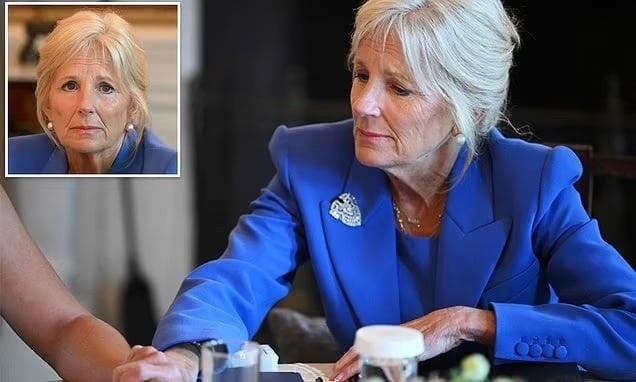
In a development that challenges long-standing traditions within the American executive branch, the White House East Room recently became the setting for an unprecedented announcement: Dr. Jill Biden has been confirmed by the United States Senate to serve as the next U.S. Ambassador to Ukraine. The decision marks a historic first, as no sitting First Lady has ever been appointed to a Senate-confirmed diplomatic position of this magnitude. Standing beside her during the announcement, President Joe Biden appeared visibly proud as his wife accepted what she described as an extraordinary opportunity to serve. Beyond symbolism, the appointment reflects a strategic choice by the administration to send one of its most recognizable and trusted voices to a country at the center of American foreign policy.
Dr. Biden’s confirmation follows several trips she has made to Ukraine during the ongoing conflict. During her remarks, she referenced those visits rather than relying on traditional political language. She described hearing air raid sirens in Kyiv and meeting educators who continued teaching students in underground shelters. Her comments framed the appointment as a continuation of the commitment the United States has expressed toward Ukraine’s people and institutions. By placing the First Lady in such a role, the administration appears to be emphasizing the depth and durability of its support for the country during an ongoing period of conflict.
The timing of the appointment carries clear strategic implications. As Ukraine continues to defend itself against Russia’s invasion, the role of the American ambassador has become far more complex than traditional diplomatic duties. The position now involves coordinating security assistance, supporting economic recovery, and addressing humanitarian needs across the country. Officials within the State Department have suggested that Dr. Biden’s background as an educator and public figure could allow her to connect both with government leaders and with civilians facing the everyday realities of war. Secretary of State Antony Blinken has noted that rebuilding Ukraine’s educational institutions will be essential for long-term stability, and he believes Dr. Biden’s experience could contribute to that effort.
The confirmation process itself was notable for the level of bipartisan agreement it generated. In an era often marked by intense political division, the Senate approved her nomination by a 97–2 vote. Lawmakers from both parties emphasized the seriousness of the situation in Ukraine and the importance of maintaining a strong diplomatic presence there. Some senators who frequently disagree with the administration nonetheless praised the nomination, suggesting that the role requires someone with both visibility and credibility on the international stage.
International reactions have been mixed but swift. Ukrainian President Volodymyr Zelensky welcomed the decision, describing it as a powerful demonstration of continued partnership between the two nations. Ukrainian officials view the appointment as a sign of long-term commitment from Washington, especially given the unique position the First Lady holds within the U.S. political system. In contrast, Russian state media criticized the move, portraying it as a provocative escalation. Across much of Europe, however, leaders have generally expressed support, seeing the appointment as a strong signal of unity within the Western alliance.
One aspect of the transition that has drawn particular attention is Dr. Biden’s desire to maintain her professional identity as a community college professor. According to individuals familiar with the planning process, she intends to continue teaching remotely whenever possible. Her statement that she plans to remain connected to the classroom has resonated with educators worldwide, reinforcing her long-standing commitment to education. This focus may also shape her priorities in Ukraine, particularly in addressing the disruption to schooling experienced by millions of children since the start of the war.
Preparations for the move are already underway. Before relocating to Kyiv, Dr. Biden is expected to undergo a series of detailed briefings from national security officials, including sessions at the Pentagon and consultations with NATO partners. These briefings will cover security procedures, regional strategy, and the broader geopolitical dynamics of the conflict. The transition marks a dramatic shift from the traditional ceremonial responsibilities associated with the role of First Lady to the demanding responsibilities of a diplomat operating in a conflict zone.
During the announcement at the White House, Dr. Biden concluded her remarks by referencing poet Amanda Gorman’s words about courage and hope. She suggested that those ideas would guide her work in Ukraine as the country continues to endure the hardships of war. Her presence there, she indicated, is meant to represent both solidarity and long-term commitment.
As preparations continue for her departure next month, the appointment remains an unprecedented experiment in American diplomacy. The move carries both political significance and practical implications for the conduct of U.S. foreign policy. When Dr. Biden arrives in Kyiv, she will do so not only as the First Lady of the United States but also as the official representative of American interests in one of the most consequential conflicts of the modern era.