She Sent One Last Text Before Hiking Alone, Nearly a Year Later, an Eagles Nest Revealed the Truth About Her Disappearance!

The message came just after sunrise—simple, casual, and easy to overlook in the moment. Only later would it feel heavy with meaning.
Sarah Turner was standing at her kitchen sink, holding a mug of coffee that had long since gone cold, when her phone vibrated against the counter. She glanced down and smiled when she saw the name.
Amelia.
The message was short:
Off I go. Mountains are calling. Weather’s perfect. Talk Sunday night.
Sarah felt the familiar mix of pride and quiet worry that always came when her daughter set off on another wilderness trip. Amelia had always been drawn to wide, silent places—the kind where the world seemed stripped down to its essentials.
Sarah typed back quickly.
Be careful. Love you.
The message showed as delivered.
It was the last time anyone would hear from Amelia Turner.
Amelia—“Amy” to friends—was twenty-four and fiercely independent. She worked as a freelance photographer, taking on small assignments that gave her just enough income to fund the life she loved most: exploring remote landscapes with a camera and a backpack.
For Amy, the wilderness wasn’t an escape. It was where she felt most at home.
Despite her adventurous spirit, she was never careless. Friends often joked about how meticulous she was when planning trips. Her gear bin was organized with labeled checklists. She carried printed maps even when she had digital ones. She packed spare batteries, extra food, and contingency plans.
She approached hiking with the mindset of someone preparing for a serious expedition.
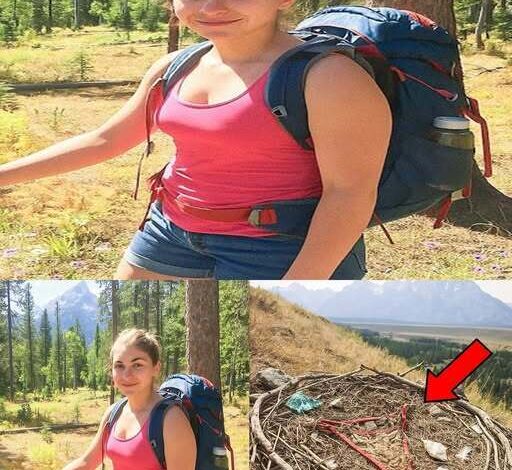
On the morning of August 12, Amy arrived at the String Lake trailhead in Grand Teton National Park just after seven. The sky was bright and cloudless, the jagged peaks glowing under early sunlight.
Before setting off, she asked an older couple nearby to take a photo of her.
In the picture, Amy stood smiling with the mountains rising behind her, her hair pulled back and her pack resting comfortably on her shoulders. She looked confident, relaxed, and excited for the journey ahead.
That photograph would soon appear on missing-person flyers across the country.
Amy planned to hike the Paintbrush Canyon–Cascade Canyon Loop, a demanding four-day trek known for steep climbs and dramatic views. She had mapped out every stage of the route and told several people exactly where she planned to camp each night.
Everything was carefully planned.
She had done everything right.
Sunday night came.
There was no message.
At first Sarah tried not to panic. She knew cell service in the mountains could be unreliable. But as the hours passed, her unease deepened.
Amy had always checked in.
By Monday evening, Sarah called the sheriff’s office with shaking hands.
Park rangers visited the trailhead that night.
Amy’s silver Subaru was still parked there.
By morning, she was officially listed as missing.
Search efforts began immediately. Rangers, volunteers, and rescue teams swept through the canyons. Helicopters scanned the terrain while search dogs followed scent trails along the route Amy had planned.
They located her campsite at Holly Lake.
Her tent was neatly set up. Her sleeping gear remained inside.
But something was wrong.
Her main backpack and boots were gone.
Experienced hikers don’t abandon their gear without reason.
Dogs tracked her scent off the trail, climbing a rocky slope and crossing loose stone.
Then suddenly the scent stopped.
It was as if she had vanished.
Some hikers who had been on the trail that morning mentioned a detail investigators couldn’t ignore: a lone man carrying a military-style backpack. He kept to himself and didn’t speak much.
A sketch was created.
But no name was attached to it.
After ten days of searching, heavy storms swept through the mountains, erasing the last traces that might have led to answers.
The official search was suspended.
The mountains had swallowed Amelia Turner.
For Mark Turner, Amy’s father, that explanation wasn’t enough.
Mark worked as a land surveyor, someone who believed the truth could always be found through careful observation. When the helicopters stopped flying, he began searching on his own.
Weekend after weekend, he returned to the Tetons.
He studied satellite images, geological maps, and terrain patterns. Instead of covering large areas quickly like search teams had done, he moved slowly—looking for subtle disturbances, small clues others might miss.
By then he no longer hoped for a miracle.
He only wanted to bring his daughter home.
Online, Amy’s disappearance drew attention. Hiking communities retraced her route and discussed possible scenarios. Some believed she had fallen or been injured. Others speculated about wildlife.
And some continued to wonder about the unknown man on the trail.
Winter eventually covered the mountains in snow, and the story faded from national headlines.
Nearly a year later, a fisherman discovered one of Amy’s trekking poles lodged in a creek downstream. It confirmed she had been in the area but didn’t explain what had happened.
Mark resumed his search with renewed determination.
Then, months later, something unexpected changed the investigation.
A park ranger monitoring golden eagle nests climbed a remote cliff far from the trail. Eagles build their nests using whatever materials they can find—sticks, fur, and scraps gathered from the landscape.
This nest contained something unusual.
Pieces of turquoise nylon fabric.
Investigators quickly recognized the material as part of outdoor gear.
Eagles didn’t hunt people—but they often collected items from areas where scavengers had been.
The discovery narrowed the search area dramatically.
A recovery team returned to the mountains.
On the third day, a trained search dog stopped and sat—a signal that meant it had located human remains.
Amelia Turner had been found.
The investigation that followed revealed a tragic truth.
Her death was not the result of an accident or wildlife encounter. Evidence showed she had been attacked and killed.
Authorities released the sketch of the unidentified hiker again—this time describing him as a suspect.
A motel employee later recognized the face. The man had stayed briefly, paid in cash, and left suddenly.
His identity was traced, and he was eventually arrested in Montana.
Among his belongings were personal items taken from victims—including Amy’s camera.
He later confessed.
The evidence led to a conviction, and he was sentenced to life in prison.
Amy’s memorial was held at an overlook in the Tetons.
Wind moved softly through the grass while the mountains stood quiet and unchanged.
When it was his turn to speak, Mark said only a few words.
“I just wanted to find my daughter.”
Amelia Turner was brought home.
Her story remains a reminder that while the wilderness can be beautiful and peaceful, safety always matters—and that awareness and preparation are important even in places that feel untouched by the world.