In early March 2026, the security environment across parts of the Middle East has become increasingly tense, prompting the United States government to issue strong guidance to its citizens in the region. As military tensions rise and diplomatic relations strain, the U.S. Department of State has urged American nationals in several countries to carefully consider leaving while commercial travel options remain available.
The advisory reflects growing concerns that the situation could deteriorate quickly if hostilities expand. U.S. officials say the goal is to ensure Americans have the opportunity to depart safely before travel disruptions, airspace closures, or security risks make evacuation significantly more difficult.
Countries Included in the Advisory
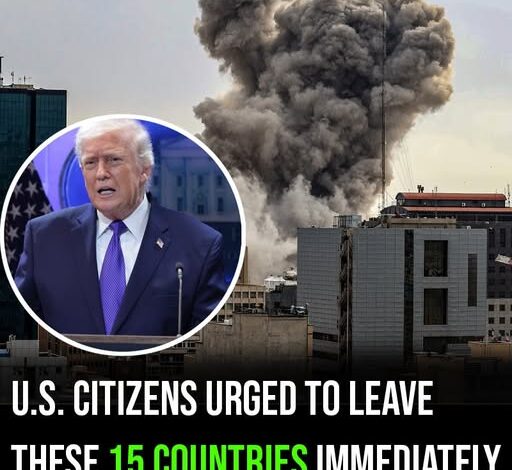
According to the State Department guidance issued on March 4, Americans were advised to consider departing a number of locations across the Middle East due to the heightened security environment. The advisory referenced several countries where tensions could directly affect civilian travel and safety, including Bahrain, Egypt, Iran, Iraq, Israel, Jordan, Kuwait, Lebanon, Oman, Qatar, Saudi Arabia, Syria, the United Arab Emirates, Yemen, and the Palestinian territories.
Officials emphasized that the advisory is precautionary but reflects the seriousness of current regional developments.
Diplomatic Drawdowns and Security Measures
Prior to the broader travel warning, the United States had already begun reducing its diplomatic presence in some areas. On March 2, non-essential government personnel and their families were ordered to depart from certain diplomatic posts as a safety precaution.
Similar adjustments have been considered in other locations depending on evolving security conditions. These measures are common during periods of geopolitical instability and are designed to protect diplomatic staff and their families from potential threats.
Secretary of State Marco Rubio confirmed that the State Department is actively assisting American citizens who wish to leave the region. Thousands of individuals have already departed in recent days, though others remain while monitoring conditions or arranging travel.
Officials are encouraging Americans abroad to register with the Smart Traveler Enrollment Program (STEP) so they can receive security updates and emergency assistance if needed.
Challenges for Travelers
For those still in the region, leaving quickly has not always been easy. As tensions rise, airlines have adjusted schedules, and some airports have experienced temporary disruptions. Security alerts related to drones, missile threats, and airspace restrictions have added further complications.
Travelers are being encouraged to remain flexible, monitor official announcements closely, and consider alternative routes if direct flights become unavailable.
U.S. Leadership Response
Speaking publicly about the situation, President Donald Trump acknowledged that the security environment could remain uncertain for some time. Administration officials have emphasized that U.S. forces and diplomatic teams are prepared for a range of scenarios while working to protect American interests and citizens abroad.
At the same time, the administration continues to communicate with international partners in an effort to manage tensions and avoid further escalation.
A Region on Alert
Across the Middle East, governments and residents alike are watching events unfold with concern. Regional security systems have been placed on heightened alert, and international organizations have called for restraint and renewed diplomatic engagement.
While military operations and political rhetoric dominate headlines, officials stress that protecting civilian lives remains a top priority. The travel advisory serves as a precautionary measure intended to reduce risk for Americans living or traveling in the region.
Looking Ahead
The situation remains fluid, and conditions may change rapidly. U.S. authorities continue to monitor developments closely while urging citizens abroad to remain informed and prepared.
For many Americans in the region, the immediate goal is simple: reach a safe location and stay connected to official guidance as events continue to unfold.