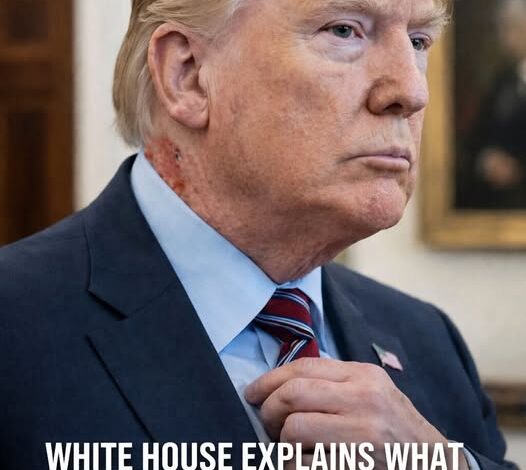
President Donald Trump’s physician, Dr. Sean Barbabella, recently described a visible rash on the president’s neck as a reaction to a common topical skin treatment. According to the doctor, the irritation was a temporary side effect that can sometimes appear when preventive creams are used, and the redness could persist for several weeks before fading.
While the explanation was presented as routine, it left several questions unanswered. The statement did not specify what condition the cream was meant to treat, why the treatment was started at this particular time, or whether it was connected to any broader health concerns. Those omissions have drawn attention from observers who closely monitor the health of national leaders—especially given that Trump is 79 years old.
In recent months, public discussion about the president’s health has intensified following a series of widely circulated photographs and reports. Some images showed bruising on Trump’s hand, which appeared partially covered with makeup during public appearances. Different explanations have been offered for those marks, including the possibility that they were caused by frequent handshakes or by the use of medications such as aspirin that can increase bruising.
Other moments during public events have also prompted commentary, particularly when Trump appeared tired or less energetic than usual. The White House has acknowledged that the president has chronic venous insufficiency, a circulatory condition that affects blood flow in the legs and is relatively common among older adults. Officials have emphasized that the condition is manageable and not unusual for someone of his age.
Even so, every new detail—whether a rash, a bruise, or signs of fatigue—has sparked renewed public conversation. In an era of constant media coverage and high-resolution images shared instantly across the internet, small physical changes in prominent figures can quickly become topics of national debate.
For many Americans, the health of a president is more than a personal matter; it is closely tied to concerns about leadership, stamina, and transparency. While administrations often aim to reassure the public with official medical statements, those explanations sometimes leave room for speculation if they appear incomplete.
As a result, the conversation surrounding Trump’s recent health observations reflects a broader dynamic: the tension between official medical briefings and the public’s desire for full clarity about the well-being of its leaders. Each new image or report adds another layer to that ongoing discussion, as citizens, commentators, and analysts continue to interpret what they see and what they are told.
For now, the White House maintains that the president’s health issues are routine and under control, but the scrutiny surrounding them shows no signs of fading. In modern politics, even small medical details can become part of a much larger narrative about transparency, trust, and leadership.